


Innovation without borders! Grigory Trubnikov on Belarus' role in JINR's unique projects
12:31, 11 February

Photo: sb.by
The Moscow-area science city of Dubna, home to the legendary Joint Institute for Nuclear Research (JINR), is celebrating the 70th anniversary of the international scientific center this year. In an interview with sb.by correspondents, the institute's director, RAS Academician Grigory Trubnikov, spoke in detail about the large-scale and strategic cooperation with the Republic of Belarus, one of JINR's founding members.
- Share on Facebook
- Share on VK
- Share on Twitter
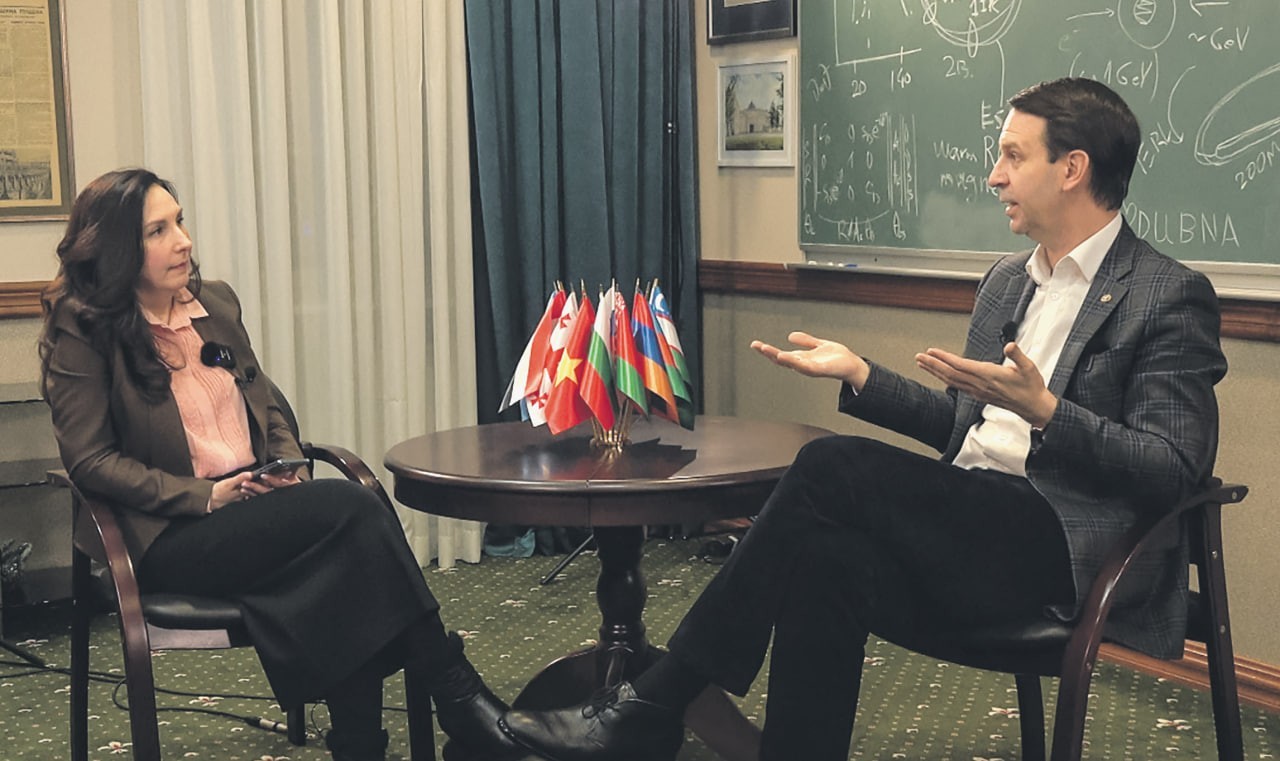
According to Trubnikov, the institute, which brings together scientists from 36 countries, maintains a unique multidisciplinary status. Research is conducted in three key areas: high-energy and nuclear physics, information technology, and "physics for life"—the application of nuclear technology in medicine, biology, and agriculture.
"Belarus is one of the founding members of JINR. As an independent state, it was one of the first to sign the agreement during those difficult 1990s," the director emphasized. He noted close collaboration with the National Academy of Sciences of Belarus, the Sosny Institute, and dozens of industrial enterprises, highlighting the expertise of Belarusian specialists in precision mechanics, optics, laser technology, and energy.
Joint projects are groundbreaking. These include participation in the creation of the NICA superconducting collider, work on the largest neutrino telescope in the Northern Hemisphere on Lake Baikal, and experiments studying the effects of cosmic radiation on living organisms. Trubnikov also focused on medical developments: this year, a new, unique facility for proton therapy for tumors, developed in part with Belarusian partners, will be operational in Dubna.
"This isn't just about contracts and economics. Companies are gaining access to new technologies, creating new products, and opening up new markets," the academician stated. He also thanked the Belarusian leadership for its consistent support of cooperation with JINR.
Among the future challenges where the alliance between the two countries could play a decisive role, the institute's director cited the development of fusion energy, the creation of powerful computers, space exploration, and breakthroughs in genetics and the chemistry of new materials.


