


Belarusians celebrate Independence Day today
09:53, 3 July

Photo by BELTA
Today Belarusians celebrate Independence Day, the key holiday of Belarusian statehood, BELTA has learned.
- Share on Facebook
- Share on VK
- Share on Twitter
The life of every nation has fateful days and events that mark the beginning of a new stage in the history of the state and contribute to the unity of all citizens. For Belarus such a milestone is the day of liberation from the Nazi invaders. It was this historic date that has become Independence Day, linking together the sacred words “Freedom” and “Independence”.
The decision to celebrate Independence Day on 3 July was made in 1996 when Belarusians cast their votes in a republican referendum on 24 November. As many as 88.18% of those who voted in the referendum voted in favor of the proposal. In December 1996 President Aleksandr Lukashenko signed a decree establishing the Day of Independence of the Republic of Belarus (the Day of the Republic) as a public holiday. It is an official day off.
This holiday has become a symbol of the national revival of our state. The decision to celebrate Independence Day on 3 July is a tribute to the heroism and steadfastness of the Belarusian nation, the selfless struggle of underground resistance fighters and partisans, and the unparalleled labor feat of those who rebuilt the republic from ruins, built factories, houses, and schools, and produced the first goods at enterprises.
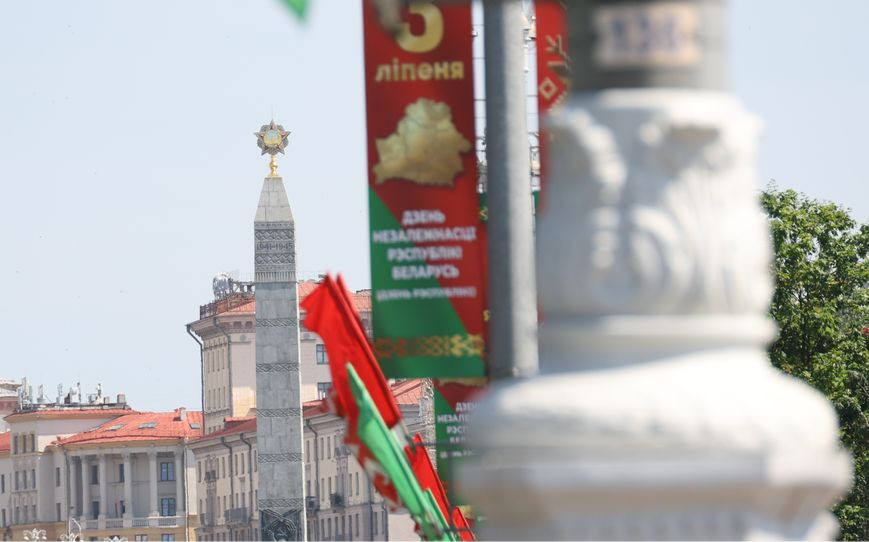
The victory that made the Belarusian statehood possible
During the Belarusian offensive operation codenamed Bagration (the largest strategic operation of the Great Patriotic War of 1941-1945), assisted by partisans, the 1st Belarusian Front and the 3rd Belarusian Front liberated the capital of Belarus from the Nazi invaders on 3 July 1944. The offensive Operation Bagration was of exceptional importance for Belarusians, this is why it is no coincidence that the day of liberation of the capital city of our republic was chosen as the date of independence. 3 July is an eternal symbol of freedom and love for the Motherland, for which Belarusians gave the most precious thing they had: their lives.
During the Great Patriotic War Belarus was the first to bear the brunt of the Nazi attacks, and on the second day of the war Minsk was subjected to merciless bombings and artillery fire. The city was completely destroyed. The water supply and the power grid were knocked out. The access railway tracks were damaged, and part of the rolling stock was destroyed.
In these complicated conditions the city was evacuated and the local military registration and enlistment offices mobilized people for the Red Army. As a result, almost 27,000 soldiers and officers were sent to the army. Volunteers from Minsk joined the ranks of the city’s defenders. The 1st Minsk Reserve Regiment, numbering about 10,000 people, was formed from among those who were drafted. Fighter units and combat worker brigades were created in all districts of the capital.
The local population provided great assistance to the Red Army in strengthening the defensive line. Residents of nearby villages and the cities of Minsk, Dzerzhinsk, and Zaslavl participated in the construction of defensive structures, delivered ammunition, and supplied food.
However, despite the fact that Hitler’s troops encountered fierce resistance on approaches to the city, on 28 June 1941 the Nazis managed to capture Minsk after all. From the first days of the occupation the city’s residents rose up to fight the enemy. 1,100 days of the occupation meant 1,100 days of selfless, heroic struggle against the Nazi invaders. Minsk was occupied, but not conquered.
The Nazis established a brutal occupation regime in Minsk. It was built around a terror campaign targeting civilians. During the occupation more than 20 branches and subsidiaries of concentration camps operated in Minsk. One of the first concentration camps in the Nazi-occupied territory of Belarus was established in Drozdy outside Minsk in early July 1941.
But the people of Minsk did not surrender to the enemy. They began to set up underground resistance groups and sabotage units. By the winter of 1941 about 50 separate underground resistance groups had been formed in the city. They were also set up in prisoner-of-war camps. In 1944 the number of combat groups operating at the railway junction, in industrial enterprises and institutions of the city rose to 120. During the years of the occupation more than 6,000 patriots went through the crucible of the underground resistance movement. Heroes of the underground resistance movement carried out more than 1,500 sabotage operations. The most prominent one was the elimination of Wilhelm Kube, the executioner of the Belarusian people. For their courage and heroism 600 members of the Minsk underground resistance movement were awarded orders and medals and eight people were awarded the title of Hero of the Soviet Union. Today names of the Minsk underground resistance fighters are immortalized in street names.
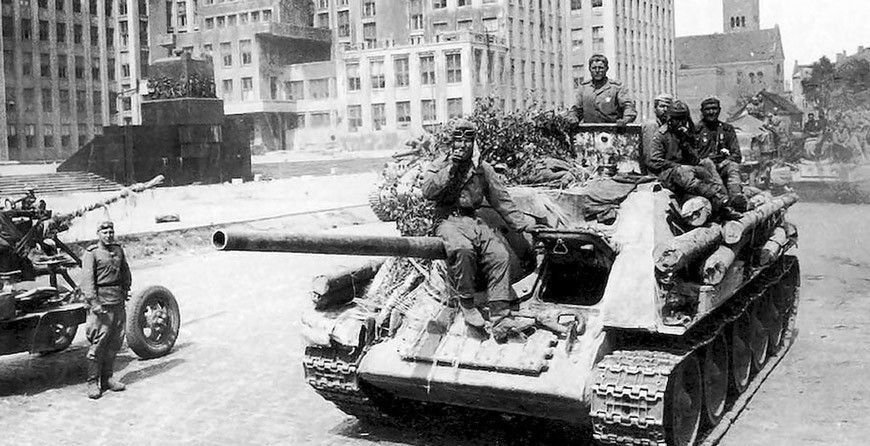
The Belarusian offensive Operation Bagration was carried out from 23 June through 29 August 1944 with the aim of defeating the Nazi’s Army Group Center and liberating Belarus. It consisted of two stages. During the first stage (23 June through 4 July) the Vitebsk-Orsha operation, the Mogilev operation, the Bobruisk operation, and the Polotsk operation were carried out and the encirclement of the enemy group in Minsk was completed. During the second stage (from 5 July through 29 August) the army fronts worked together and successfully carried out five offensive operations: the Siauliai, Vilnius, Kaunas, Bialystok, and Lublin-Brest operations. 28 July 1944 saw the liberation of the city of Brest. The Nazi invaders were completely driven out of the territory of Belarus.
On 26 June 1974 a decree was signed to award Minsk the honorary title “Hero city” accompanied by the Order of Lenin and the Gold Star Medal. The award ceremony took place four years later, on 25 June 1978.
Belarus knows the price of freedom: it lost every third resident in the Great Patriotic War. Traditionally, on 3 July the Belarusian nation pays tribute of respect to the heroism and resilience of soldiers, the selfless struggle of underground resistance fighters and partisans, the labor feat of those who raised the country from the ruins.
Accomplishments of modern Belarus
The modern generation of Belarusians has managed to correctly exploit the granted opportunity to build their own state. Over the years of sovereignty a reliable foundation for the confident development of the country has been created in Belarus.
A unique political model with a well-developed system of representative bodies has been established in our country. Granting a constitutional and legal status to the Belarusian People’s Congress has strengthened the foundations of Belarusian statehood and has demonstrated that Belarusians are a united nation capable of setting and achieving its own goals.
Over the years of sovereignty our country has developed its own model of statehood with a strong social policy and a people-first economy. A key priority of the government policy is to implement various social programs aimed at improving the quality of life of citizens and the society as a whole.
Interethnic peace and harmony are maintained in the republic where everyone has an opportunity to live and work freely regardless of their faith or nationality. Belarus has become a second home for people fleeing wars and conflicts. Today our country is home to representatives of about 150 nationalities, with 25 registered religious denominations and movements.
In 2024 Belarus became a full-fledged space power by cooperating with Russia and sending into orbit the first cosmonaut in its sovereign history Marina Vasilevskaya. The Republic of Belarus became the 48th state in the list of countries that have managed to send their representatives into outer space.
However, the most important accomplishment is the fact that all conditions have been enabled in Belarus to ensure peace, stability, and territorial integrity of the state.
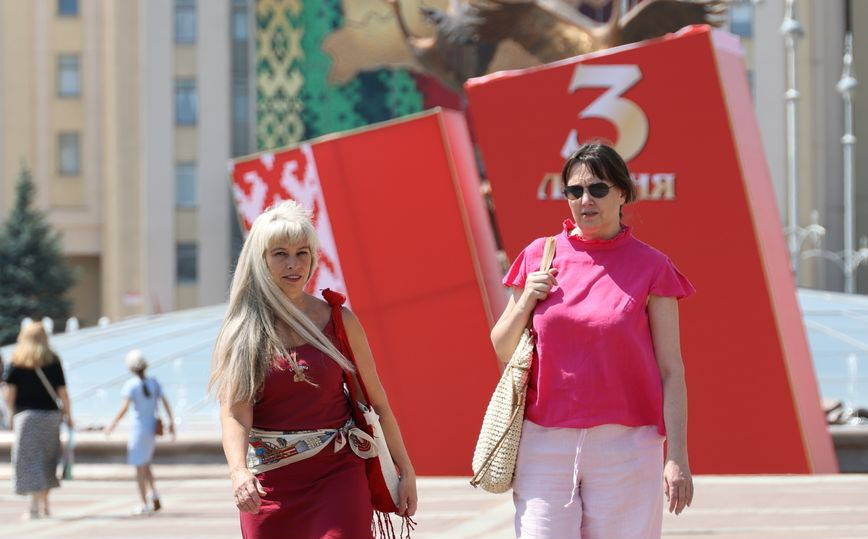
We and the future generations should remember and appreciate everything that has been done for peace and security of our country. One should not forget the fact that these and many other accomplishments of independent Belarus would have been impossible without the Great Victory. The modern generation of Belarusians should always remember heroic deeds of their ancestors.
Preservation of historical memory
Preservation of the historical memory is an integral part of the national security of Belarus. The updated Constitution of the Republic of Belarus clearly states: “The state shall ensure the preservation of historical truth and memory of heroic deeds of the Belarusian nation during the Great Patriotic War.” At the same time, the Constitution stipulates that it is the duty of citizens of the Republic of Belarus to preserve historical memory of the heroic deeds of the Belarusian nation.
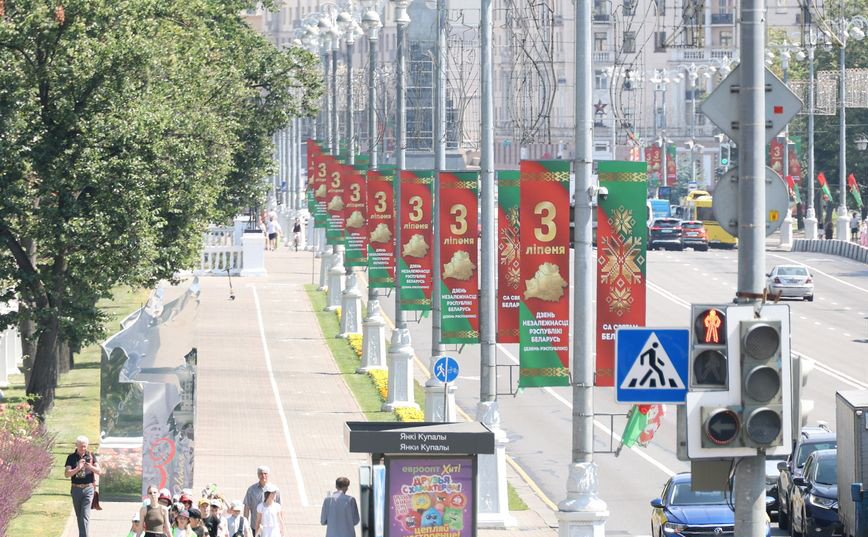
The laws “On preventing the rehabilitation of Nazism” and “On the genocide of the Belarusian people” have been worked out and passed in Belarus. They are aimed at preserving the historical memory and suppressing the falsification of historical events.
The Prosecutor General’s Office of Belarus is investigating a criminal case into the genocide of the Belarusian people during the Great Patriotic War. The investigation has added new names to the list of villages and hamlets that shared the tragic fate of Khatyn. In other words, those that were burned down completely together with their residents and have not recovered after the war. As of today it includes at least 290 names. In Belarus’ territory as many as 578 death camps operated and at least 187 punitive operations were carried out. During the years of the Nazi occupation in the territory of the BSSR at least 12,868 rural communities were completely or partially destroyed, including together with their residents.
Independence Day is the key holiday of Belarusian statehood. It is a historically significant date which has become a symbol of freedom and peace. This holiday is precious to all Belarusians as memory about those, who defended the independence of their Motherland in battlefields.
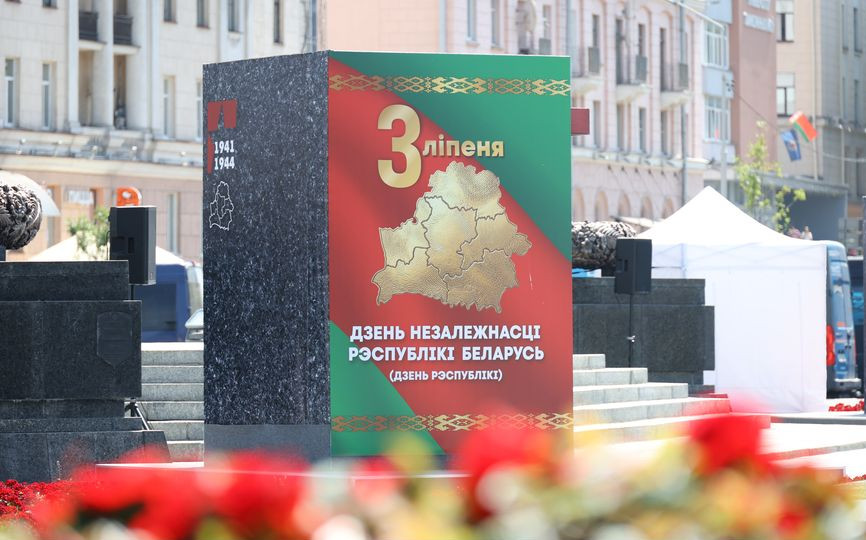
Our country celebrates Independence Day every year in a solemn atmosphere. Festive events will traditionally take place all over the country this year. In Minsk the main celebration venue will be located outside the Sports Palace. A festive fair will take place over there. It will be accompanied by the concert “Together for Belarus!”. About 20 themed sites will operate in various districts of the city during the day. A major festive concert near the Minsk – Hero City stele will be the central event in the capital city. The festive evening will end with an anthem singalong as well as fireworks that will be the final point of the celebrations.


