


Belarus at the UN: key takeaways from Ryzhenkov’s New York visit
18:00, 27 September

Photo: Belarus' MFA
The Belarusian delegation, headed by Minister of Foreign Affairs Maxim Ryzhenkov, took part in the UN General Assembly High-Level Week 2026. The traditional New York events brought together leaders and foreign ministers from across the globe. For Belarus, this was both an opportunity to set out its position on key international issues and a platform for meetings with partners and new agreements - from visa abolition to the launch of negotiations on the Eurasian Charter of Diversity and Multipolarity in the 21st Century. How does Minsk see the future of the global system, and what should the UN do in a changing world? BelTA’s review covers the main statements, meetings and initiatives of Belarusian diplomacy.
- Share on Facebook
- Share on VK
- Share on Twitter
Bilateral diplomacy: trade, security and new projects
On the sidelines of the UN General Assembly, Maxim Ryzhenkov held a large number of meetings with foreign ministers of countries in Europe, Asia, Africa, the Middle East and Latin America. The focus was on the development of political dialogue, trade and economic cooperation, new joint projects, humanitarian ties and interaction on international platforms.
During talks with Iran, Belarus confirmed a shared position on the need for a peaceful resolution of the conflict in the Middle East. Talks with the DPRK covered the prospects of opening a Belarusian embassy in Pyongyang and visa-free travel. With Cuba, Minsk signaled its readiness to keep up humanitarian assistance and build bilateral cooperation. Other talks centered on trade, deliveries of Belarusian products and machinery, agriculture, education and investment.
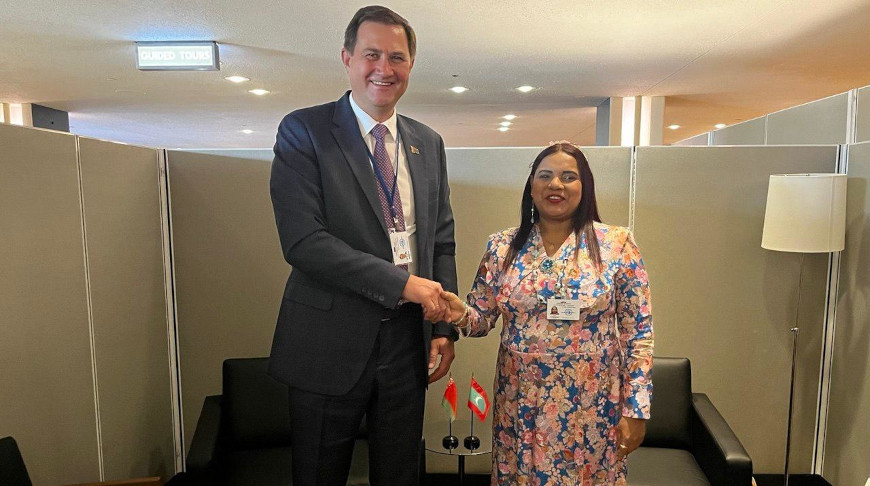
In New York, Belarus signed a mutual visa waiver agreement with the Maldives. The document is intended to simplify travel for citizens of the two countries and create additional opportunities for the development of tourist, business and humanitarian contacts. Another notable result: Oman has agreed to send its first-ever ambassador to Minsk.
Talks with European neighbors stood out as a separate track. On the sidelines of the General Assembly, Maxim Ryzhenkov sat down with Polish Foreign Minister Radosław Sikorski. The sides discussed where Belarusian-Polish relations stand and how they might develop.
Maxim Ryzhenkov also discussed the entire range of bilateral relations and possible directions for their development with his Slovak counterpart. The ministers reviewed the situation in the region, expressing confidence in the need to keep communication channels open for the earliest possible settlement of the conflict in Ukraine.
Talks with Nepalese Foreign Minister Shisir Khanal focused on finding new drivers of trade and economic cooperation and the possible recruitment of Nepalese citizens to work in Belarus.
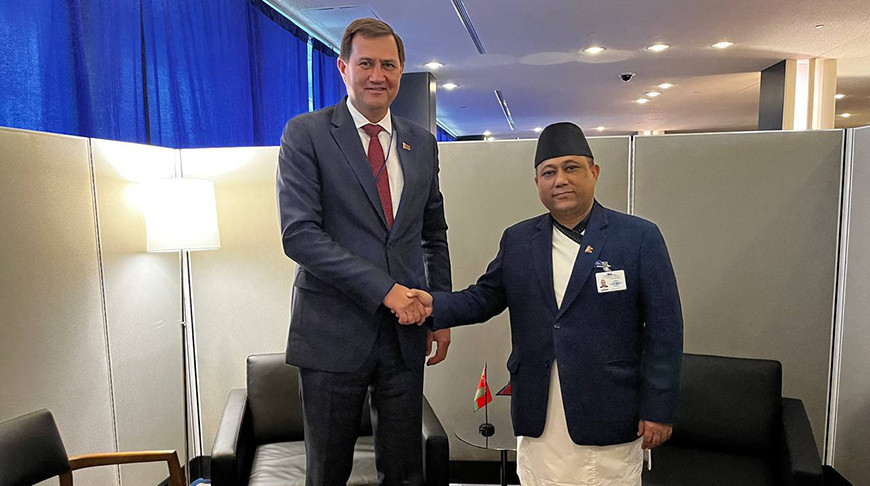
“Particular attention was given to creating an effective mechanism for the organized recruitment of Nepalese citizens for work in Belarus - one that protects their labor and social rights and ensures their safety. The sides agreed to hold consultations on the matter, coordinated by the two countries’ foreign ministries,” the Ministry of Foreign Affairs press service said.
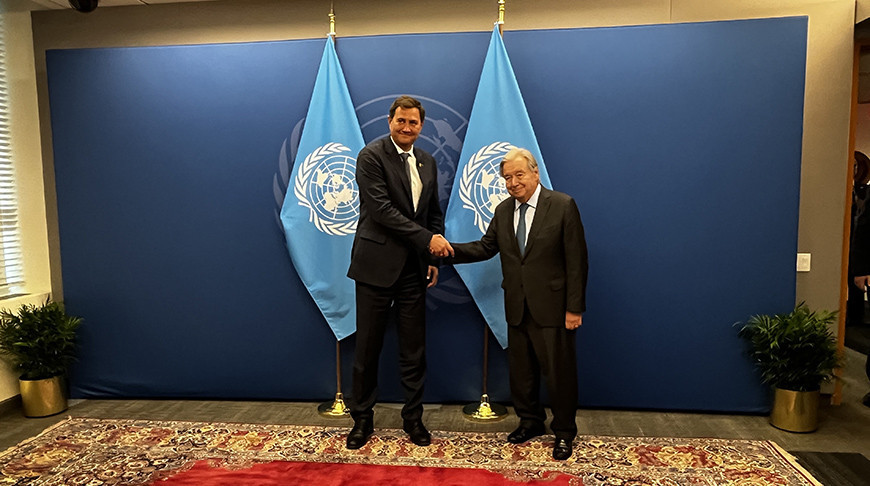
At UN headquarters, Maxim Ryzhenkov also held a meeting with UN Secretary-General António Guterres. The minister thanked him for supporting Belarus’ peace initiatives, and the secretary-general, for his part, praised Belarus’ contribution to the work of the UN.
Maxim Ryzhenkov’s visit to New York also had an unusual diplomatic detail. On the sidelines of the General Assembly, he gave colleagues souvenirs: two coffee blends - ‘Peaceful settlement coffee’ and ‘Politics-free coffee’ Against the backdrop of harsh rhetoric around conflicts, sanctions and the structure of the world system, the gesture looked like a kind of continuation of the diplomatic agenda in an informal format: behind complex international disputes there remain people who still have to find a common language, including quite literally over a cup of coffee.
The Eurasian Charter: from idea to negotiations
The idea of the Eurasian Charter of Diversity and Multipolarity in the 21st Century emerged as a proposal to form a common document that would reflect the changes taking place in the world and enshrine the principles of equality of states, respect for sovereignty, diversity of development models and multipolarity. For Belarus and Russia, this initiative became one of the elements of a broader conversation about a new architecture of international relations.
In New York, the idea moved from concept to practice: on 25 September, on the sidelines of the UN General Assembly, official negotiations on the document got under way. The ministerial meeting, which gathered representatives of various Eurasian states, was co-chaired by the foreign ministers of Belarus and Russia, Maxim Ryzhenkov and Sergey Lavrov.
The ministers noted that the negotiating process on the text of the charter will contribute to establishing an atmosphere of trust and defining common approaches to addressing security problems in the Eurasian space, based on a balance of interests of all the states involved.
As was stated following the event, the charter should enshrine the principles of equality of states, the indivisibility of security and the responsibility of Eurasian countries for resolving regional problems. At the same time, it concerns economic connectivity, humanitarian contacts, civilizational dialogue and equal participation in decision-making. The participants in the meeting adopted a joint statement and approved the rules of procedure for the working group preparing the document.
The main thesis: the UN must once again become a working mechanism
The central event of the high-level week is always the general debate in the General Assembly hall. By established diplomatic tradition, Brazil opens it, followed by the United States as the host country.
The plenary sessions were devoted to a topical theme – Restoring trust, managing transformation: A United Nations that delivers for all. As Maxim Ryzhenkov emphasized in his speech, trust between states today is at its lowest point since the Cold War.
“The necessary reforms are stalling. More and more voices are saying that the UN is not working in the interests of all and is incapable of managing change. This is largely because we, the Member States, have in large part, become mired in endless debates, but have failed to give the organization a real opportunity to act. That is precisely why the theme of this session sounds today like a verdict on our collective indecision, and at the same time as a diagnosis, calling for urgent treatment,” the Belarusian diplomat said.
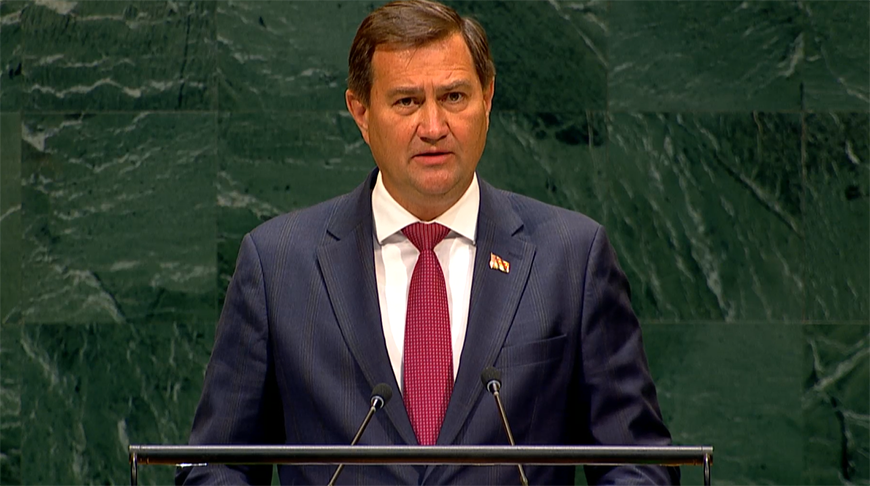
According to him, the systemic crisis of international relations is visible everywhere: the air is filled with anxiety from Europe to the Middle East, from Asia to Africa and Latin America.
“Humanity is once again teetering on the brink of existence. That is a brink that we had hoped we had left for good in the last century. How did we reach this point?” the minister asked. “It is no mere coincidence. It is the inevitable result of actions by certain states aimed at deliberately undermining the system of international relations so that the world would develop not according to the laws of peaceful coexistence, but rather the principle of ‘might makes right’ and political selfishness. If we truly want to restore trust, we must not hide behind diplomatic niceties, but honestly identify the causes of crises.”
Belarus, Maxim Ryzhenkov recalled, is a founding state of the UN, and therefore is interested not in weakening the organization but in restoring its role. “We have a recipe for restoring the UN to its intended purpose. And it's very simple. Individual countries must stop using the organization, our shared organization, for their own selfish ends, and they must begin to think about the fate of our planet, our shared planet as a whole,” the diplomat said.
But the minister did not stop there. He moved from a general assessment to concrete proposals. The first is reform of the UN Security Council. In Belarus’ view, its composition must take into account the growing role of the countries of the Global Majority, including through expanding the category of permanent members to include states of the Global South.
The second is a return to international law and the UN Charter instead of the vague concept of a “rules-based order”. It is the Charter, Maxim Ryzhenkov emphasized, that remains the universal document enshrining the sovereign equality of states.
The third is reform of the UN specialized agencies and international financial institutions. Belarus advocates changing the system of representation and votes in them, taking into account the demographic and economic realities of the 21st century.
Maxim Ryzhenkov added that with each new crisis, ordinary people around the world ask themselves: why does the UN not work to establish peace? That is, people are not interested in the institutional limitations of the UN - they want to see action and results, and there are none.
“It is therefore no surprise that many equate the work of our organization with its secretariat, which is dominated by representatives of Western countries. And just like in Brussels, this is a world of comfortable offices, of sky high salaries and a lifestyle that is very far removed from the concerns of those in need of assistance in various corners of our planet. Many of those officials have never even been to the conflict zones, and they are much further away from them than any volunteer on the front lines. And this is, of course, not so much a criticism of the Secretariat. Rather, it is a criticism of us, the member States, who have allowed this to become the norm, who have allowed this to happen,” the minister said.
They always have a green light
The sharpest part of the minister’s speech was devoted to the West’s relations with the rest of the world. Here Maxim Ryzhenkov used a road-sign metaphor that may well have become the most memorable image in his statements.
“Unfortunately, however, the desire to live at the expense of others has remained the dominant narrative in the collective West's development,” the Belarusian diplomat stated. “During the Cold War the balance of power was maintained by a system of checks and balances between the two opposing political systems. But since the 1990s, when that balance collapsed, the policy of unrestrained superiority has begun to grow rapidly.”
According to him, in recent years this policy has reached its peak: Western countries have effectively trampled on international law and begun to force everyone to act on the basis of so-called “rules”, destroying unwelcomed countries and suppressing unbowed peoples. “And these rules are like traffic signs in a city that they themselves have designed. They always have a green light while everyone else faces strict restrictions,” Maxim Ryzhenkov noted.
Ukraine: Belarus once again declared its readiness to contribute to peace
The Belarusian minister of foreign affairs also touched on the situation in the region, emphasizing that Belarus is ready to continue doing everything possible for the earliest possible achievement of peace in Ukraine.
“We've proven our ability to serve as a reliable platform for negotiations, and we're ready to continue doing everything possible to achieve peace in Ukraine as soon as possible. But let's be frank, any lasting peace in that country is not possible without addressing the root causes, which have been ignored for years. These include plans to bring Ukraine into NATO. Contrary to all security realities, the failure to implement the Minsk agreements, which were the only legitimate path to peace,” the minister said.
Maxim Ryzhenkov recalled that the implementation of these agreements was sabotaged in order to buy time and give Ukraine the opportunity to rearm. Western politicians have acknowledged this as well.
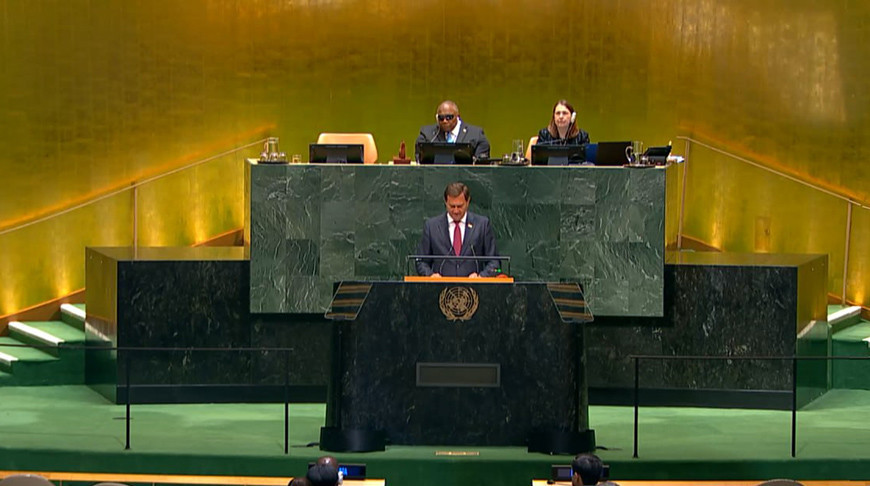
“The endless supply of weapons to Ukraine will only lead to the destruction of Ukraine itself and its people. We call for the prompt beginning of genuine negotiations that will lead to a lasting peace,” the diplomat said.
Africa and historical justice
In March, the UN General Assembly adopted a resolution declaring the trade in enslaved Africans and the racial enslavement of Africans a crime against humanity. Belarus supported the document without hesitation, and it was not merely a diplomatic gesture.
As Maxim Ryzhenkov emphasized at the UN, it was the voice of a country that has itself endured a similar hellish chapter in history. “We know what genocide is. A third of our population during the war was murdered in cold blood and tortured by civilized Europeans, united by Hitler 85 years ago. Now their descendants are telling us that they had have nothing to do with this, and nor did their grandfathers, supposedly. But that village house filled with Belarusian children, the elderly and women, was not burned down by the Führer himself. And there were thousands of such houses,” the minister noted.
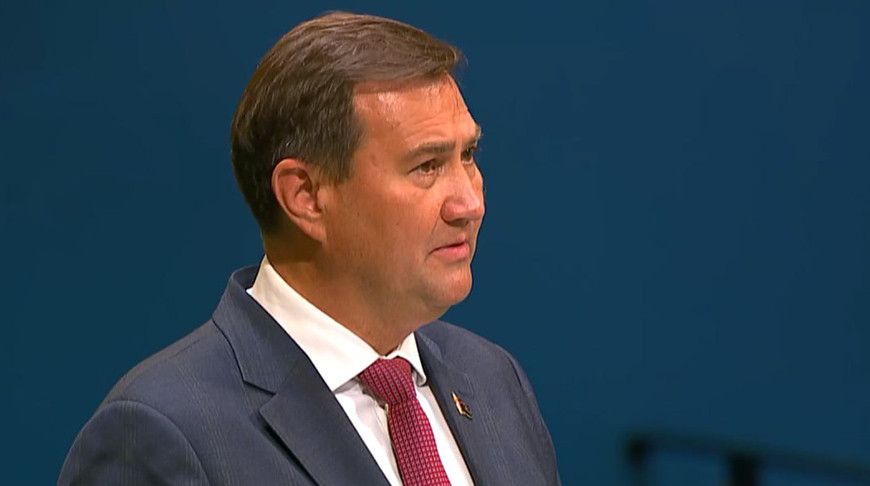
Belarus also knows what the plundering of cultural heritage means: its wealth, resources and works of art were taken to the West. Young people were forcibly driven into slavery there too - to Europe. “And today, facing unprecedented sanctions, we have once again felt what it means to be a target. That is why we wholeheartedly and with fraternal feelings, support those who demand historical justice, including on the issue of reparations raised by the African Union,” the minister said. “But reparations are not just about money, they are also about respect for memory. They are about returning people's own history to them. How many names remain on the world map that have erased millennia old memory?”
As an example, he cited the famous waterfall in southern Africa, which the peoples of Zimbabwe had called Mosi-oa-Tunya, meaning “the smoke that thunders”, for centuries. The colonizers “discovered” it and named it after their Queen Victoria, who had never even been to Africa. “What is that, if not identity theft?” the Belarusian diplomat asked rhetorically.
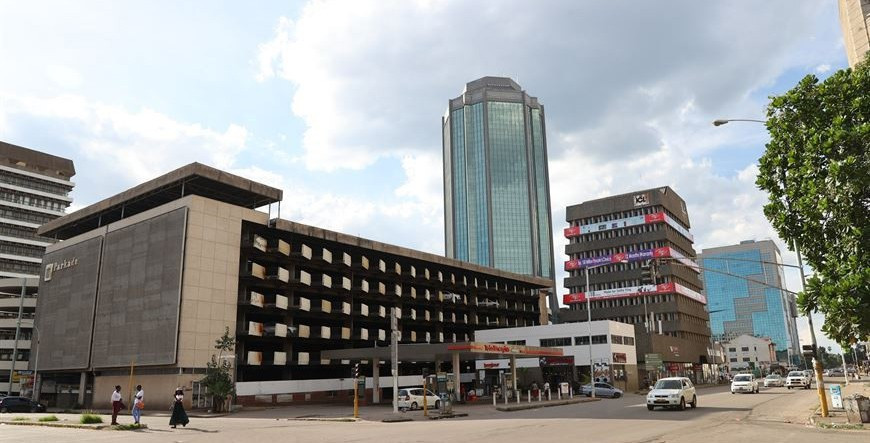
The Belarusian delegation voiced similar approaches at a separate high-level event organized on the sidelines of the General Assembly on the initiative of the president of Ghana.
Belarus supported the efforts of African states to return cultural valuables, ensure historical justice and compensate for the damage inflicted during the colonial period. It was proposed to step up international efforts in this area through scholarly communities, historians, as well as museums, archives and libraries.
As for the proposal to return the original names to geographical objects in African countries, this initiative of the Belarusian side aroused keen interest among the participants in the event and was supported, the Belarusian Ministry of Foreign Affairs said.
On the architecture of cooperation and the clash of civilizations
At a high-level meeting marking the 40th anniversary of the Declaration on the Right to Development, Maxim Ryzhenkov stated that the future lies with a new architecture of international economic cooperation.
Today’s confrontation merely underscores that the world has still not managed to overcome the split that emerged back in the last century. Those states that voted against the declaration or chose to abstain in 1986 are today effectively blocking the adoption of the Pact for Development. What lies behind their position? The answer is simple: they want to go on living as they have lived for centuries - that is, at the expense of others, the minister said.
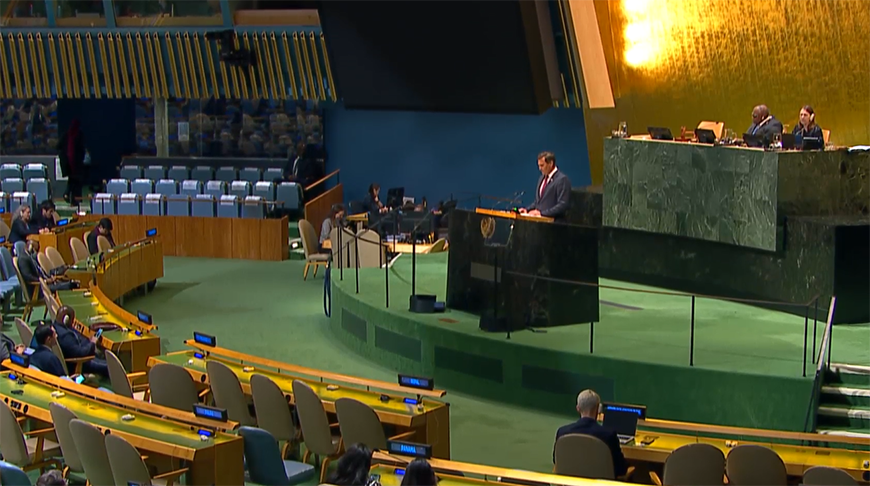
That is precisely why, the minister emphasized, these states are trying to hold back the development of the countries of the Global Majority through a policy of neocolonialism, expressed in illegal unilateral coercive measures, artificial barriers to trade and technological exchange, the imposition of so-called “democracy” and “reforms,” and other similar actions.
“Belarus, like many other countries of the Global Majority, feels the impact of these instruments aimed at artificially limiting our progress. We decisively reject such approaches and reject the right of the strong as the basis of the world order. We are convinced that the future lies with the gradual but steady formation of a new architecture of international economic cooperation,” the minister said.
Such an architecture, Maxim Ryzhenkov explained, will be oriented towards the interests of ordinary people and built on the principles of equality, non-discrimination and the fair distribution of benefits.
It must also take into account the interests of the Global Majority and be based on the rule of law and respect for sovereignty, rather than on a “rules-based order” that is reinvented by Western countries each time, the minister added.
Speaking at the UN, Maxim Ryzhenkov also drew attention to the continuing clash of civilizations, which, in Belarus’ assessment, is deliberately cultivated by the West to destabilize the countries of the Global Majority - through incitement to war, fueling regional conflicts, and the introduction of unilateral coercive measures. This topic was raised by the minister of foreign affairs at the ministerial meeting of the Group of Friends of the Alliance of Civilizations.
Maxim Ryzhenkov stated that it is unacceptable for individual members of the group to pursue policies involving dictate, threats and illegal sanctions. He noted that double standards leading to civilizational tension must be abolished.
How to unite efforts in global healthcare
Maxim Ryzhenkov called for solidarity among states, but this time in the field of global healthcare, at a high-level meeting on pandemic prevention, preparedness and response.
The minister recalled that the COVID-19 pandemic clearly demonstrated global interdependence: the virus spread rapidly across the world, recognizing neither countries, nor borders, nor peoples. However, instead of uniting, the world became divided: borders closed, most states shut themselves inside their own national “fortresses”, and international trade as a whole contracted significantly.
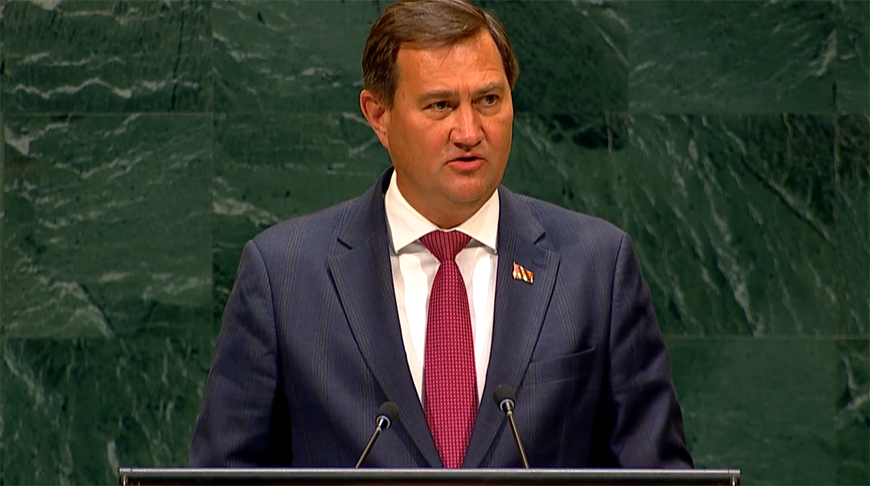
“At the same time, a group of Western countries took on the role of teacher, giving instructions to everyone else on how to behave: close your borders, stop production, drive the population back into their homes. Moreover, by monopolizing the development of vaccines and controlling their distribution, the West in effect also arrogated to itself the right to determine the final diagnosis. And that is nothing other than corruption serving the enrichment of pharmaceutical transnational corporations,” the minister said.
According to him, looking back, it is obvious that the social and societal costs exceeded the benefits of the restrictions by an order of magnitude. Belarus at the time foresaw these risks and therefore chose a different, more far-sighted path - to remain open, actively advocating the pooling of efforts.
In 2021, Belarus supported the idea of developing an international agreement on pandemics, actively participating in the negotiations and putting forward concrete proposals. “However, today we see that efforts cannot be united. While experts argue over the wording of the protocol to the agreement regulating the system of access to pathogens and the sharing of benefits, EU countries continue a policy of sanctions that block access for many countries to vital medicines, vaccines and medical equipment. That is why we call for clearly enshrining in the protocol the obligation to refrain from introducing any restrictions on the supply of medical products during emergencies,” the minister said.
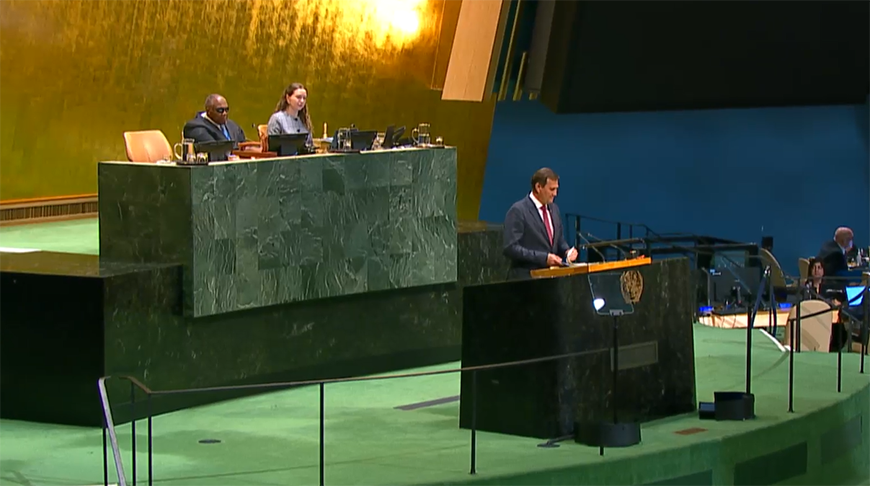
Maxim Ryzhenkov added that solidarity in the field of global healthcare should be expressed in the timely exchange of information, joint research, the strengthening of epidemiological surveillance and, critically, mutual support.
On the same day, the Belarusian minister of foreign affairs met with WHO Director-General Tedros Adhanom Ghebreyesus. Among possible areas of cooperation, access to medicine procurement on international platforms, the training of specialists and the use of Belarusian experience on the effects of radiation on human health were discussed.
Choosing a different path
Many of these trends were spoken about at the UN General Assembly last year as well. Belarus, and other states sharing its position, called on the international community to act. But things are only getting worse.
“Belarus and the countries of the global majority do not wish to go down with the wreckage of this ship. And we are choosing a different path. We are building a multipolar and just world of equal states in the interests of all of our peoples. We have no other choice!” Maxim Ryzhenkov declared from the main UN rostrum.
That, perhaps, became the main message of the Belarusian delegation in New York.
Screenshots from webtv.un.org, photos by BelTA


