


The second part of the presentation of the large‑scale sociological study started in Minsk
12:00, 16 September

Photo: soyuz.by
On September 16, the second part of the presentation of a large‑scale comprehensive republican sociological study, prepared by the Institute of Sociology of the National Academy of Sciences of Belarus at the request of the Belarusian Institute for Strategic Studies, was launched, a Soyuz.by correspondent reports.
- Share on Facebook
- Share on VK
- Share on Twitter
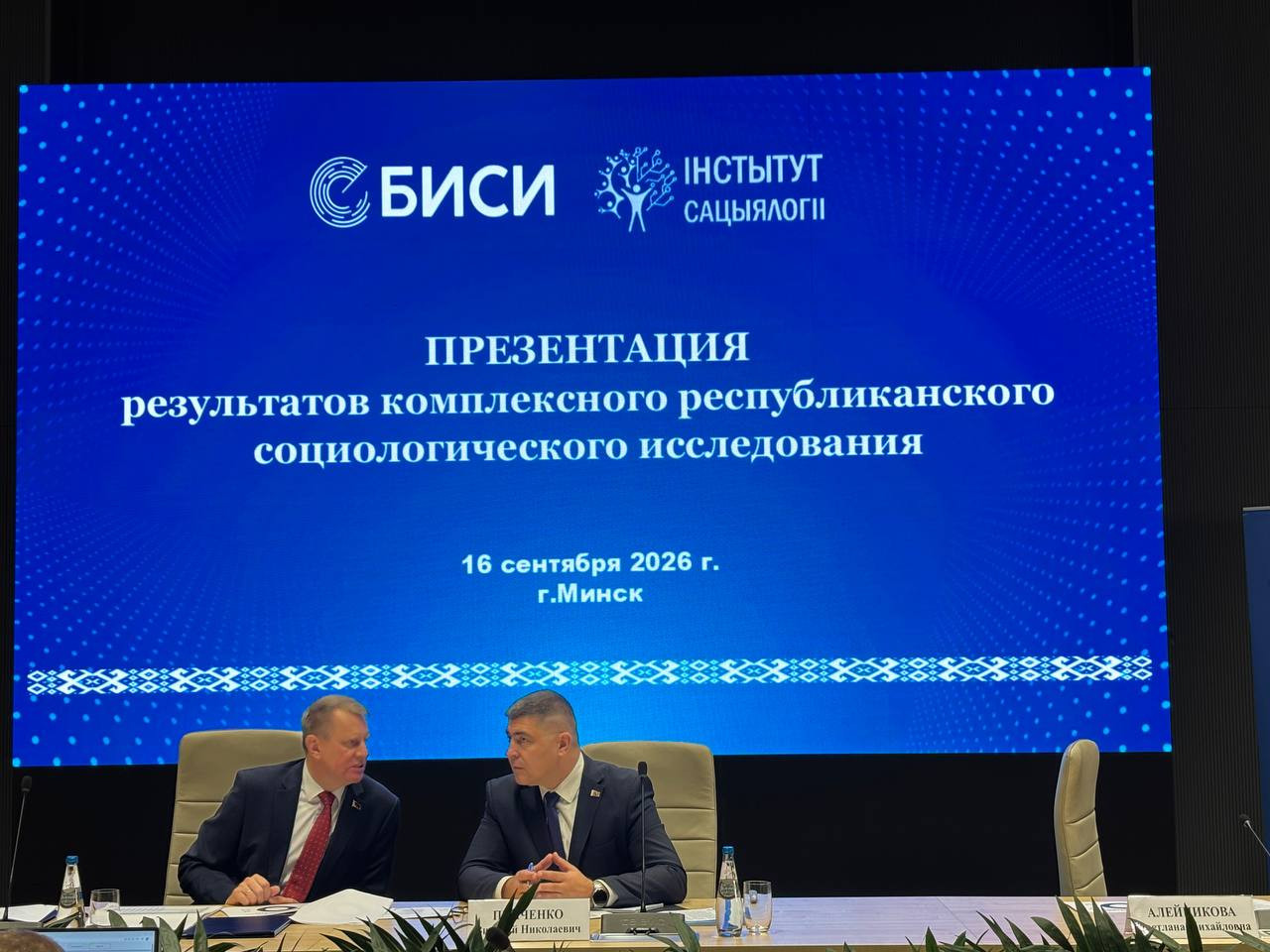
The presentation is devoted to the socio‑political component of the research conducted in July–August 2026.
Among the speakers are Vitaly Punchenko, deputy director of Belarusian Institute of Strategic Researches; political scientist Vadim Elfimov; BISR analyst Svetlana Aleynikova; and Nikolai Myslivets, director of the Institute of Sociology of the National Academy of Sciences.
“We are holding this presentation on the eve of a national holiday — National Unity Day. Issues of trust in the authorities are very important, and this is emphasized by the head of our state,” Vitaly Punchenko noted. “We will be talking about trends related to public sentiment. Our research has shown a high level of trust in the republican authorities. At the same time, there is a demand among citizens for personal contact with local authorities,” the deputy director of BISR emphasized.
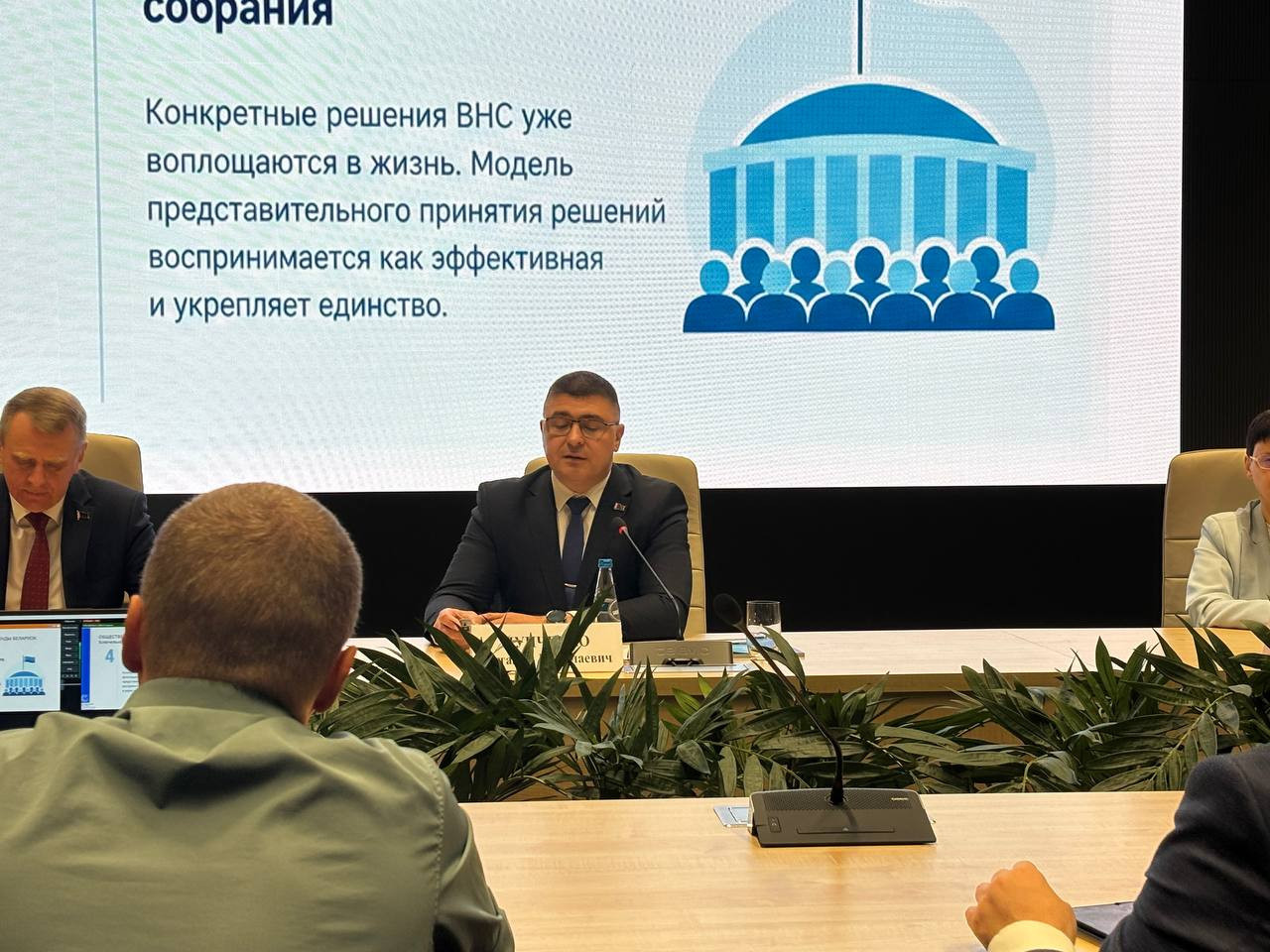
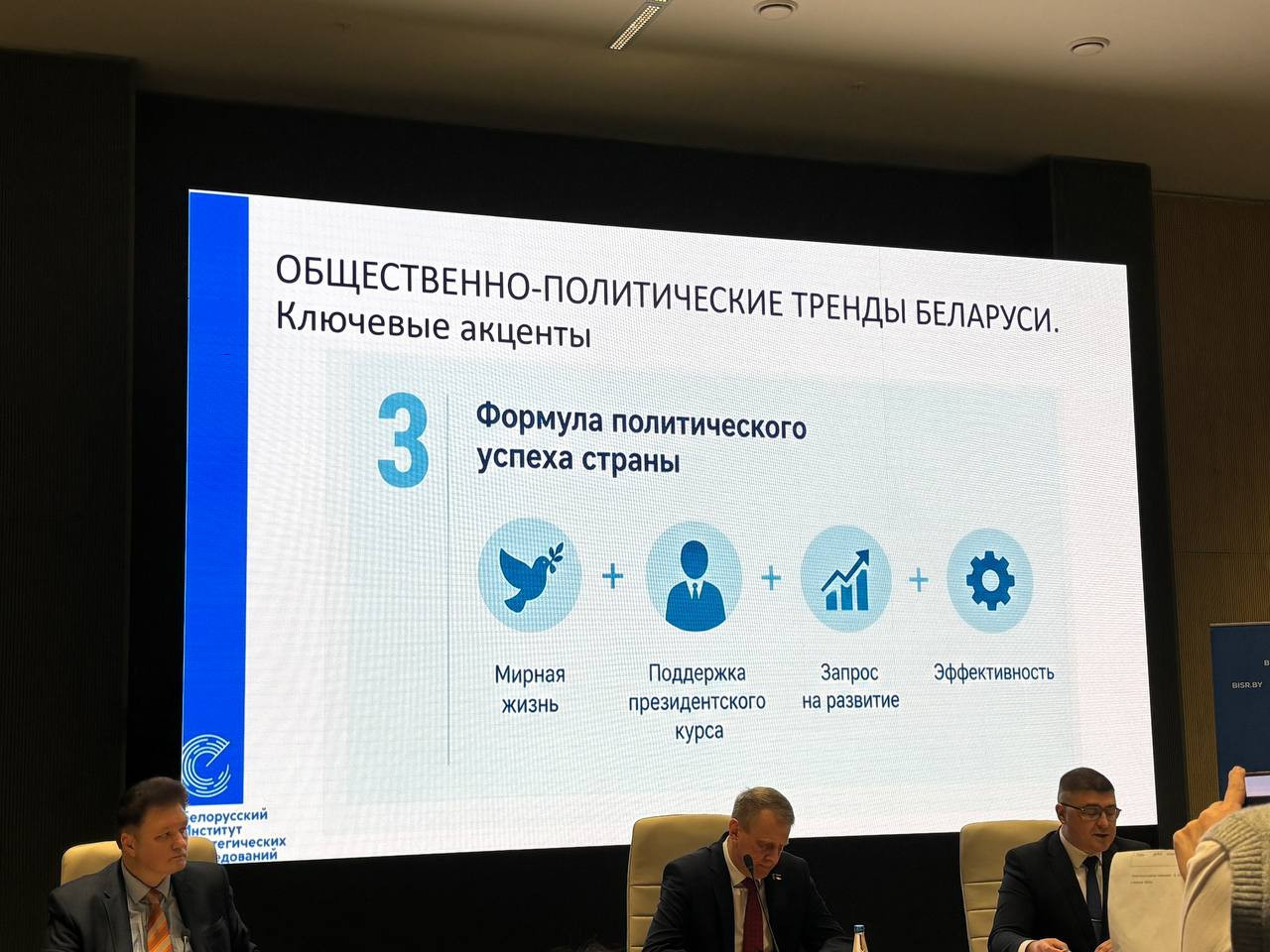
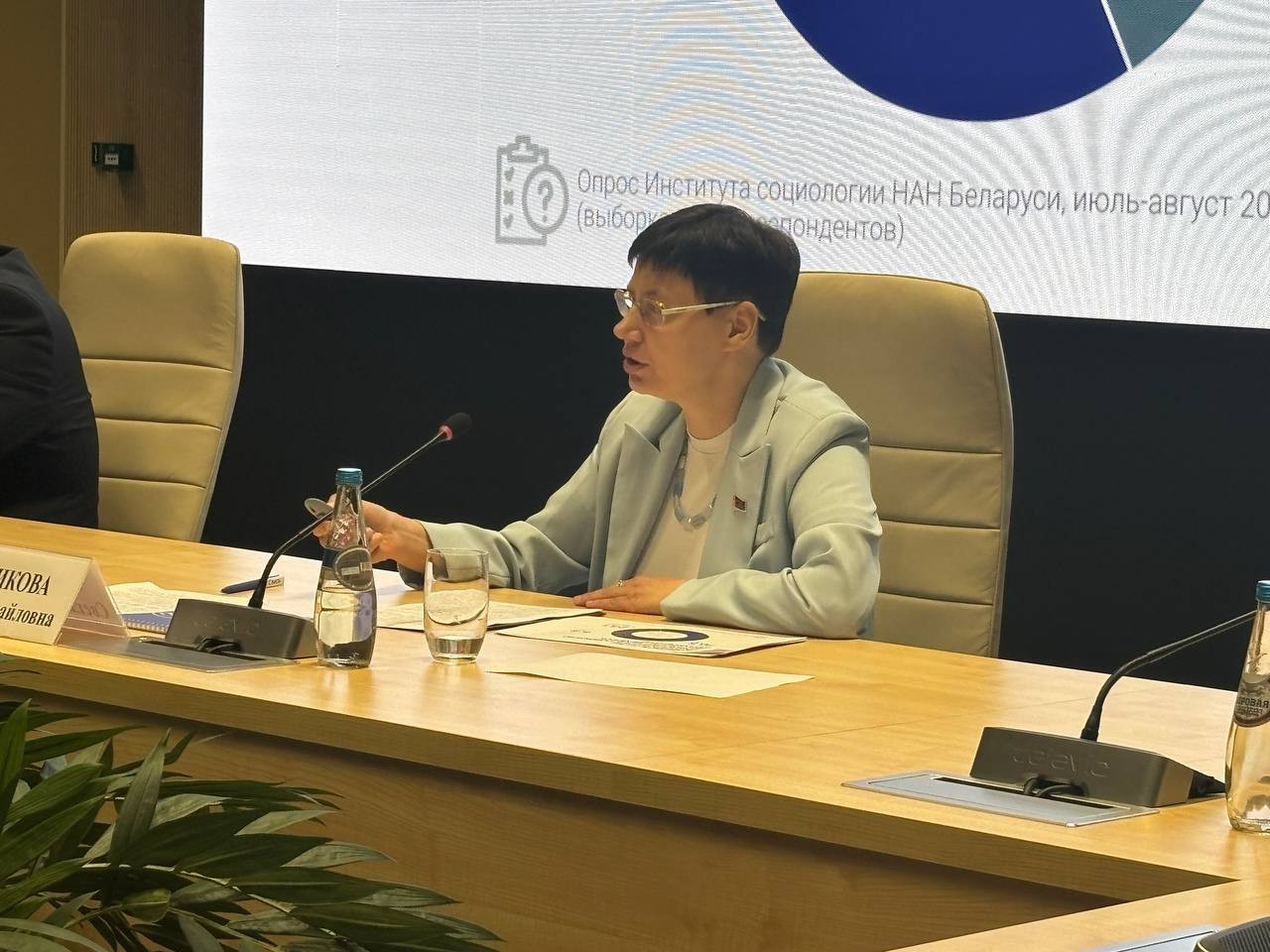
BISR analyst Svetlana Aleynikova noted that the study showed that citizens perceive the republican government as an institution, while they perceive local government as a personal experience, a point of contact between an individual and the state.
According to her, it is precisely through the lens of the institution of power that people see the work of the government and rate its performance very highly.
“A very important nuance is feedback. For example, when developing the Program for Socio‑Economic Development, the Council of Ministers carried out painstaking work. The program was preceded by a large‑scale survey, including on the ‘People’s Five‑Year Plan’ platform, where people submitted proposals and expressed their initiatives en masse, and these were taken into account. People see this, and it contributes to the high ratings,” the BISR analyst emphasized.
The sociological study involved 2,045 respondents, including 22.3% from Minsk, 16.3% from the Minsk Region, 14.3% from the Gomel Region, 14.2% from the Brest Region, 11.7% from the Vitebsk Region, 10.7% from the Grodno Region, and 10.5% from the Mogilev Region. Among them, 78.9% were urban residents and 21.1% were rural residents.
55.3% of the respondents are women and 44.7% of men. They belong to different age groups: 18.6% of participants are 18-30 years old, 51.8% of participants are from 31 to 57 years old for women and 62 years old for men, 29.6% are from 58 years old for women and 63 years old for men.
40.9% of the respondents have a higher education degree, 44.2% have vocational or technical, or secondary specialized education, and 14.9% have basic (up to 9 grades) or secondary general (up to 11 grades) education.
55.4% of the study participants are married, 17.3% are single/unmarried, 12.9% are widowed, and 10.8% are divorced. 75.6% of the respondents have children.


