


Belarusian MP: WW2 events are distorted most often
17:16, 21 October

Photo: soyuz.by
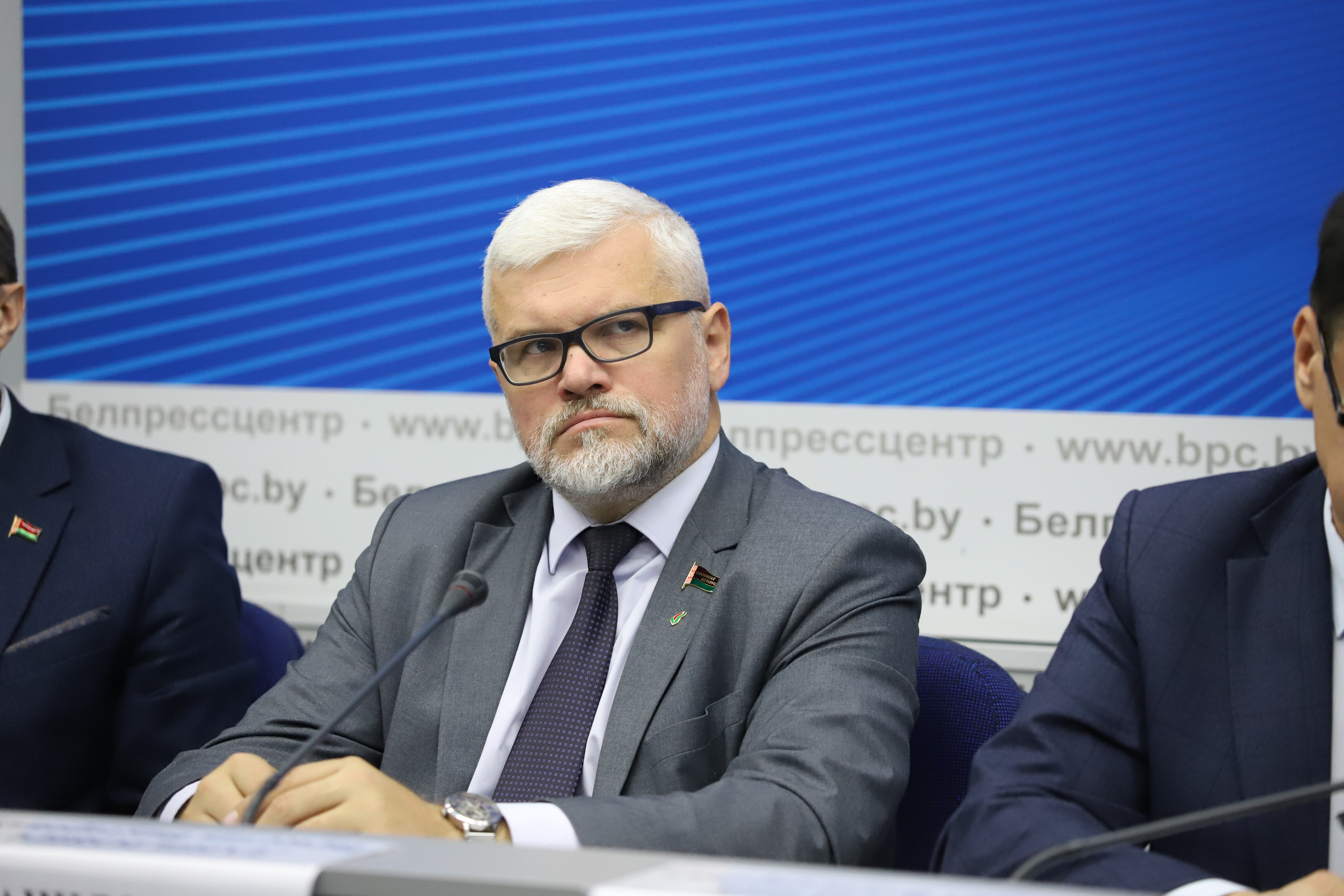
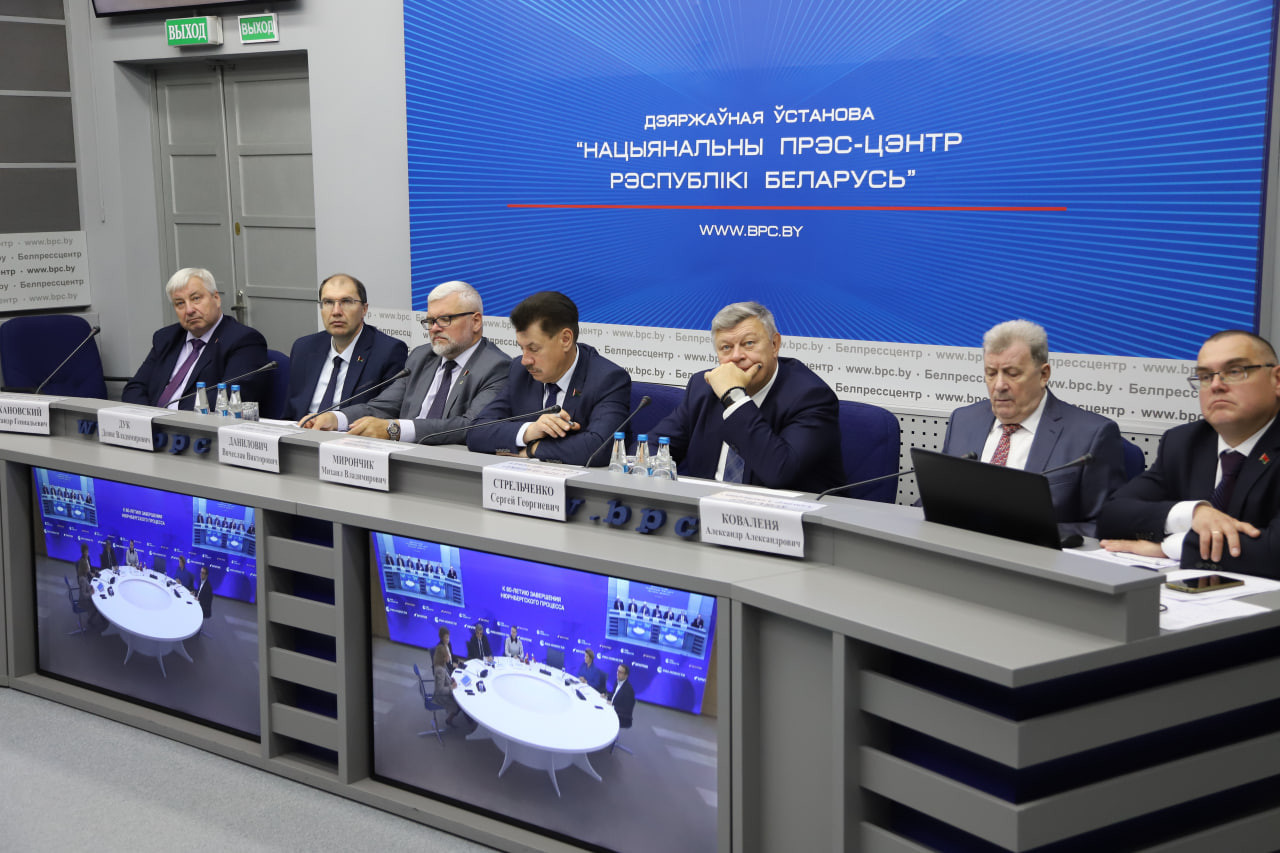
The events of World War Two and the Great Patriotic War of 1941-1945 are most often subjected to distortion and falsification. Deputy Chairman of the Education, Culture, and Science Commission of the House of Representatives of the National Assembly of Belarus, Academician-Secretary of the Department of Humanities and Arts of the National Academy of Sciences of Belarus Vyacheslav Danilovich made the statement during a Minsk-Moscow video conference timed to the 80th anniversary of the end of the Nuremberg Trials, BelTA has learned.
- Share on Facebook
- Share on VK
- Share on Twitter
In his words, some believe that Belarusians recall World War Two and the Great Patriotic War too often and mark too many commemorative dates connected with them. “We have two very weighty reasons for this. First, if it were not for the victory in the Great Patriotic War, neither the Belarusian nation nor Belarusian statehood would exist. The second reason is that, unfortunately, it is precisely the events of World War Two and the Great Patriotic War that are most often subjected to distortion and falsification in the modern world,” he stressed.
The historian recalled that the Nuremberg Trials conducted by the International Military Tribunal were unprecedented. “For the first time the top officials of an entire state stood in the dock, accused of committing war crimes and genocide. By the way, this very word was also openly uttered at the tribunal for the first time. Germany’s leaders had to answer for all the atrocities committed with their connivance or on their direct orders. At the same time, the Nuremberg Trials were open. All the rights of the defendants stipulated by the charter of the International Military Tribunal were strictly observed. The interests of the defendants were represented by a total of 27 lawyers, assisted by 54 assistants and 67 secretaries. The progress of the Nuremberg Trials was covered in detail by 249 accredited correspondents,” Vyacheslav Danilovich said.
The Nuremberg Trials took place from 20 November 1945 through 1 October 1946. As many as 403 open sessions were held, with court hearings lasting for 216 days. They involved 240 witnesses, about 300,000 written testimonies were read out, and more than 5,000 documents were submitted. Among the materials were documents about the crimes of the German occupiers in Belarus’ territory: about the atrocities in Minsk and Minsk Oblast, about the infection of Soviet people with typhus in three concentration camps in Polesie Oblast, about the shooting of residents of Gomel, Pinsk, and Lida, and about the extermination of children in Brest Oblast. The total volume of the Nuremberg Trials protocol amounted to about 16,000 pages.
“As noted in the tribunal’s verdict, the indictment was largely based on documents drawn up by the defendants themselves, whose authenticity was not disputed. The guilt of the chief war criminals was proven. The tribunal also proved the groundlessness of the version fabricated by the Nazis about the preventive nature of Germany’s attack on the USSR,” the expert noted.
The International Military Tribunal in Nuremberg is of great historical significance, the historian believes. “The trials exposed the aggressive and misanthropic essence of Nazism and established the guilt of the leaders of Nazi Germany in organizing grave crimes against humanity,” Vyacheslav Danilovich concluded.


