


Grated potato dishes: Belarus seeks UNESCO heritage status for culinary tradition
16:07, 14 January

Photo: BelTA
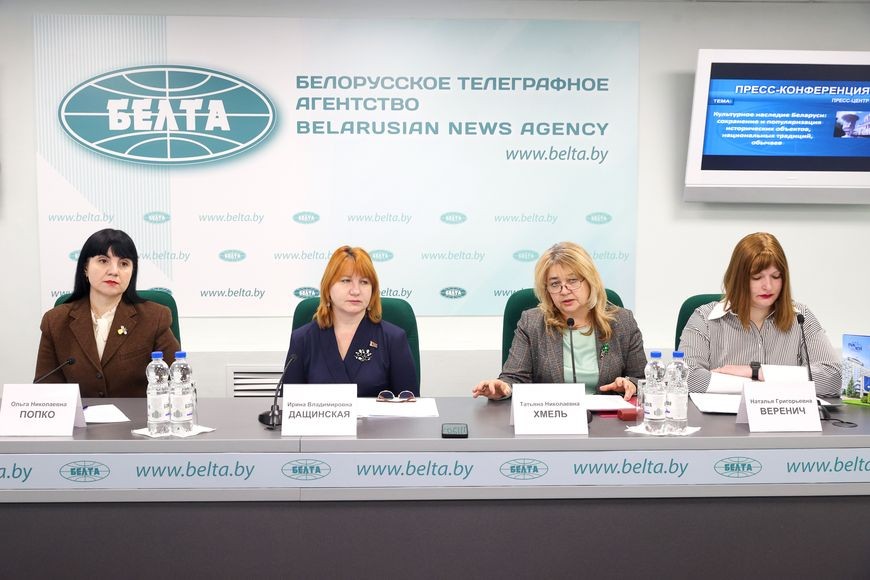
Belarus is currently busy developing a national nomination file titled “Grated Potato Dishes: Traditions of Cooking and Consumption in Belarus” for inclusion in the UNESCO Intangible Cultural Heritage List, Irina Dashchinskaya, Head of the Historical and Cultural Heritage Department at the Culture Ministry, said at a press conference “Cultural Heritage of Belarus: Preservation and Promotion of Historical Sites, National Traditions, and Customs” at BelTA’s press center,BelTA has learned.
- Share on Facebook
- Share on VK
- Share on Twitter
“Belarusian specialists are working on the national file 'Grated Potato Dishes: Traditions of Cooking and Consumption in Belarus'," Irina Dashchinskaya said.
According to her, Belarus has four tangible sites and seven intangible elements inscribed on the UNESCO World Heritage List. The following sites from Belarus were inscribed on the UNESCO World Heritage List: Belovezhskaya Pushcha National Park; Mir Castle Complex; Architectural, Residential, and Cultural Complex of the Radziwill Family at Nesvizh, and the Struve Geodetic Arc. The UNESCO Lists of Intangible Cultural Heritage now feature seven Belarusian elements. These include the festive Christmas rite Kalyady Tsars in the village of Semezhevo, Kopyl District, Minsk Oblast; the Celebration in honor of the Budslau Icon of Our Lady (Budslau fest) in Myadel District, Minsk Oblast; Spring rite of Jurauski Karahod (St. George's Round Dance) in the village of Pogost, Zhitkovichi District, Gomel Oblast; Tree beekeeping culture; Straw weaving in Belarus, art, craft and skills; Vytsinanka, traditional art of paper cutting in Belarus; Negliubka textile tradition of Vetka District, Gomel Oblast.
“The presence of sites on the World Heritage List enhances their prestige, making these sites and the nation itself more recognizable and attractive to tourists,” emphasized Irina Dashchinskaya. She added that the protection of historical, cultural, and spiritual heritage is a mandatory condition for the sustainable development of the state and the strengthening of its prestige in the international community.
Furthermore, to promote historical and cultural heritage, the Culture Ministry launched the search website State List of Historical and Cultural Heritage of the Republic of Belarus in 2020. There, any user can quickly find information about historical and cultural assets, including through a mobile application. The state information database Bank of Information on Historical and Cultural Heritage is also being updated with current texts and images.
“To date, the State List of Historical and Cultural Heritage of Belarus includes 5,690 objects and elements. The past of the nation is embodied in numerous material and intangible testimonies of its historical journey: monuments of archaeology, architecture, urban landscape, history, and art, as well as elements of traditional culture. Ancient settlements, historic city centers, castles and churches, and numerous monuments are evidence of our millennia-long history, reflecting the establishment of the Belarusian state. Moreover, it is quite difficult to imagine the image of Belarusian culture and the foundation of national identity without traditions, customs, rites, and folk crafts rooted in the time of the first Slavs’ appearance on the territory of Belarus,” Irina Dashchinskaya noted.
According to her, world-famous outstanding landmarks and traditions of Belarus have had an influence on the development of both national and world culture.
In April 2025, the Nesvizh Museum-Reserve opened its doors with the exhibition project UNESCO World Heritage Sites. This exhibition was dedicated to the 20th anniversary of the inclusion of Nesvizh Castle and the 25th anniversary of the inclusion of the Kazan Kremlin in the UNESCO World Heritage List. On 15 May, an official presentation of the joint Russian-Belarusian transnational nomination “Memorials to the Heroes of the Great Patriotic War: Brest Fortress and Mamayev Kurgan” for inclusion in the UNESCO World Heritage List was held in Paris. The event was organized by the Permanent Delegation of Belarus to UNESCO and the Permanent Delegation of Russia to UNESCO. It was timed to coincide with the 80th anniversary of Victory in the Great Patriotic War, added the head of the department for the protection of historical and cultural heritage of the Culture Ministry.
International scientific forums and conferences are also held in Belarus, where scholars and experts discuss modern research on the study, preservation, and promotion of historical and cultural heritage. In addition, over the past two and a half decades, Belarus has been actively engaged in restoring its architectural heritage. A significant amount of resources has been invested in preserving and maintaining the site. Extensive efforts have been made to restore and revitalize hundreds of historical and cultural landmarks, which has contributed to increasing tourist traffic and promoting regional tourism.


