


Belarusian and Russian scientists presented a fundamental work, "The Population of Belarus. A Face-Based Album – A Look into the Past."
16:50, 4 February

Photo: Soyuz.by
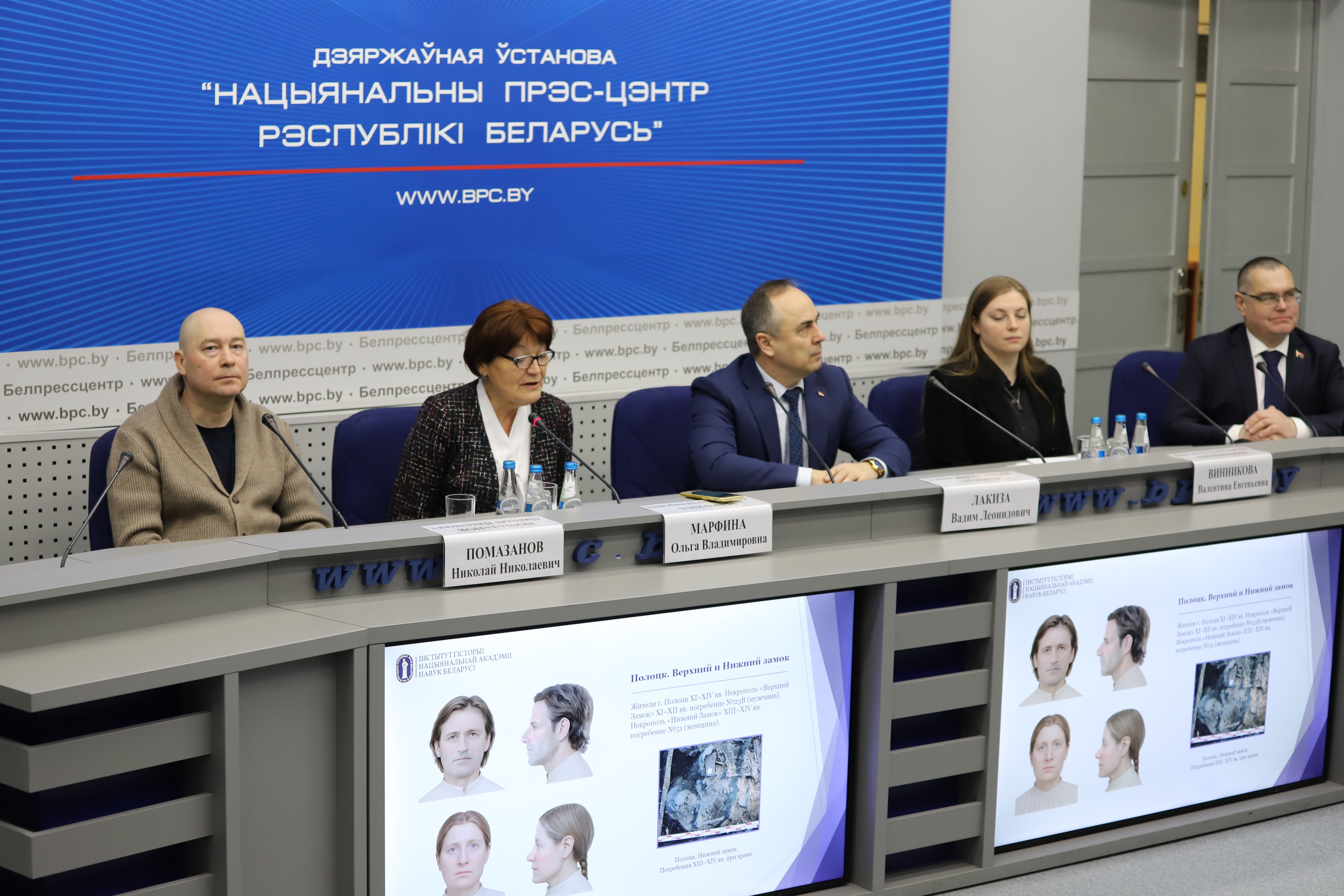
How did ordinary people live, what did they eat, and what did they look like in Belarusian lands several centuries ago? The answers to these questions can now be not only read about but also literally seen. Today, February 4, Belarusian scientists presented a new fundamental study, "The Population of Belarus. An Album of Faces – A Look into the Past." The work was prepared in close collaboration with Russian colleagues from the N.N. Miklouho-Maclay Institute of Ethnology and Anthropology of the Russian Academy of Sciences, reports a Soyuz.by correspondent.
The study covers periods when the territory of modern-day Belarus was part of various states—from the ancient Russian principalities to the Russian Empire. The scientists' primary focus is not on political events and border changes, but on the daily lives, health, and appearance of the residents themselves.
- Share on Facebook
- Share on VK
- Share on Twitter
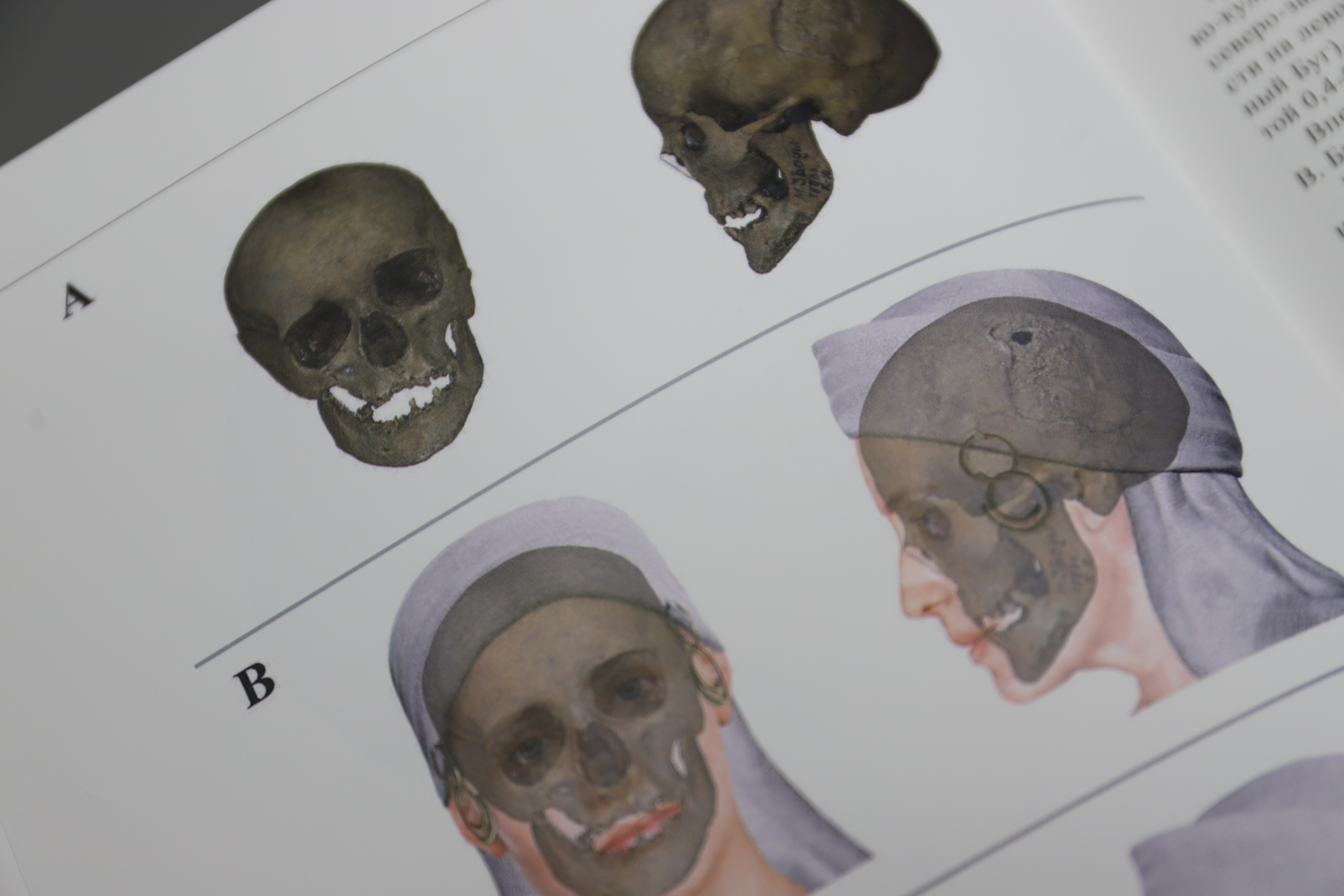
Thanks to the collaboration of a Russian-Belarusian team of archaeologists, anthropologists, and geneticists, history has been given a human face, in the truest sense of the word. While studying ancient necropolises in various regions of the country, specialists applied a range of modern methods:
– Anthropological analysis of skeletal remains allowed us to determine gender, age, previous illnesses, injuries, and even dietary habits.
– Genetic studies have yielded sensational results in a number of cases: scientists were able to determine the true eye and hair color of specific individuals who lived hundreds of years ago.
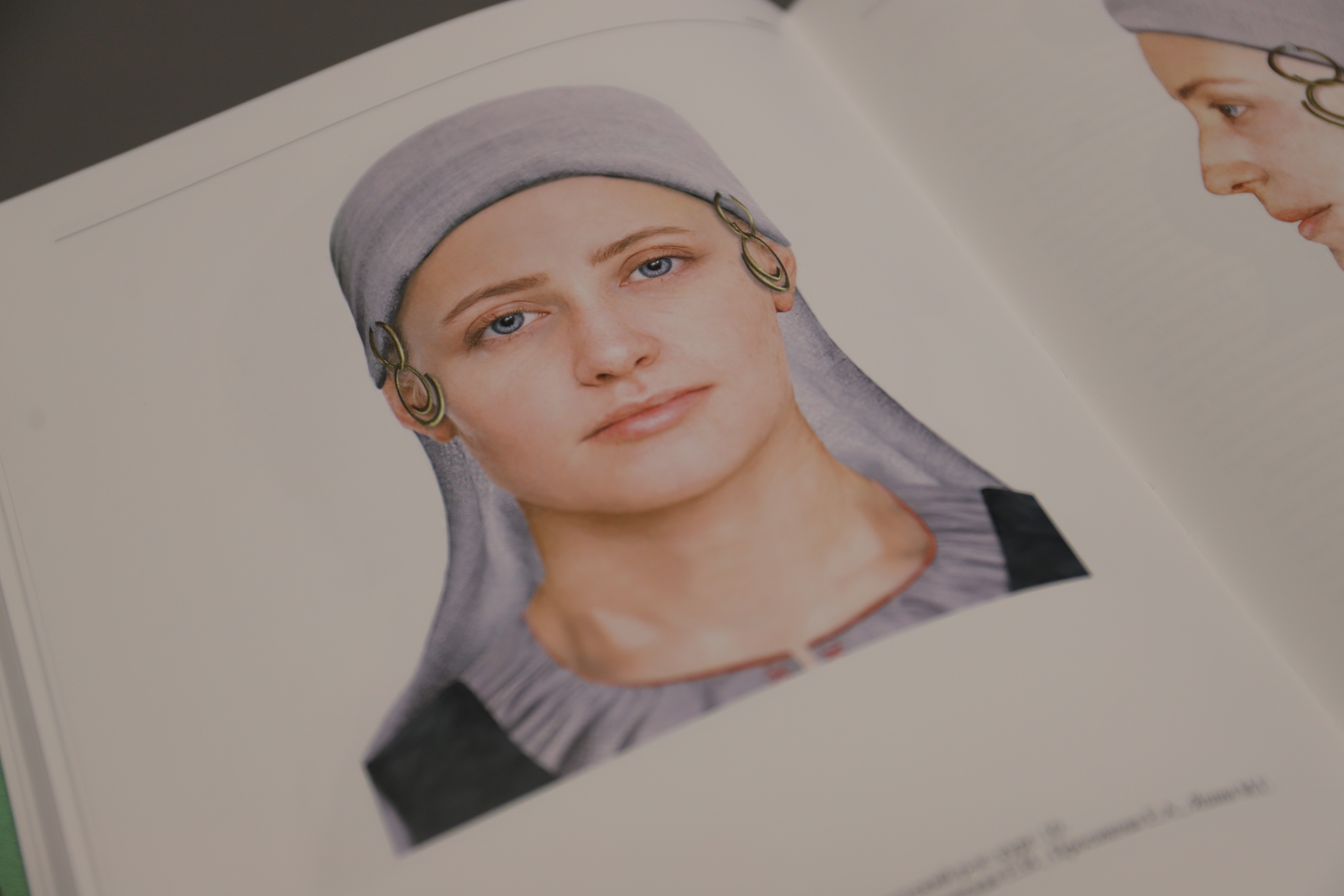
Based on this precise data, reconstruction artists have reconstructed the appearance of our ancestors in life. The resulting sculptures and graphic portraits, with hair and eye color based on DNA data, are scientific, not artistic, reconstructions.
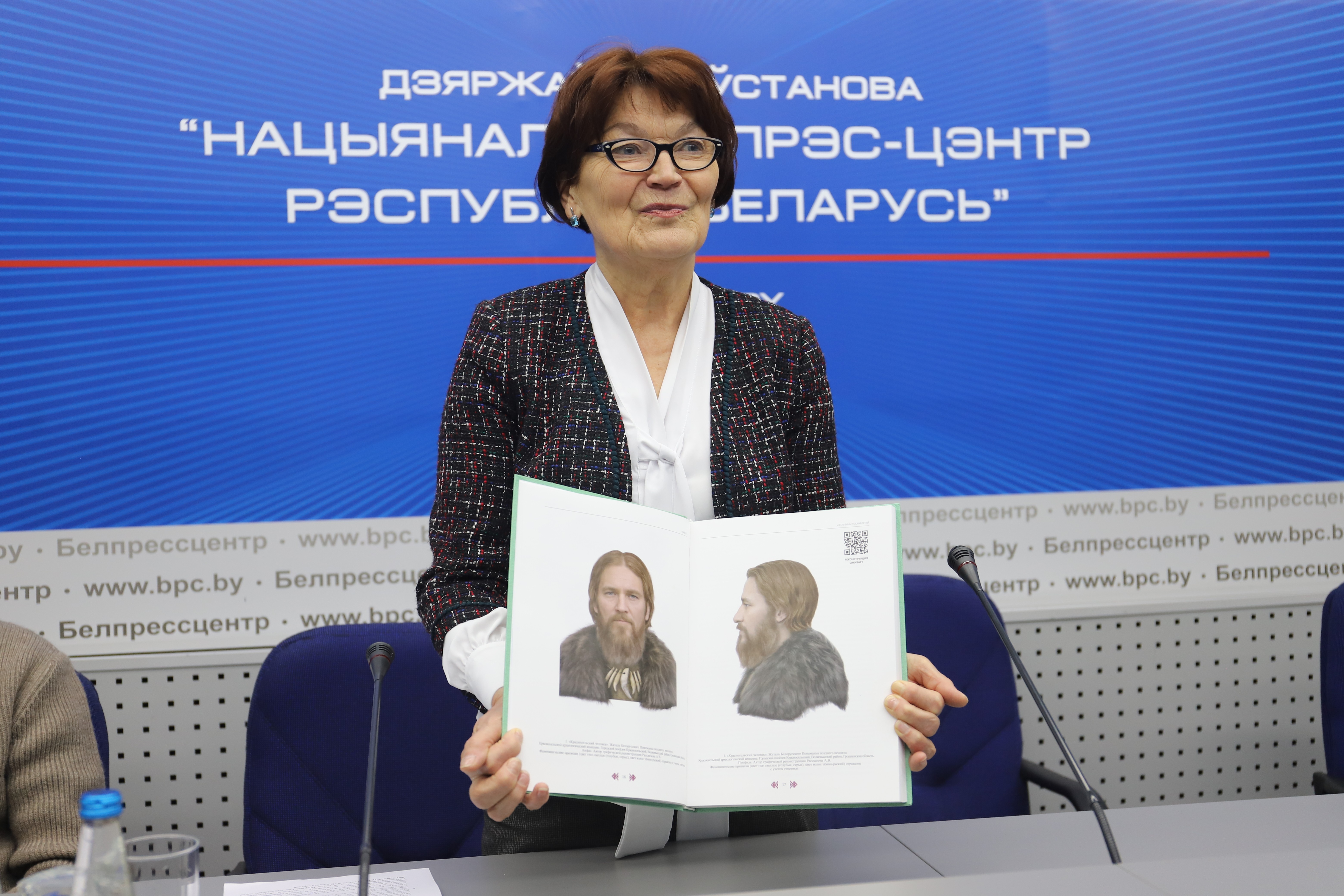
The book contains not only unique illustrations and data tables, but also historical information about the settlements where excavations were conducted. This fundamental work opens a new chapter in the study of the past, making it tangible and understandable.

As Vadim Lakiza, Director of the Institute of History of the National Academy of Sciences of Belarus, noted, the project's central achievement was the scientific reconstruction of the appearance of 26 inhabitants of Belarusian lands from different eras. One of the most striking finds was the reconstructed image of a miner who mined flint in the territory of today's Volkovysk District 4,500 years ago. His image, created based on archaeological finds, is already being used in collaboration with local authorities to establish a museum of the ancient mining complex and serves as a visual aid for schoolchildren.
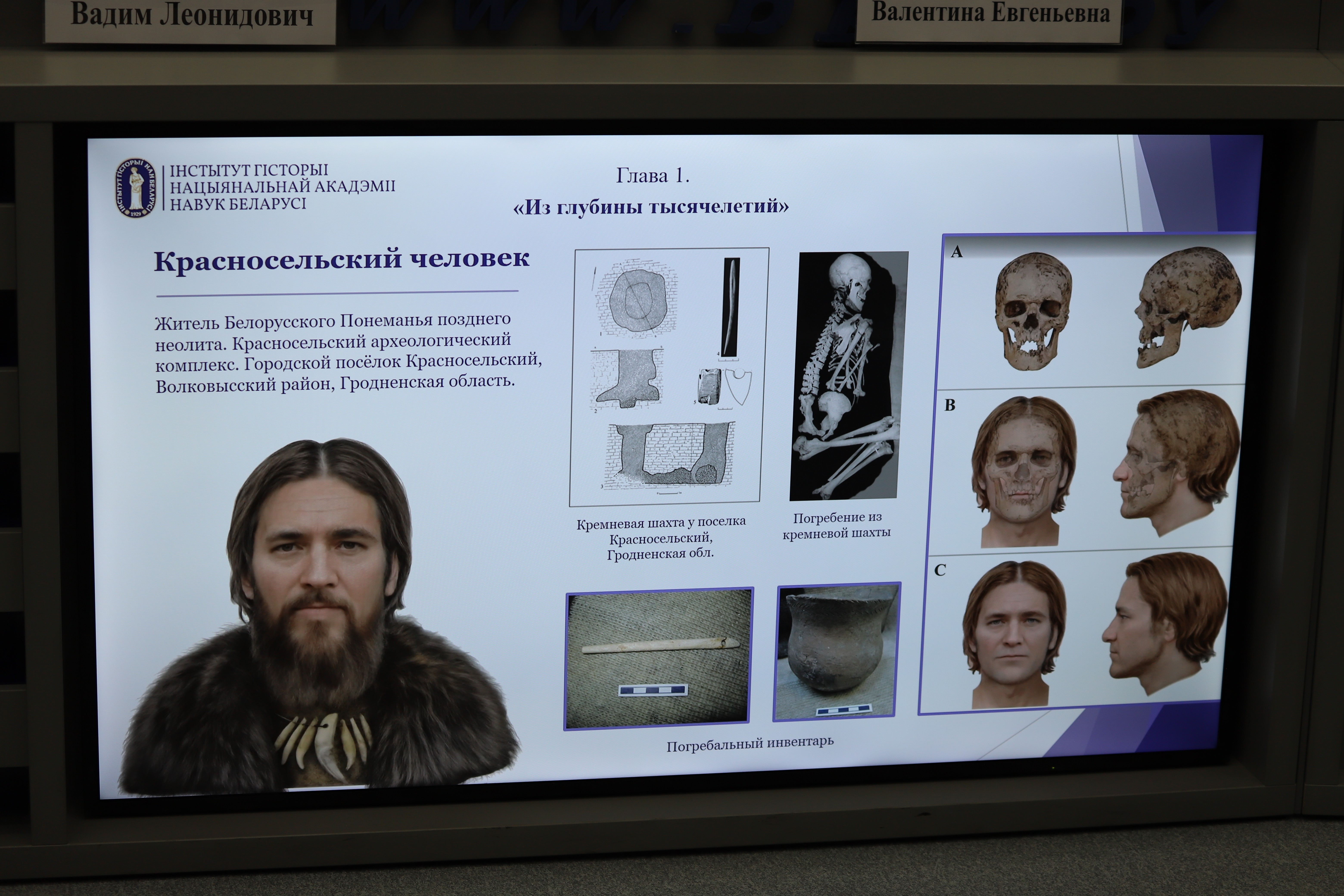
In addition to the ancient miner, the book features portrait reconstructions of forty-four rural and urban residents from various parts of Belarus, spanning from the early Middle Ages to the modern era. The researchers reconstructed the appearances of villagers from the Lelchitsy and Dokshitsy districts, a woman from a settlement on the Menka River near Minsk, and men and women from the 13th and 19th centuries in Belynichi and Nesvizh. Modern methods, including DNA analysis, anthropological research, and digital technology, made it possible to accurately reconstruct not only faces but also clothing elements.
The Director of the Institute of History of the National Academy of Sciences of Belarus emphasized that such materials have great practical significance for education, culture, and tourism development. He also announced further work: the research team plans to prepare a new edition of the album with supplements, as well as publish a series of popular science books on the history of the population of individual regions of Belarus, which will mark the next stage in the development of this important research area and international cooperation.


