Lukashenko reviews draft decree on centralized procurement for agriculture
12:00, 12 March

Photo: BELTA
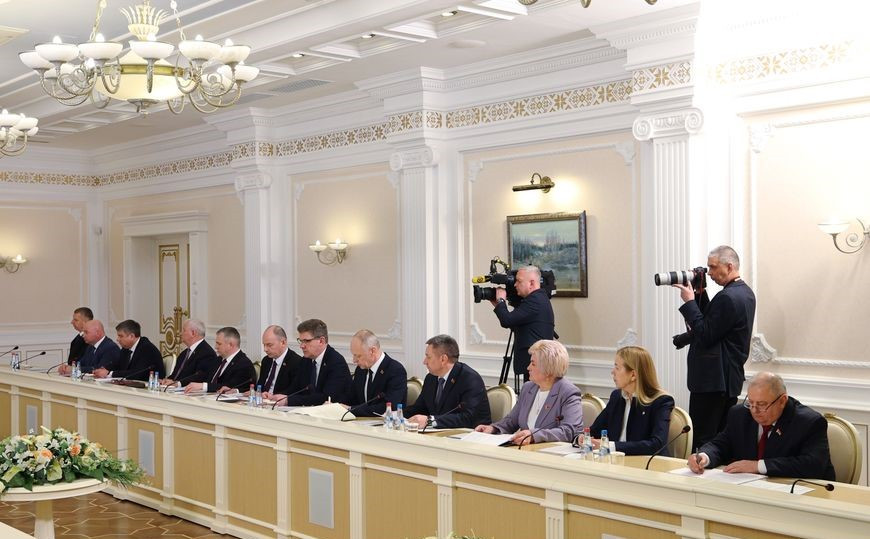
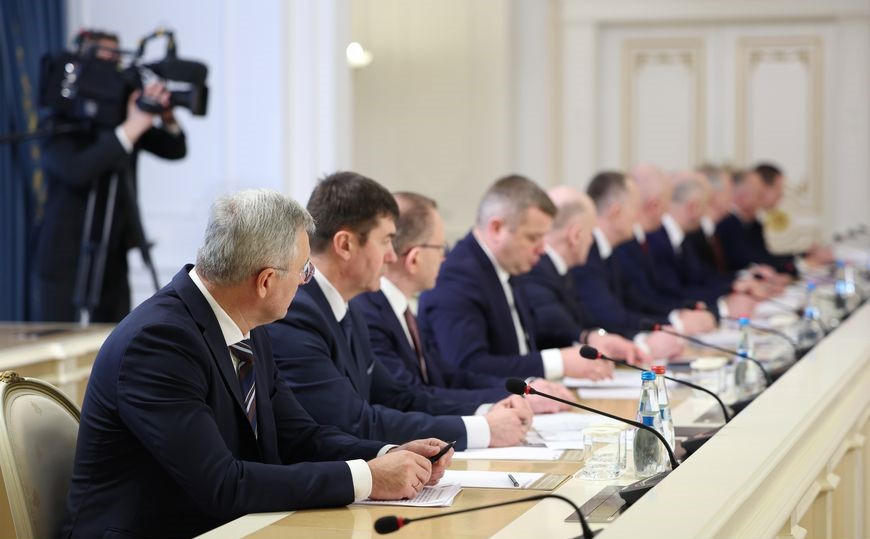
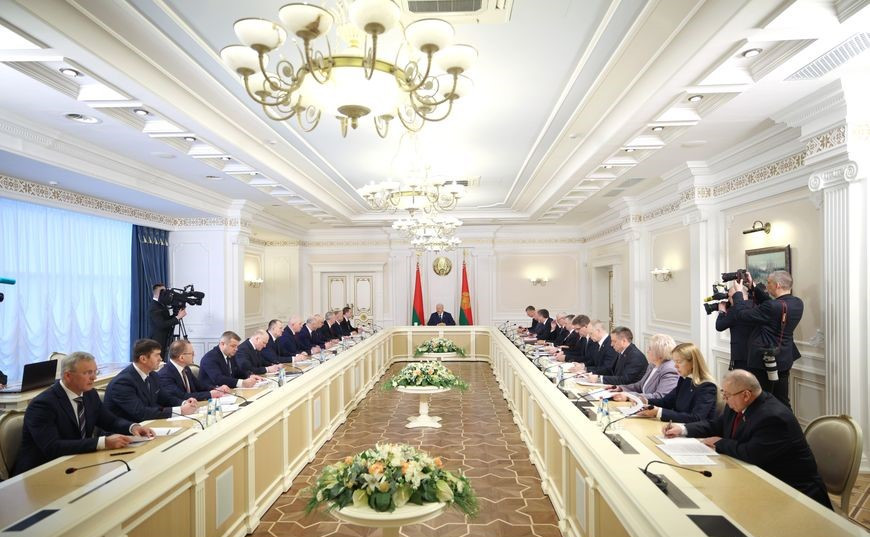
Agricultural organizations must be provided with all necessary goods in a timely manner and at fair prices, Belarusian President Aleksandr Lukashenko said at a meeting to discuss measures to eliminate unjustified and unscrupulous intermediation on 12 March, BelTA has learned.
- Share on Facebook
- Share on VK
- Share on Twitter
Among the issues on the agenda of the meeting with the head of state was a draft decree on the centralization of procurement of certain goods for the agricultural sector. “What does ‘certain’ mean? This is a rhetorical question. All goods that we purchase for agriculture must be included in this decree,” Aleksandr Lukashenko emphasized.
The president noted that he had previously discussed with Minister of Agriculture and Food Yuri Gorlov the elimination of intermediation in agriculture “as a practice.” “We agreed that we would eliminate intermediation, especially in agriculture. Did this happen? No,” Aleksandr Lukashenko stated.
The head of state cited the following example: “In Belarus, Gomselmash produced a harvester, and farmers purchase it through intermediaries. Is that normal? And they justify it so cleverly.”
Moreover, as the State Control Committee has determined, the money for implementing these intermediary schemes is taken from Belarusian banks. “So why can’t we take it? Why can’t Gorlov and the governors, together with their farmers, take this money and buy the harvester from Gomselmash?” the Belarusian leader asked rhetorically.
In this regard, Aleksandr Lukashenko called for a clear distinction between justified and unjustified intermediation, including in agriculture. The criteria for assessing such intermediation may be defined by the head of the Ministry of Agriculture and Food.
The head of state pointed out that farms must be provided with everything they need in a timely manner: fertilizers, seeds, plant protection products, growth regulators, and spare parts for agricultural machinery. Aleksandr Lukashenko cited an example of how, due to delays by the Minister of Agriculture and Food, growth regulators for rapeseed were not purchased in time, which negatively affected this crop. “The president gave instructions: purchase them and hand them over immediately. Get them wherever you want, but the main thing is that the prices are reasonable. He kept making proposals well into winter, when the rapeseed had already stopped growing in the fields and these growth regulators were needed by no one. Is that normal? They needed to be bought and applied on the spot, to keep the rapeseed from overgrowing,” the president said.
At the same time, the draft decree contains a provision stating that agricultural organizations must be able to purchase everything they need most at “fair prices.” The head of state noted that this concept is rather abstract and requires specification.
The president asked the meeting participants to provide solid arguments for adopting the new legal act. First of all, he inquired why the subject of regulation was plant protection products, alfalfa seeds, and a number of spare parts. “What about the rest?” Aleksandr Lukashenko asked.
The head of state also wanted to know who the new decree would apply to: whether it would affect all agricultural organizations, farmers, and other private entities. “I will answer this question: it should apply to everyone. The system must be for everyone. We have private and state forms of ownership. But these are our state-owned enterprises, which must work in the interests of the state,” the president said.
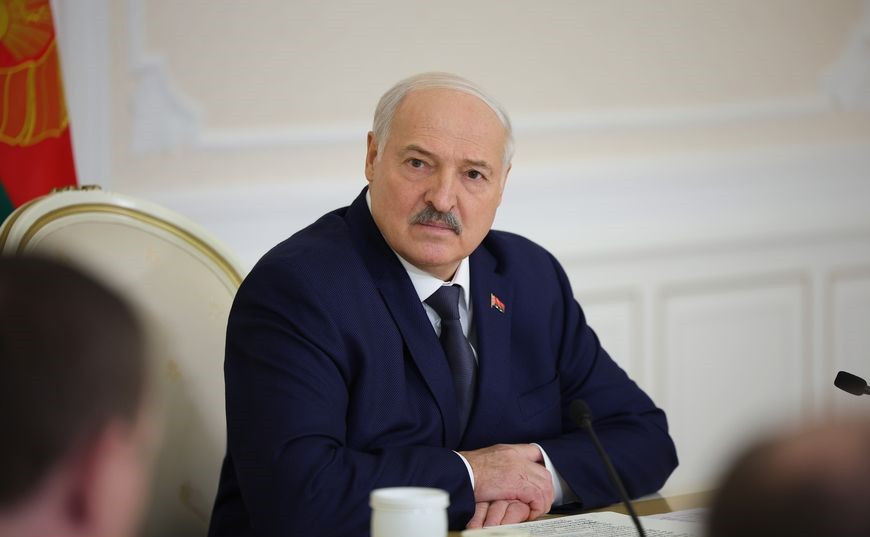
Another question raised by the Belarusian leader was whether the proposed mechanism will bring order to agricultural procurement prices once and for all? “Are the conditions proposed to be created simple and clear enough? Will agricultural organizations end up trapped in lengthy bureaucratic procedures? Everything must be simple,” Aleksandr Lukashenko stated. “Ultimately, responsibility must lie with the head of the enterprise and the governor, when it comes to agriculture. And, naturally, their subordinates – the chairpersons of the district executive committees.”
At the same time, the president noted that any innovations must ensure the uninterrupted and timely execution of production processes, especially during the busy periods of planting or harvesting. “And most importantly: will we create new monopoly intermediaries under the guise of forming a competitive environment? We will not, because these monopolies will be managed by a specific person: the governor or the minister. If they see that prices are exorbitant, they will regulate that issue as well,” the head of state concluded.