


Lukashenko convenes meeting to discuss future workforce training in Belarus
11:00, 26 January

photo: BelTA
The question of establishing an educational center to train gifted youth for professions of the future was raised at a meeting Belarusian President Aleksandr Lukashenko hosted on 26 January, BelTA has learned.
- Share on Facebook
- Share on VK
- Share on Twitter
The meeting with the head of state included government officials, representatives of the Belarus President Administration, the National Academy of Sciences, Minsk City Hall, and representatives from several universities, including Belarusian State University, Belarusian State University of Informatics and Radioelectronics, Belarusian State Technological University, Belarusian National Technical University, Brest State Technical University, and the Belarusian-Russian University.
Aleksandr Lukashenko emphasized that a serious innovative transformation of Belarus’ economy requires specialists whose level of knowledge can compete with the world’s leading schools. “And not just compete, but create high-quality, competitive Belarusian products. That is the number one task for the higher education system,” he said.
The head of state noted that, for these purposes, experimental training of specialists in promising fields is already underway at Belarusian State University and other universities. However, the results of this effort have yet to be fully assessed.
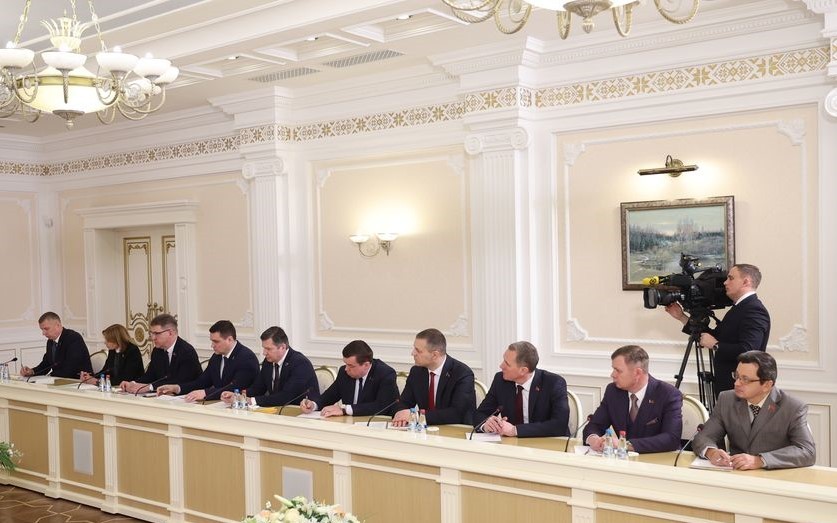
According to the president, it is necessary to expand the implementation of experimental programs, including at regional universities. A corresponding directive was issued during the president’s Address to the Belarusian People and Parliament on 18 December 2025.
Belarus is actively cooperating with technologically advanced countries, implementing joint educational programs with universities in China, Russia, and other states.
According to Aleksandr Lukashenko, the task was set to thoroughly work out the issue of creating an educational center that will be focused on training tomorrow’s workforce.
The government has submitted its proposals on this matter. The president pointed out that participants need to decide how to organize this training correctly and efficiently, raising several key questions in the process.
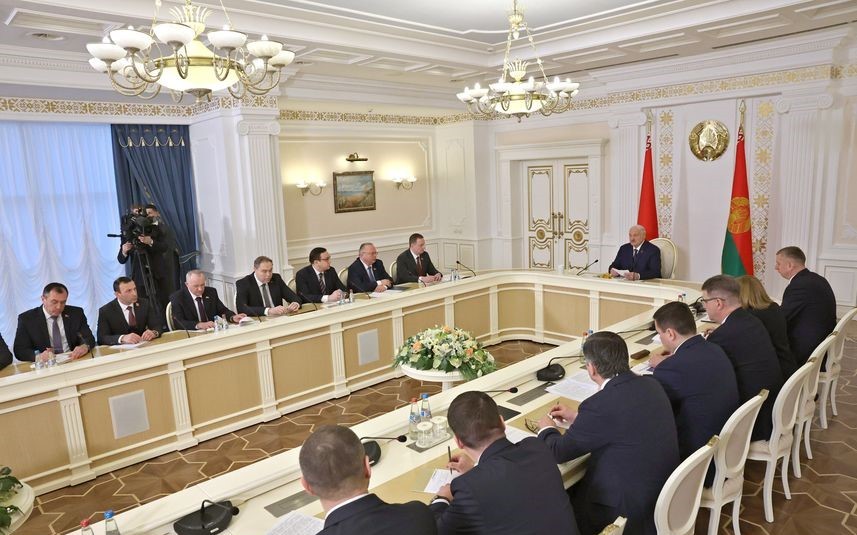
First, Aleksandr Lukashenko asked what has already been done to organize the experimental training and scale it up, and how it will be coordinated with the programs of the future educational center.
“What is the rationale for relocating a portion of the operational experimental programs (eight out of eighteen are presently based at universities) from our premier universities to the center? Are they incapable?” the head of state asked. He observed that certain disciplines earmarked for the new center are, in fact, already under development within universities and the Academy of Sciences.
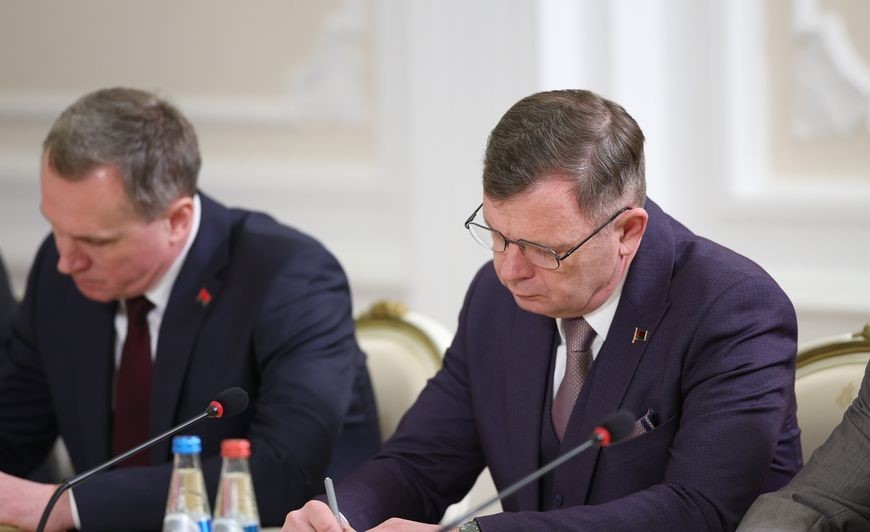
“I want everyone to understand. We cannot afford to deplete the personnel of the country’s leading higher education institutions (which could happen to some extent), the existing scientific schools there, and even less so to weaken regional universities,” the president warned. “A decline in the quality of education is unacceptable. The international prestige of our higher education and the export of educational services depend on it.”
Another aspect the head of state focused on is the justification for creating a new educational center or university. “What prevents us from organizing this training on existing university sites? What will be the uniqueness of the selection and training of specialists? How will the retention of young specialists be ensured in the future?” Aleksandr Lukashenko asked.
There are currently different points of view on this topic. Some believe the educational center should recruit those who have already completed university and are ready to delve deeper into a specific field to develop “miracle products”. Others propose admitting graduates after completing their general secondary education. “Naturally, the very best, most progressive, and talented people for learning and teaching will be drawn there. We must be clear about that,” said the president. “But a finished product must come out of it. Therefore, strong specialists must enter it. Can people who come to study today after secondary school accomplish this?”
The head of state placed particular emphasis on the fields of activity and specialties the educational center would undertake. Currently, they essentially duplicate those that exist in other institutions. “We already have them everywhere in the country. Is it worth taking a certain field, for example, from BSU or the Academy of Sciences, and transferring it to the center?” the president asked the meeting participants.
The discussion also touched on the future of the BSU Biology Center, a state-funded project now being built to provide a modern research hub for biotechnology and biochemistry. The president asked about using this facility if some biology programs move to the new center, and about BSU’s own experimental education plans. “Keep in mind, the money put into this educational complex must deliver a return,” Aleksandr Lukashenko said.
One proposed location for the new educational center is the complex of buildings on Pobeditelei Avenue in Minsk. The president clarified whether this is possible in buildings originally intended for office spaces and how they plan to equip lecture halls, laboratories, and common areas there. “Has the issue of ensuring biological and chemical safety been thoroughly addressed, as it has been at the Biology Center at BSU? We cannot take risks; this is essentially the city center,” the head of state pointed out.


