


Lukashenko urges to preserve close ties with Kazakhstan amid global turbulence
12:58, 5 February

Photo: BELTA
Belarusian President Aleksandr Lukashenko advocates preserving and strengthening cooperation with Kazakhstan. He made this statement during a meeting with Chairman of the Mazhilis of the Parliament of the Republic of Kazakhstan Yerlan Koshanov in Minsk on 5 February, BelTA has learned.
- Share on Facebook
- Share on VK
- Share on Twitter
“I strongly urge: we must not lose each other,” the head of state said. “No country, not even America, can develop in isolation today. That is why I suggest: let's make sure we don't lose each other in this turbulent world.”
Speaking about the Central Asian region, where Kazakhstan is located, Aleksandr Lukashenko noted: “We know whose attention is directed toward this part of our planet. But as an experienced person, I always say and advise my colleagues: we understand that finding new friends abroad today is very difficult. Even if Kazakhstan or Belarus do find them, we must not lose our old friends. Therefore, based on this philosophy, we are ready to cooperate with you in any area and in any form.”
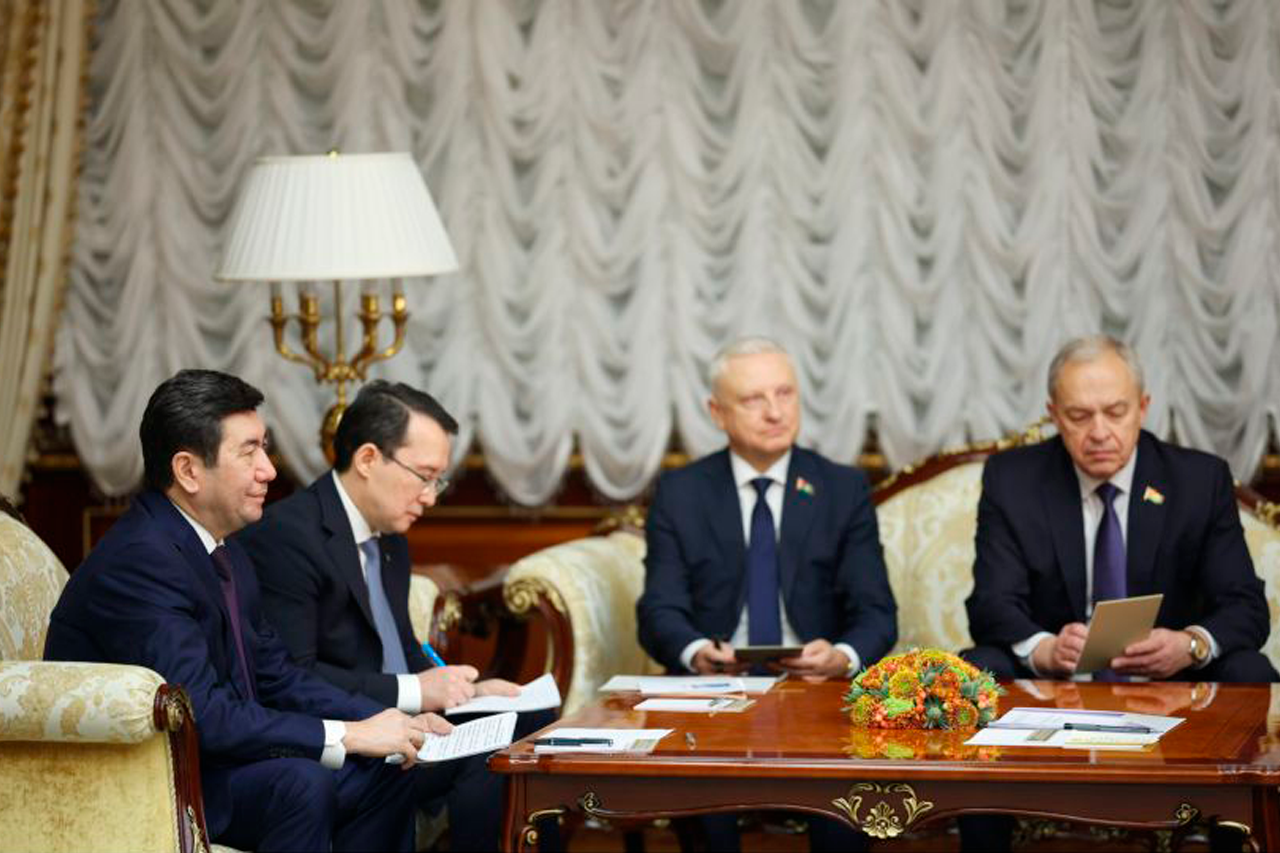
“As I always say, trade is the foundation. I must note that I once dreamed that our trade with Kazakhstan would approach $1 billion. Today, according to calculations, we already have a billion and more. But there is still room to grow. We are a high-tech country,” the president stated. “We are ready to supply you not only with goods. They are well known. We know what goods Kazakhstan needs. But looking to the long term, we are ready to establish joint production facilities with Kazakh partners, to work together and move forward in this direction.”
In particular, the discussion touched upon the possibility of expanding supplies of Belarusian engineering products. “We make no secret of the fact that we would like to supply not only BelAZ trucks to your market, but also our grain harvesters and other agricultural machinery,” the president said. He noted that Belarusian combines are in no way inferior to foreign counterparts in terms of their specifications, and Belarus is ready to prove this in practice: for example, on a designated agricultural site in Kazakhstan where grain is cultivated. Given that vast areas in Kazakhstan are devoted to this crop, Belarus, according to Aleksandr Lukashenko, is prepared to demonstrate on several thousand hectares how its harvesters and other agricultural equipment perform.
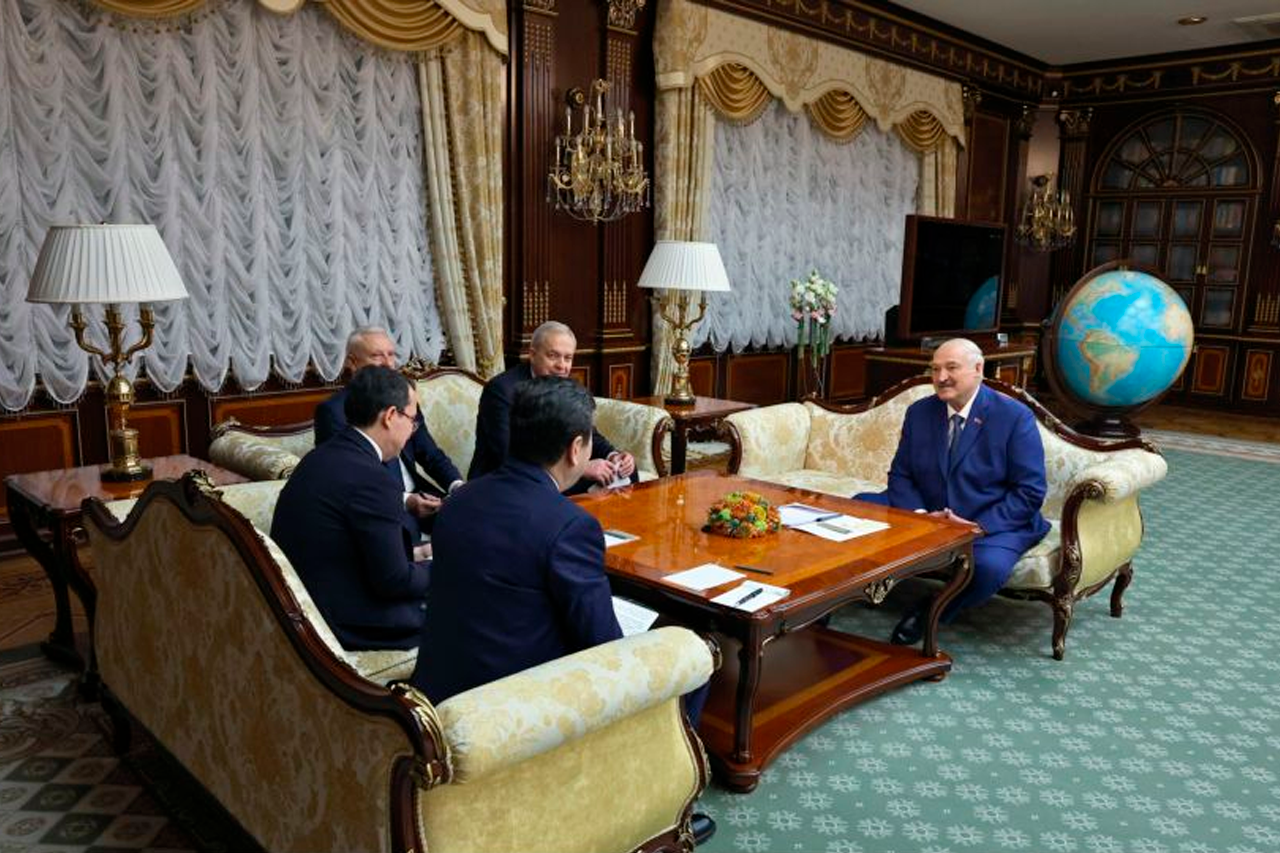
“We need to find new formats to showcase ourselves (our machinery, our people) and to train those who will operate our equipment there. Then the question of which machinery is better will no longer arise,” the head of state said.
Aleksandr Lukashenko stressed that Belarus produces over half again more goods than the domestic market can consume, with the surplus ready for export, including to Kazakhstan. “We are a machine-building country, and our agriculture is highly developed. These are exactly the things Kazakhstan needs. I know Kazakhstan very well, since Soviet times. I learned a lot there,” the Belarusian leader noted.
In this context, the president recalled that back in Soviet times, when he headed an agricultural enterprise, he worked on cost‑accounting issues together with a specialist from Kazakhstan. “That is why I visited Kazakhstan, and your specialists came to my farm in Belarus. We achieved quite a lot back then. For me, it was very important. At that time, I realized the path along which our country could develop in the future, although I could not imagine that the Soviet Union might collapse,” Aleksandr Lukashenko recounted.
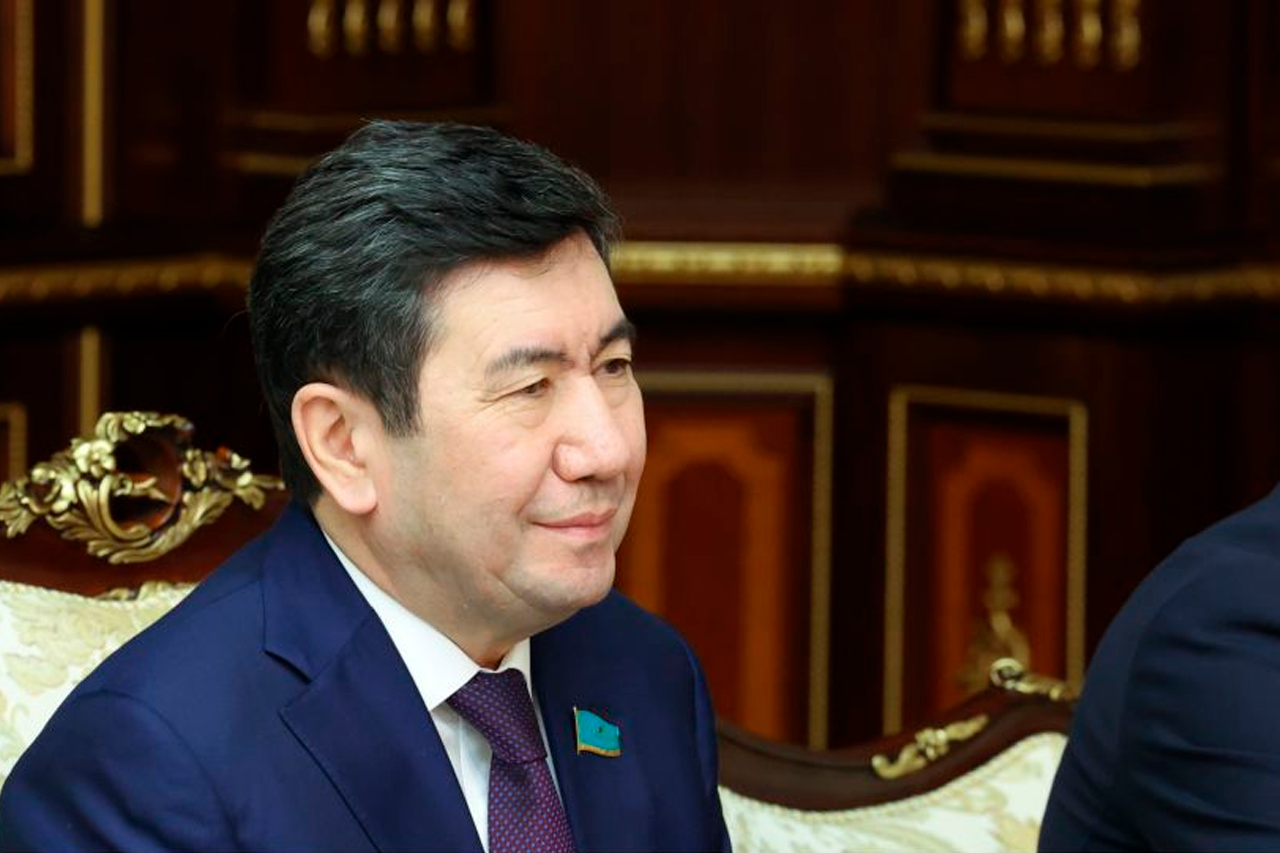
The president emphasized that he counts on support from parliamentarians and personally from Yerlan Koshanov in advancing bilateral cooperation. “You are a pragmatic, experienced person,” Aleksandr Lukashenko said. “You know the lessons of the Soviet period, both negative and positive. I know them well too, and so do my colleagues. We certainly place great hopes on you, especially after this visit. We are open to you. You are not strangers to us. There are no problems or barriers at all. Along this path the economy must become our priority, above all, because it is the foundation, the basis. As well as people and personnel.”


