


Lukashenko took part in the 5th Eurasian Economic Forum in Astana
22:00, 28 May

Photo: President.gov.by
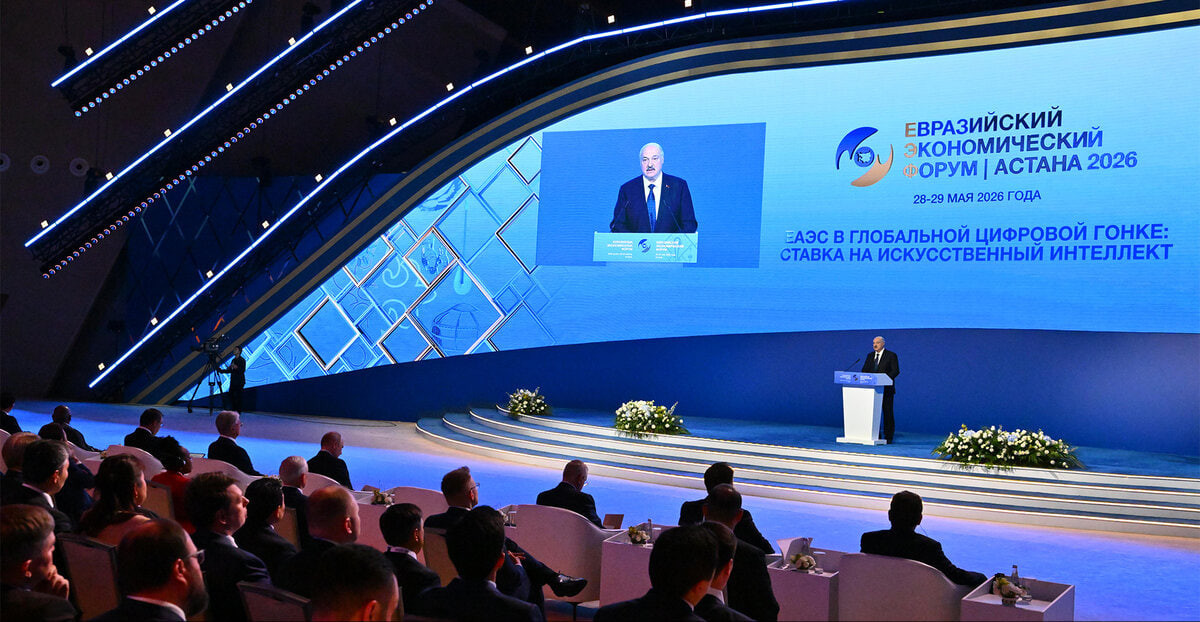
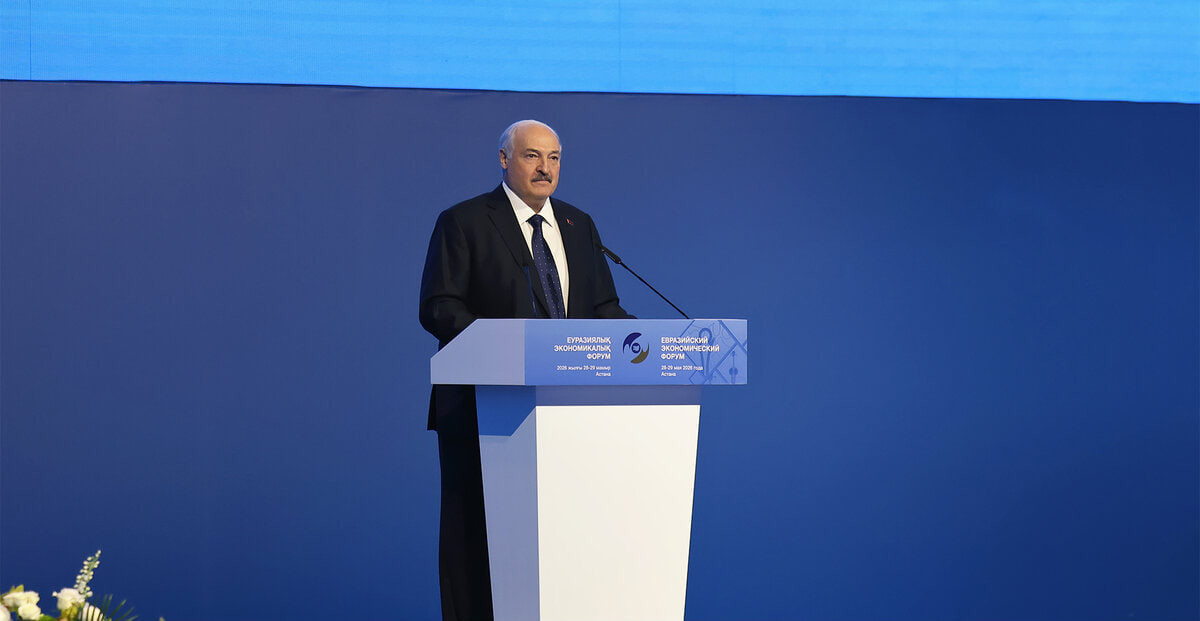
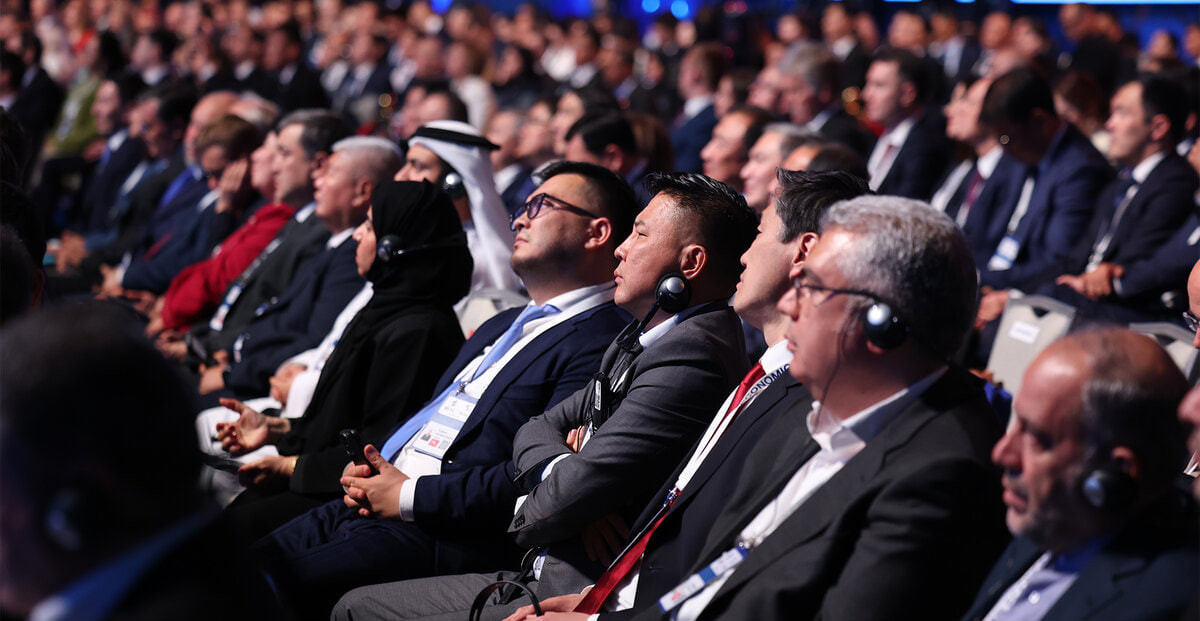
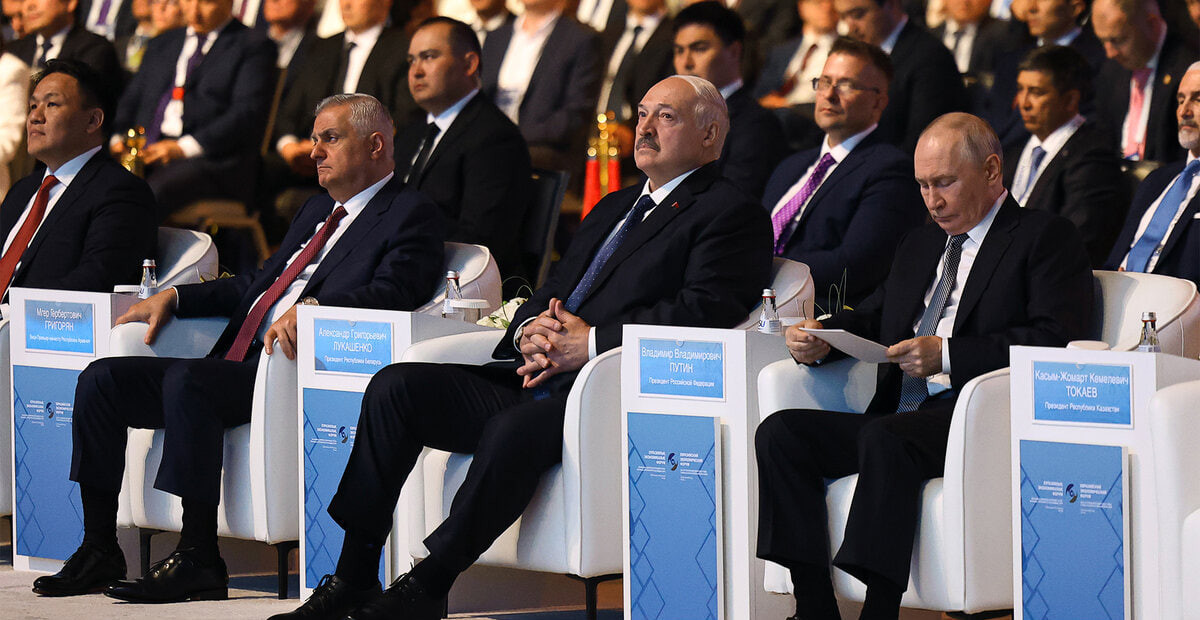
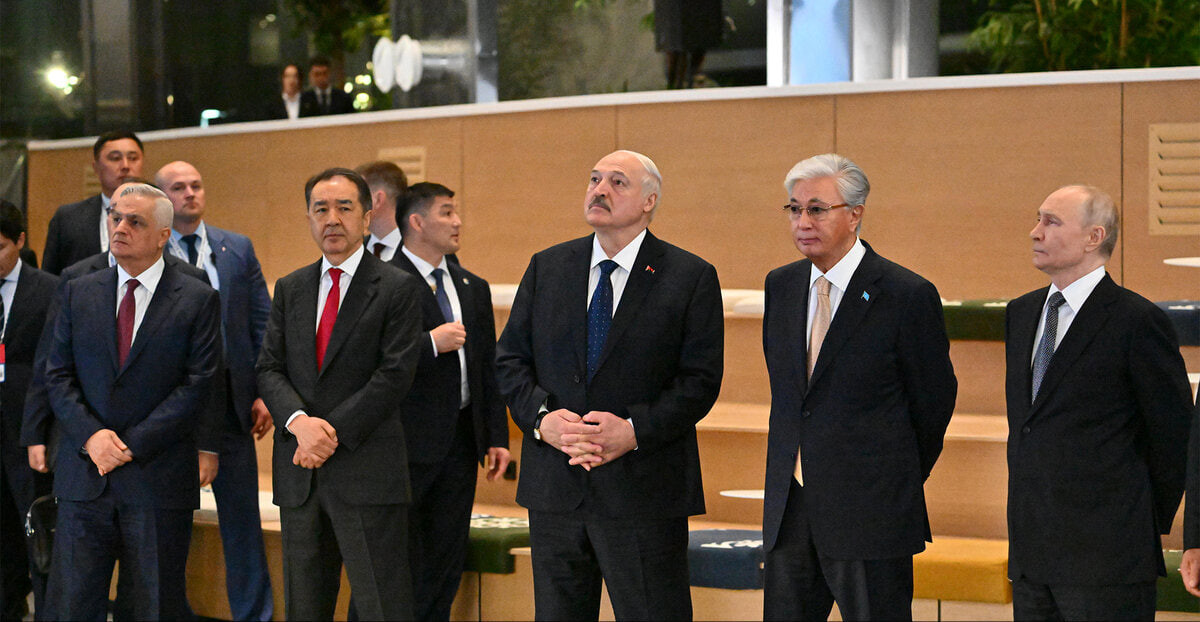
Belarusian President Aleksandr Lukashenko took part in the 5th Eurasian Economic Forum held alongside the Supreme Eurasian Economic Council meeting in Astana, Kazakhstan on 28 May, the press-service of the President reported.
- Share on Facebook
- Share on VK
- Share on Twitter
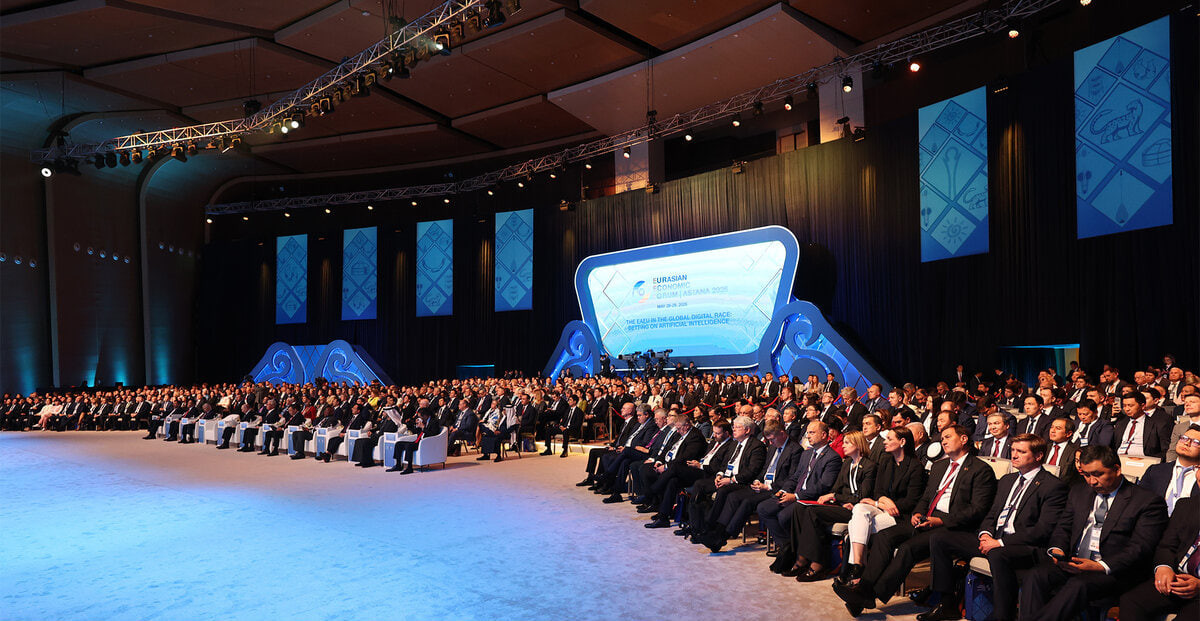
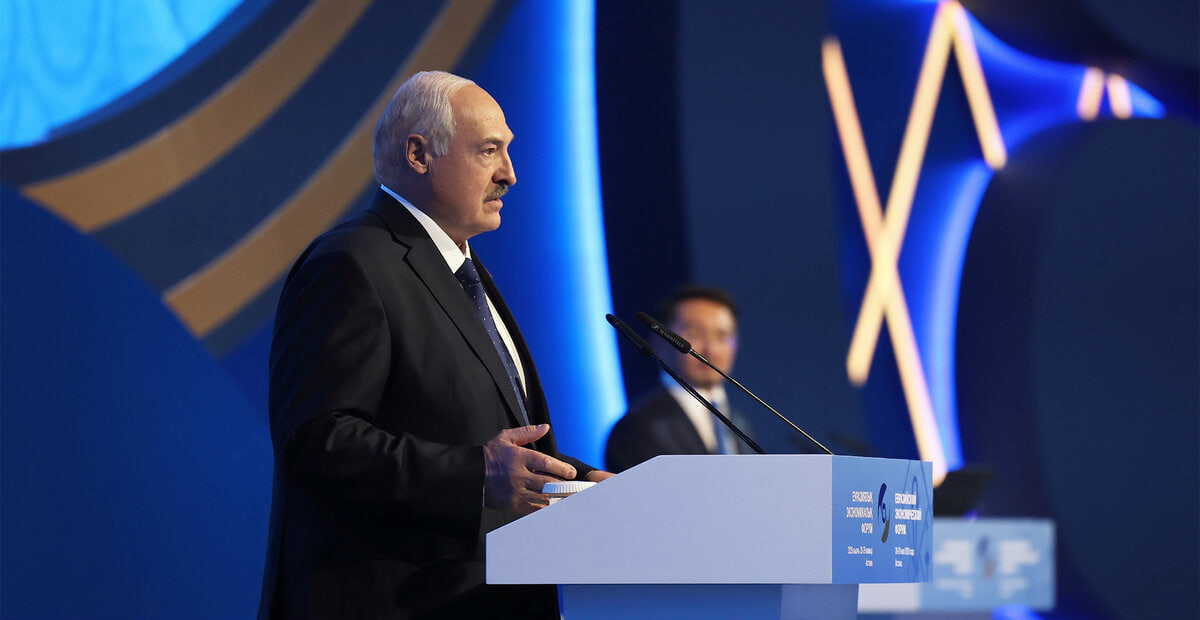
The main topic of the forum is The EAEU in the Global Digital Race: Betting on Artificial Intelligence. In his speech, Aleksandr Lukashenko outlined Belarus’ approach to the use of artificial intelligence, cited specific examples of AI implementation in the real sector of the economy and stressed the need for closer cooperation in this field within the Eurasian Economic Union.
Aleksandr Lukashenko chose to begin with the basics, recalling that he is a teacher by diploma and has often delivered lectures. In this regard, the Belarusian leader focused on the very definition of artificial intelligence.
“Artificial intelligence (I looked at how it defines itself) is a branch of computer science. Computer science is the study of methods and processes for collecting, processing, storing, transmitting, analyzing and evaluating information using computer technologies. Artificial intelligence is part of this field, developing systems capable of performing tasks that normally require human intelligence: learning, reasoning and decision-making,” Aleksandr Lukashenko said.
Based on the definition AI gives of itself, the Belarusian leader stressed, people would be able to solve such tasks without artificial intelligence, but it would take much longer. “Time is accelerating, and artificial intelligence helps people keep pace with this acceleration. As part of computer science, it speeds up work with data, automates routine tasks, writes code, generates content and helps solve complex analytical problems,” Aleksandr Lukashenko added.
About global shift in AI
The President noted that the concept of AI is more than 70 years old.“This is not a novelty of today. In Belarus, systematic work on this topic has been underway since the mid-1960s, beginning with the establishment of the Institute of Technical Cybernetics in Minsk. We built our own knowledge over decades, preserving and developing it even during the extremely difficult period following the collapse of the once-unified country,” he said.
Aleksandr Lukashenko noted that the last three years have brought a global shift in the field. Artificial intelligence has moved from research laboratories and development centers into every smartphone and, therefore, into everyday life. “From a highly specialized term, it has become an everyday expression. To some extent, it has become fashionable. For some, especially young people, artificial intelligence and neural networks have become a familiar virtual assistant; for others, a slogan and an icon; and for still others, almost the beginning of the apocalypse and a fear of the future,” the President said.
Speaking about the complexity of the topic of artificial intelligence, Aleksandr Lukashenko cited a quote from Xi Jinping related to learning Chinese. “I remember a phrase said at a family dinner at Xi Jinping’s. He said a memorable line I still recall: you shouldn’t be afraid to learn Chinese. It’s exactly the same with some people’s fear of artificial intelligence, especially among the older generation,” the President of Belarus said.
About Belarus’ approach to AI
Aleksandr Lukashenko also detailed Belarus’ approach to AI, which rests on two key principles. “First of all, for us artificial intelligence is not a goal by itself, not a tribute to fashion, not a reason to hype it up and reject the practices that have worked for decades. It is first and foremost a tool that has to really work for the benefit of people and the manufacturing sector, improving the efficiency of the economy and the quality of life of citizens,” Aleksandr Lukashenko stated.
“Second, we chose our own path of digital development a long time ago and followed it. We refuse to blindly copy foreign technologies and rules of the game in favor of creating domestic competences and solutions of our own,” he stressed.
The President pointed out that Belarus was the first country in the post-Soviet space to create the Hi-Tech Park back in 2005. At present it is home to over 1,000 resident companies and over 60,000 employees. “The park generates nearly 3% of the GDP (2.7% in 2025 with the total earnings at $3 billion) and around 17% of the export of services (to be precise, 16.6% or nearly $2 billion last year),” Aleksandr Lukashenko said.
“It was in Belarus that a model law on artificial intelligence technologies had been developed. In 2025 it was approved by the CIS Interparliamentary Assembly,” the Belarusian leader remarked. “The relevant problems are being examined by our academic community. New courses, specializations are being created in universities. National standards are being developed.”
AI in the real economy
The head of state said AI is becoming part of real-sector production where its use is justified. In mechanical engineering and metalworking, for example, computer vision technologies significantly reduce manufacturing defects.
“Virtual models, or what are also called digital twins of real production facilities, make it possible to fine-tune technological processes before equipment is physically assembled and launched,” Aleksandr Lukashenko said.
In the dairy sector, robotic systems help optimize labor and address workforce shortages. “Soon, because of urbanization, we may find ourselves transporting milkmaids from cities to milk cows. This trend exists in every country. One robotic complex replaces between four and 20 workers in dairy production. Smart route-planning systems reduce delivery times for finished products by 17%. This is efficient and helps preserve product quality,” the President said.
Special attention, he added, is being paid to machinery operating in difficult conditions. New technologies have already been integrated into agricultural and mining equipment produced by Belarus’ leading manufacturers, including Minsk Tractor Works, Gomselmash and BelAZ. “These machines have already been created and have been operating for years: in Russia, and possibly Kazakhstan, especially BelAZ vehicles. In quarries, such systems increase productivity by more than 20%, while in agriculture they reduce crop losses by a quarter,” Aleksandr Lukashenko said.
AI is also used in crop farming to analyze satellite imagery and field sensor data, enabling more precise fertilizer application, irrigation optimization and crop protection. “As a result, yields increase, environmental pressure decreases,” Aleksandr Lukashenko noted.
The Belarusian leader mentioned healthcare as another field that is embracing artificial intelligence. “Artificial intelligence is used to create medications, diagnose diseases. It helps carry out most complicated surgeries in cardiology, oncology, and urology. Moreover, surgeons can control the process remotely,” the President stated.
The head of state added that domestic digital platforms are being developed in transportation, logistics, trade, state administration, and other fields.
AI not replacing humans
The President noted that examples of artificial intelligence use in the real sector of the economy could go on at length, but what matters most is something else: “Despite the undeniable successes and clear prospects of artificial intelligence, it will not lead to massive job losses. Technical and law-enforcement responses to personal data theft, cyber fraud and fake content already exist.”
“Artificial intelligence will not replace people. It relieves them of routine and dangerous tasks and helps expand the capabilities and expertise of engineers, technologists, agricultural specialists, scientists and public officials. The point is to increase the efficiency of human labor where it is truly necessary and appropriate,” Aleksandr Lukashenko said. “This is especially important now. In many ways, AI has become fashionable, and we are trying to insert it everywhere, where it is needed and where it is not.”
Need for tighter cooperation in AI within EAEU
The President remarked that calculations indicate that no country, even a country with a well-developed engineering school and capable personnel, can take care of the full cycle of creation, education, and commercial deployment of modern artificial intelligence models on its own. “This is why we need tighter cooperation within the framework of the Eurasian Economic Union in this field,” the Belarusian leader is convinced.
Aleksandr Lukashenko pointed out that the world’s leading players are practically fighting for control over the field of computer technologies. “We should not fall behind or become dependent on the ‘good will’ of the centers of power that are trying to enforce their own rules of the game,” he stated.
The head of state believes that it is at this juncture that the strategic role of the Eurasian Economic Union as a platform for working out a new type of technological cooperation is manifested. “The foundation for digital interaction in the Eurasian Economic Union has already been laid. Legal and technological tools have been formed for transition from disjointed national initiatives towards a unified Eurasian digital ecosystem,” Aleksandr Lukashenko stressed.
Among such tools the President mentioned the formation of the common Eurasian space of industrial data and consumer data: “It is necessary for safely sharing information for training artificial intelligence taking into account peculiarities of every member state.”
The Belarusian leader mentioned the creation of joint industry-specific digital platforms for the real sector as another tool for transition to the unified Eurasian digital ecosystem. “By leveraging it, enterprises of the EAEU states will be able to get ready-made software solutions for a broad spectrum of tasks, including demand forecasting and the optimization of delivery chains. It is important that those will be our common R&D products, which will be safe to use and independent from external factors,” he stated.
The development of common approaches to the certification of solutions in the field of artificial intelligence was another tool identified by Aleksandr Lukashenko.
“I am convinced that by merging the engineering potential, manufacturing capabilities, and intellectual resources, we will be able not to simply adapt to challenges of the digital age but to work out the rules, thus securing technological development and a better quality of life for our nations,” the head of state concluded.


