Minsk-Moscow train travel time could drop to three hours in the future – Mishustin
17:00, 1 October

photo: BelTA
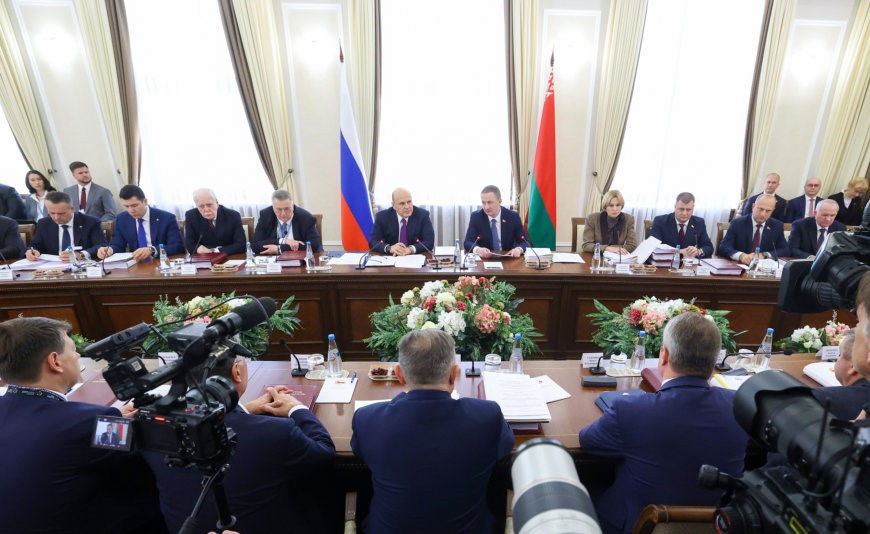
Train travel time between Minsk and Moscow could be reduced to three hours in the future thanks to the implementation of the high-speed railway project, Chairman of the Government of the Russian Federation Mikhail Mishustin said during a meeting of the Council of Ministers of the Union State of Belarus and Russia, BelTA has learned.
- Share on Facebook
- Share on VK
- Share on Twitter
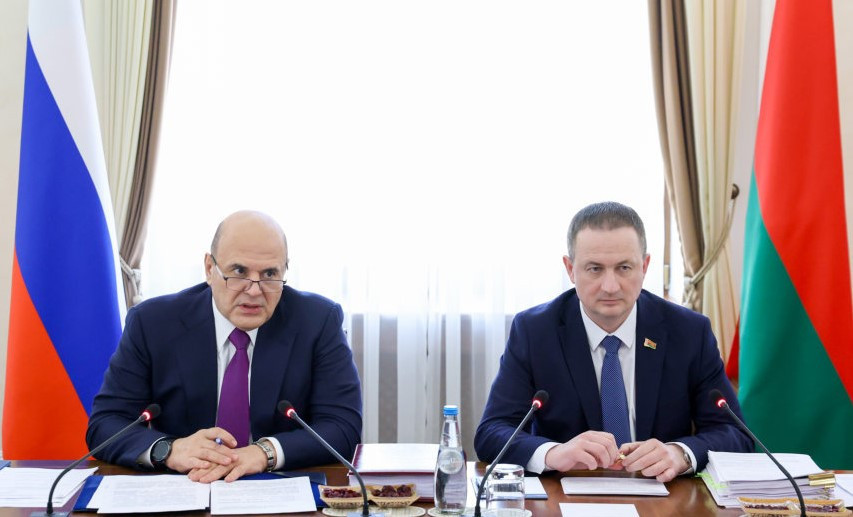
“To provide our citizens with more opportunities for communication, we continue to form a common transport space. One of the projects is the construction of the Moscow–Minsk high-speed railway. The ministries of transport of Belarus and Russia have signed a memorandum of cooperation on this project. The transition to high-speed rail will allow people to reduce their highly important and precious travel time on trains between the Belarusian and Russian capitals from seven hours to three. I am confident that many will deeply appreciate this opportunity,” Mikhail Mishustin said.
Russian Transport Minister Andrey Nikitin provided reporters with more details regarding the Minsk–Moscow high-speed rail project. According to him, the route length will be 700 km, with train speeds reaching up to 400 km/h. The projected passenger traffic is estimated at up to 5.8 million people per year. Russian Railways, together with Belarusian Railways, will handle this matter, determining the exact route alignment and performing calculations. The experience of creating the Moscow–St. Petersburg high-speed line will be taken into account during construction. No exact timeline for the construction has been specified yet, as several stages remain to be completed before the project implementation begins.
Furthermore, in April, operations began on new integrated cross-border routes: Smolensk–Orsha and Smolensk–Vitebsk. Mikhail Mishustin noted that the number of passengers who used them is more than double the figure originally projected for the entire year of 2026. “It is time to move to the next stage. It is time to consider such high-demand routes as Velikiye Luki–Vitebsk and Velikiye Luki–Polotsk. These projects are necessary for the socio-economic development of neighboring regions, for strengthening business ties, and direct contacts between citizens of the Union State,” the Chairman of the Government of Russia noted.