Economy minister: Belarus, Russia share common understanding of strategic goals
10:30, 21 September

Photo: BELTA
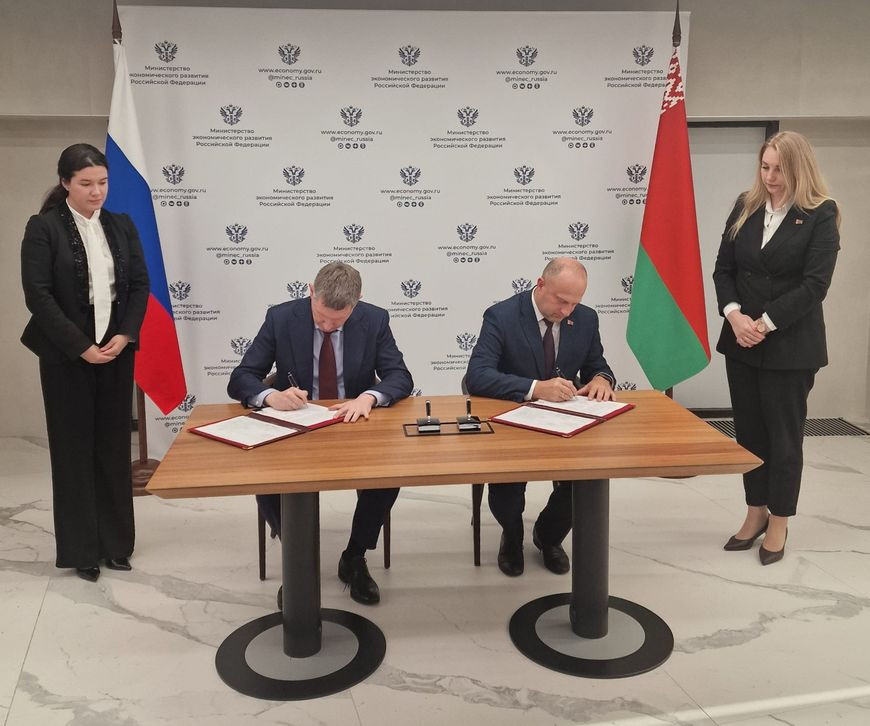
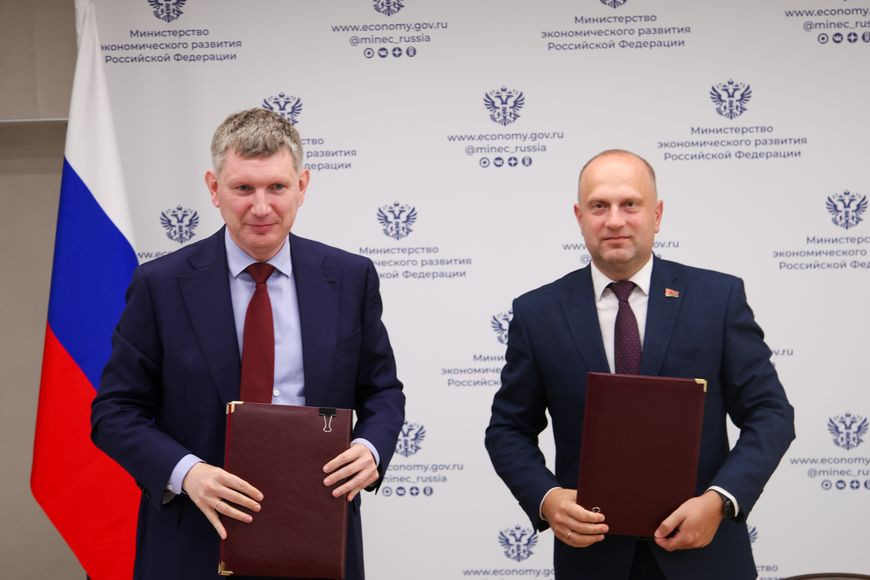
Belarus and Russia share a common understanding of strategic goals and a readiness to move forward consistently, Economy Minister Yuri Chebotar said at a joint meeting of the boards of the Belarusian Ministry of Economy and the Russian Ministry of Economic Development, BelTA learned from the press service of the Belarusian Economy Ministry.
- Share on Facebook
- Share on VK
- Share on Twitter
Yuri Chebotar noted the strong performance of mutual trade: in January-July 2026, trade exceeded $36 billion. The services sector is also showing positive momentum: mutual trade in these areas grew by almost 20%.
The volume of mutual investment is also comparable, reaching about $3.3 billion in January-June 2026. Importantly, the volume of direct investment continues to grow, increasing by approximately one third, the ministry noted.
According to Yuri Chebotar, maintaining this momentum requires tapping additional reserves. These include deeper industrial cooperation, the implementation of new import-substitution projects, synchronized efforts to remove barriers to mutual trade, especially digital ones, and the development of joint measures to protect the domestic market of the Union State. These priorities have been included in the draft key areas for implementing the provisions of the Union State Treaty for 2027-2029.
Belarusian Deputy Economy Minister Alesya Abramenko noted that the implementation of the measures outlined in the key areas for 2027-2029 would increase the integration effects of Belarus-Russia cooperation. She outlined key measures that have brought tangible benefits to businesses and citizens.
For example, the integration effect of implementing 28 Union State programs in 2021-2025 exceeded $2.1 billion for Belarus and $1.7 billion for Russia.
A decision was made to grant products manufactured by Russian and Belarusian producers the status of Union State Goods. The register currently contains 15 types of goods. All of them are Belarusian: BelAZ mining dump trucks (three types), and MAZ buses, garbage trucks, and dump trucks. A collegial body has been established to organize and coordinate activities aimed at ensuring the quality of manufactured products - the Union State Committee for Standardization and Quality.
To protect the market from counterfeit goods, certain types of household appliances - refrigerators, washing machines and televisions - have been added to the list of products subject to traceability. The product labeling system is being improved, and effective cooperation between the sides is being ensured in issuing labeling codes.
Under the agreement on international road transport, a gradual transition is being made to a permit-free system for carrying cargo to and from third countries. Direct passenger commuter routes from Smolensk to Vitebsk and Orsha have been launched.
In addition, roaming charges have been abolished across the Union State.
According to Alesya Abramenko, the draft key areas for implementing the provisions of the Union State Treaty for 2027-2029 is similarly practical in nature. The document contains 13 sections and includes 110 tasks. Alongside traditional priorities - creating a common economic and legal space and common sectoral policies - it introduces new sections on protecting the domestic market of the Union State and the environmental agenda. It also provides for the creation of legal conditions for using financial and payment instruments, digital development, tourism and other areas.
“Specific projects, indicators and methods for achieving them will be reflected in action plans for implementing individual provisions of the key areas for 2027-2029. Their subsequent implementation will be aimed at systematizing our efforts to achieve the goals set out in the key areas. It is expected that these measures will help increase the integration effects of Belarus-Russia cooperation and strengthen the technological sovereignty of the two countries,” she stressed.
The meeting also addressed the practice of introducing identification-based product labeling in both countries and the interim results of a pilot project on information exchange between Russia’s Chestny ZNAK labeling system and the information system of the Republic of Belarus.
“The main thing is that Belarus and Russia share a common understanding of strategic goals and are ready to move forward consistently. Our economic cooperation is becoming increasingly mature and effective. We intend to continue working together at all integration platforms and in the format of bilateral meetings. I am confident that our cooperation will grow stronger and be enriched with new projects and initiatives,” Yuri Chebotar concluded.