


Lukashenko met with St. Petersburg Governor Alexander Beglov
13:00, 27 October

Photo: the press-service of the President
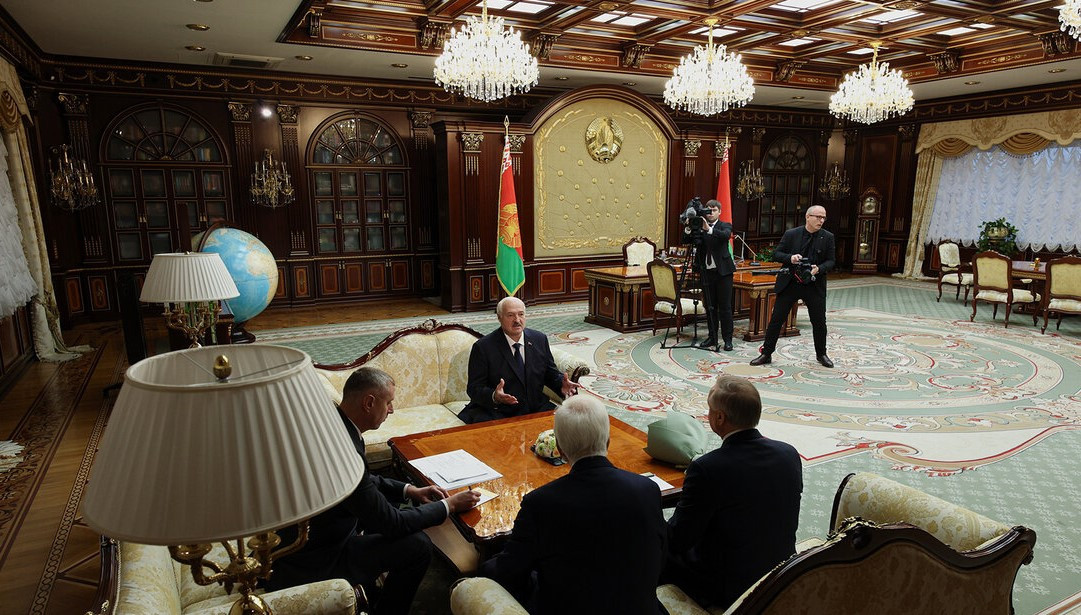
Belarusian President Aleksandr Lukashenko met with St. Petersburg Governor Alexander Beglov on 27 October, the press-service of the Belarusian leader reported.
- Share on Facebook
- Share on VK
- Share on Twitter
The head of state presented the Order of Honor to the governor. Alexander Beglov was honored with the order for the services in developing trade, economic and cultural ties and strengthening international cooperation between Belarus and Russia. Belarusian head of state Aleksandr Lukashenko signed the corresponding decree.
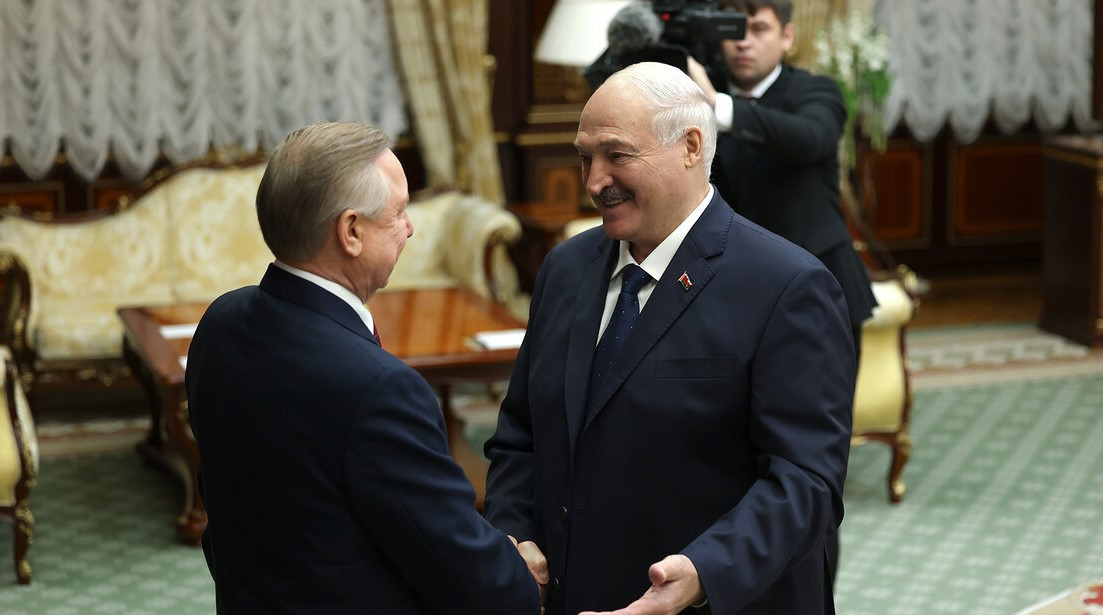
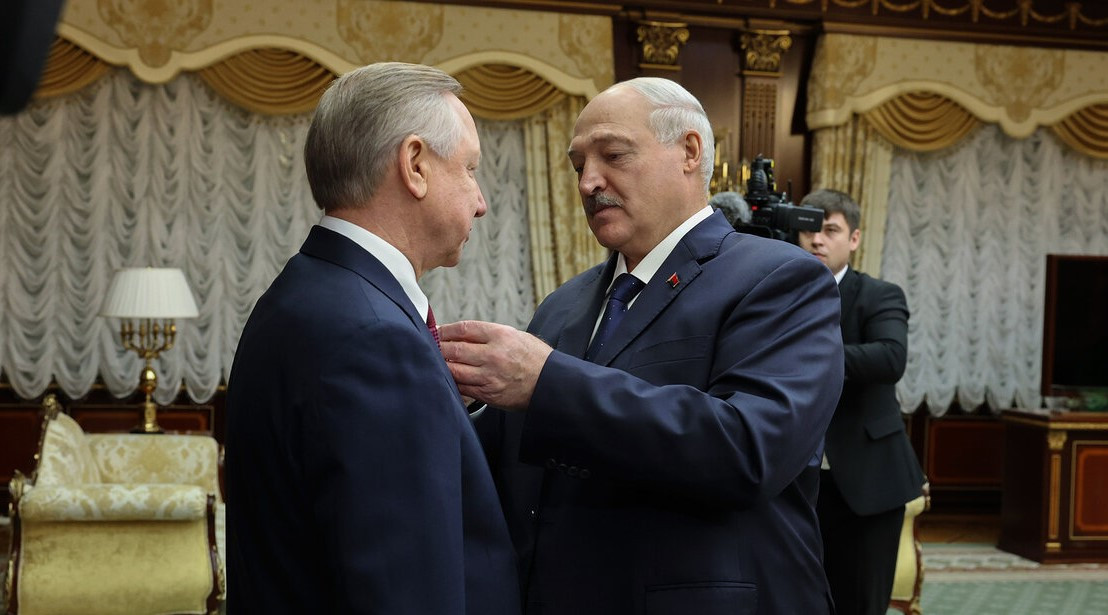
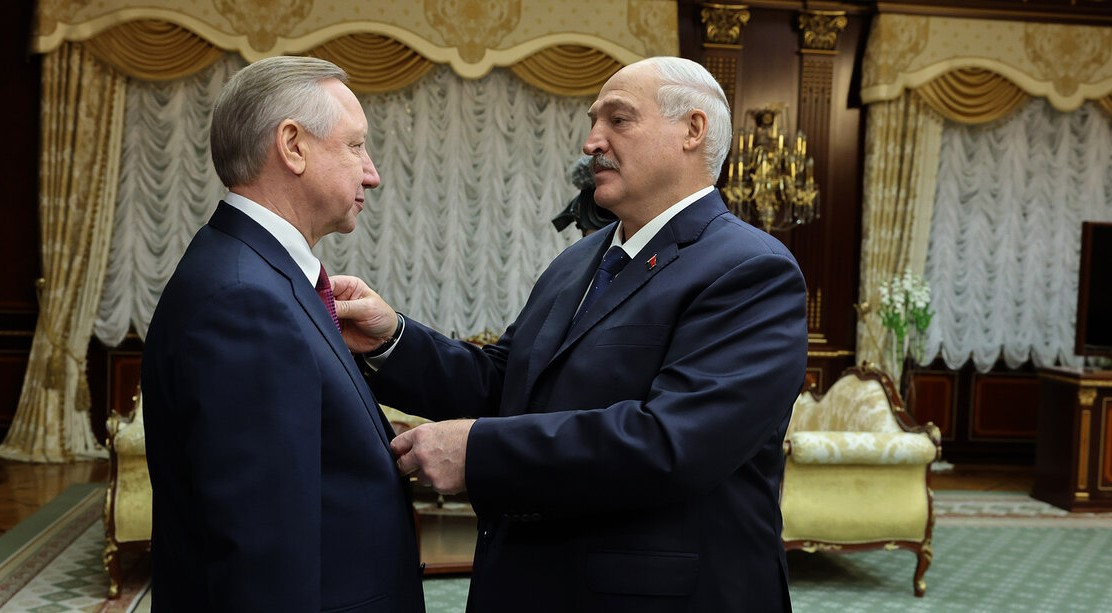
“It is great to begin with something nice,” the head of state said as he welcomed the distinguished guest. “As we say, the award has found its heroes.”
"It is a great honor for me and for our city. I thank you,” Alexander Beglov replied, receiving the Order of Honor.
“This award is well deserved. Believe me, it is very difficult to receive an award here. And I have raised this awarding question a couple of times, whether we are awarding the right order. [Russian President] Vladimir Vladimirovich [Putin], we discussed it with him, said: ‘Yes, Beglov deserves the award, I agree’,” Aleksandr Lukashenko said.
He noted that in this case there was no way to give the award without the Russian President’s consent. “That is also bad. Probably Belarusians and Russians should already move away from this. Why are we asking each other here whom to award... If someone deserves it, they should be awarded. Otherwise someone might block the awarding of the Russian ambassador to Belarus, and then what...” the Belarusian leader remarked.
“I have taken the hint,” Russian Ambassador to Belarus Boris Gryzlov, who was present at the meeting, responded.
“While we are in power, this issue needs to be resolved, since it has already come up,” Aleksandr Lukashenko added.
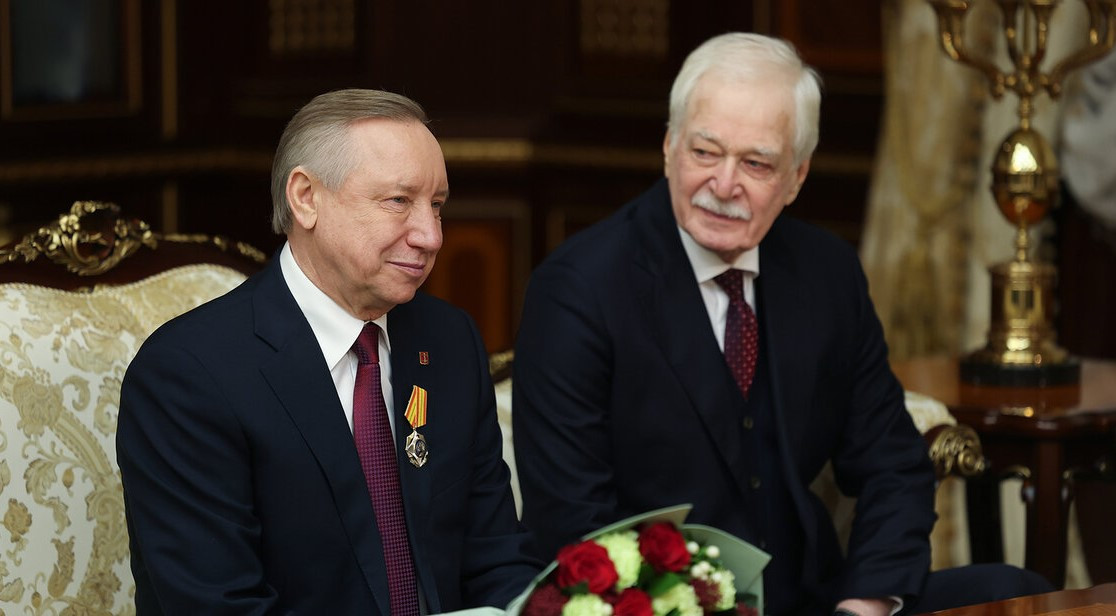
The President also sent his warmest wishes to all the people of St. Petersburg. He gave particular thanks to the city’s governor for the assistance rendered to Belarus and for the high level of cooperation that has taken shape. “If our cooperation with other cities and regions of Russia were like our cooperation with St. Petersburg and Leningrad Oblast, we would have no problems at all, neither in Russia nor in Belarus,” the head of state said.
Speaking to journalists after the meeting with the President, Alexander Beglov noted: “I see this award as an advance. And above all, of course, it is a tribute of respect to the hero city of Leningrad. It is an award for our city. For our interaction and cooperation. Which is indeed successful today.”
“It’s time we returned to the Soviet practice when Belarus was responsible for Kaliningrad, St. Petersburg, Moscow Oblast and partially Moscow (it is huge, especially now, I think we would hardly cope with such a gigantic volume). But we must cooperate first of all with these regions. The responsibility was that everything that was not available in Leningrad and the region, especially in Kaliningrad, we were obliged to produce and supply,” the Belarusian leader said addressing Russian Ambassador to Belarus Boris Gryzlov, who was present at the meeting.
“Our cooperation with St. Petersburg and Leningrad Oblast should be held up as an example,” Aleksandr Lukashenko emphasized. “This should generally be a model for our cooperation. Thank God we have achieved this under your leadership of the city. We are moving in this direction. Just speak more frankly about where we are falling short. We will respond to that very quickly. This is very important to us.”
“You know our capabilities perfectly well. Be assured that we will deliver on everything we have promised. Both in the field of mechanical engineering and elevator repair, and food. We must satisfy the needs of Leningrad wherever we can. I am very glad that the President of Russia embraces this formula - that we must cooperate closely in this regard,” the head of state said. “We hosted Andrei Vorobyov [Governor of Moscow Oblast Region] in June 2026. He has a very good attitude toward our cooperation. But I remember that we have neighbors, namely Bryansk, Smolensk, Pskov. Neighbors are given by God. If we can help with something, we will help.”
Aleksandr Lukashenko recalled his instruction to keep under control matters concerning any assistance these Russian regions may need. “Fuel, other issues, security. If our help is needed, we will help. We say so openly,. Those are not strangers there. Everything is intertwined there,” the Belarusian leader emphasized.
The President, in this connection, recalled how at a recent meeting with the governor of Bryansk Oblast he jokingly said: “We still need to figure out whose Bryansk Oblast is." “Then they started spinning it that I was almost demanding that Boris Vyacheslavovich [Russian Ambassador to Belarus Boris Gryzlov] hand over Bryansk Oblast. No, I have absolutely no such intention,” the head of state noted. "It is still unknown what will happen to various borders in the near future, in a few years. Maybe people will stop recognizing borders at all, will move freely around the world. God willing, that is how it will be. The Lord will help. Therefore, I have no such fixation on whose land it is. People live wherever they choose. There’s no interfering. Our human life will lead us where it needs to. Therefore, I understand that people in Bryansk, Smolensk and Pskov are our kin people (these regions are the neighbors to your region too). We are always open to them. The doors are simply wide open, and we must certainly support and help them.”
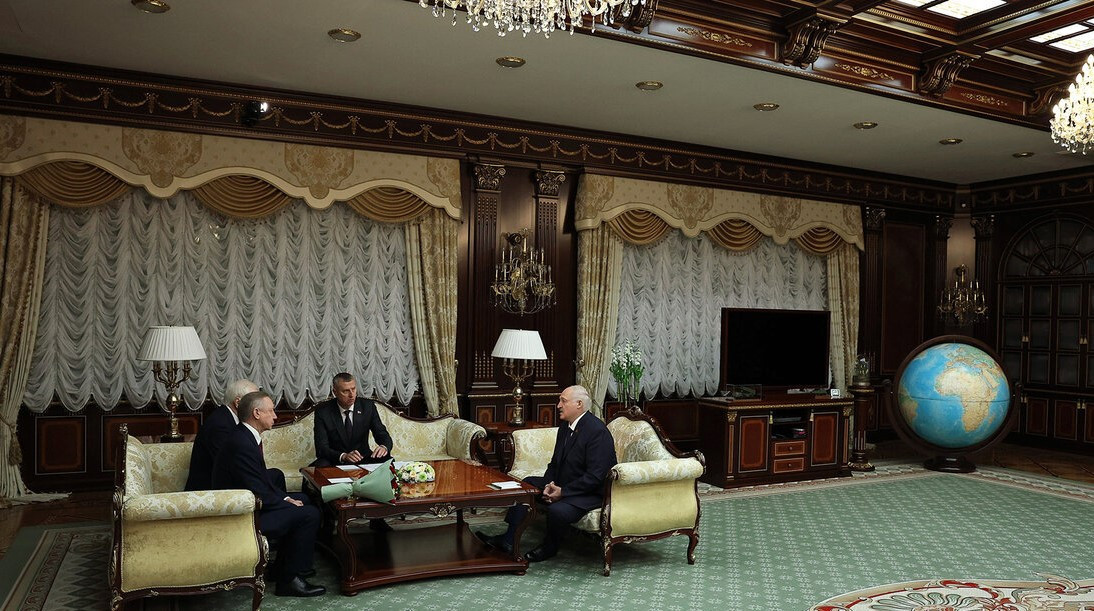
Aleksandr Lukashenko noted that Belarus has a practice of naming point men for cooperation with a particular region or country. Head of the Belarus President Administration Dmitry Kruto, who was also present at the meeting, is a point man for cooperation with Russia in general. He shares the view that cooperation between Belarus and St. Petersburg can be considered exemplary and held up as an example.
The head of state drew attention to the fact that historical ties, among other things, underlie such close interaction. Both peoples endured very tragic events and suffered considerably during the Great Patriotic War. After the war, many people from Leningrad came to Belarus and stayed here to live. This applies especially to representatives of the scientific community, who subsequently helped to set up national scientific schools. “Our people are educated and intelligent. I always tell the Russian President: if Belarusians take after anyone, it is Leningraders. They are generally the same people,” Aleksandr Lukashenko remarked.
The President also commented on the program of Alexander Beglov’s visit to Belarus and his planned trip to Brest Fortress. The head of state emphasized the particular significance of both the place itself and the visit to it. “To honor the memory of the heroes of Brest Fortress is very important. It is a good example for our Ukrainian friends and comrades. Sooner or later people will understand what they may lose and what they are losing in Ukraine. This example of Brest Fortress… Everyone fought there. Most of all there were Russians, Belarusians. Ukrainians were among defenders too. There were also people from Central Asia,” Aleksandr Lukashenko said.
“Such an element of your trip is very important for the present and the future,” the head of state said as he addressed the governor of St. Petersburg.


