


Lukashenko to Belousov: Belarus honors its commitments to defend the Union State border
14:00, 22 October

Photo: President.gov.by
Belarus and Russia honor their obligations to each other in the military sphere. Belarus President Aleksandr Lukashenko made the statement as he met with Russian Defense Minister Andrey Belousov, BelTA has learned.
- Share on Facebook
- Share on VK
- Share on Twitter
Aleksandr Lukashenko said: “We have quite a few matters to discuss. Thank you for keeping the joint force, which we and you have formed within the framework of the Collective Security Treaty Organization in the western direction, amid all the difficulties and hardships. The Belarusian army plays its part. We honor all our obligations towards Russia and the Russian side honors all its obligations towards Belarus. Our opponents (I guess we don’t really have enemies here for now) know it, they see it. Cooperation via other agencies and in other areas is going well. This is why you don’t have to worry about our obligations to protect the borders of the Union State [of Belarus and Russia].”
Aleksandr Lukashenko remarked that the training of the Armed Forces in Belarus is geared toward preventing military aggression from the outside. “You see our actions, especially those of the Armed Forces. We are preparing for war, but we are trying to avoid it by all means. Neither we nor you need it. But in order for it not to happen, we have to be ready. This is why our joint force in the western direction will always be needed. And it is in good shape today,” the president noted.
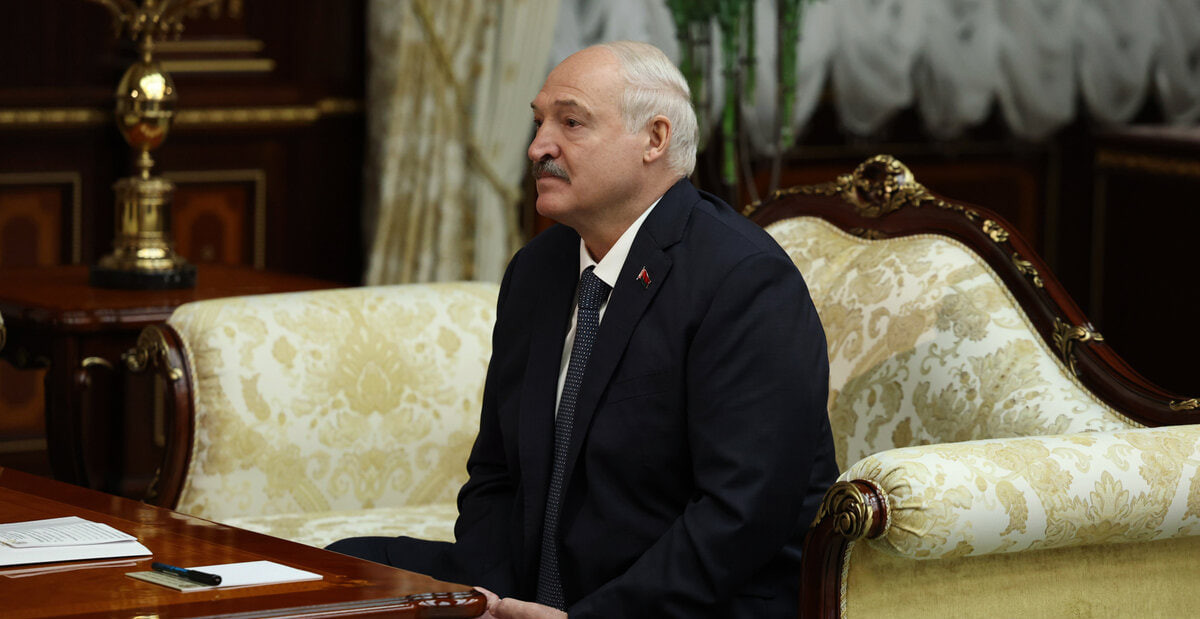
The Belarusian head of state also thanked the Russian side for assistance with organizing control using various technical means along the perimeter of the Union State, along the borders with Ukraine and Western countries. “And taking into account the conflict in Ukraine your [means] are very advanced. Radar stations and the like. Russian experience is taken into account and there are many Russian means,” Aleksandr Lukashenko said. “President Putin and I discussed this topic during our recent meeting. He is a good man, he made a promise, he said: ‘We will help with this and that’. We will need it. And we see that we need it. We control the entire territory along the border. And it is about 3,000km if we consider the West and Ukraine. Of course, [the border] has to be covered with control and surveillance means. We are working quite well here.”
The president remarked that taking into account the experience of cooperation the Russian defense minister can hardly have many complaints about the Belarusian side, if any at all.
“There are certainly no complaints,” Andrey Belousov said.
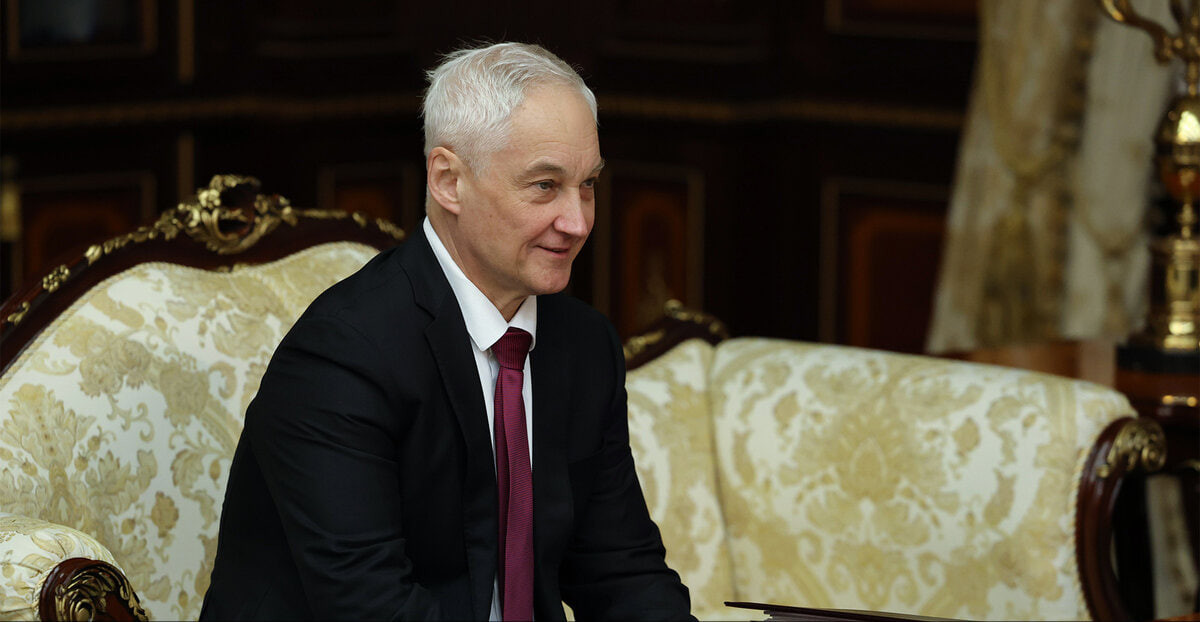
He thanked the Belarusian leader for the opportunity to meet despite his busy schedule and conveyed warm words and wishes from President of Russia Vladimir Putin.
Andrey Belousov confirmed that cooperation between the defense ministries of the two countries indeed has a substantial agenda, both with regard to the organization of the joint board and with regard to the matters discussed at the meeting between the ministers. “I flew specifically yesterday rather than today for the board session. [Belarusian Defense Minister Viktor Khrenin] and I talked for two hours,” he said.
The Russian defense minister also noted that his deputies had arrived for the session of the joint board. An important point is that it is also an opportunity for closer personal acquaintance in view of the personnel changes that have taken place in the defense ministries of both countries.
Andrey Belousov said: “You are absolutely right. The international situation continues deteriorating. It remains extremely complicated. Not only is it complicated, it is becoming more and more unpredictable. We see what is happening in Europe and in the Middle East. And it demands proactive action.”
In his words, this was the main subject of discussion at the meeting with the Belarusian defense minister as well: “What other actions, what other tasks we must set for ourselves and accomplish as soon as possible at our level. There are a number of political matters that certainly require decisions by the supreme commanders-in-chief.”


