


Lukashenko convenes meeting on development of southeastern part of Mogilev Oblast
12:47, 14 April

Photo: Belta
Belarusian President Aleksandr Lukashenko convened a meeting to discuss the comprehensive social and economic development of the southeastern part of Mogilev Oblast during his working trip on 14 April, BelTA has learned.
- Поделиться в Facebook
- Поделиться ВКонтакте
- Поделиться в Twitter
Presidential decrees on the comprehensive social and economic development of the southeastern part of Mogilev Oblast (Krichev District, Klimovichi District, Krasnopolye District, Kostyukovichi District, Slavgorod District, Cherikov District and Khotimsk District) were previously adopted in 2015 and 2020. The documents provided for tax breaks and preferences aimed at increasing investment activity, implementing investment projects, retaining labor resources, and strengthening the material and technical base of agricultural and construction organizations.
According to the Mogilev Oblast Executive Committee, during the time these decrees have been in effect, about Br3.2 billion in fixed capital investments have been directed into the region’s economy and social sector. Among the significant investment projects implemented during this period are a cement-bonded particle board plant in Krichev District, a pig-breeding complex and a reproduction facility in Slavgorod District and Klimovichi District, rainbow trout production complexes in Krasnopolye District and Khotimsk District, and a fish-breeding complex for producing fertilized rainbow trout eggs in Cherikov District. Currently, it is proposed to extend the social and economic development program for the southeastern part for 2026–2030.
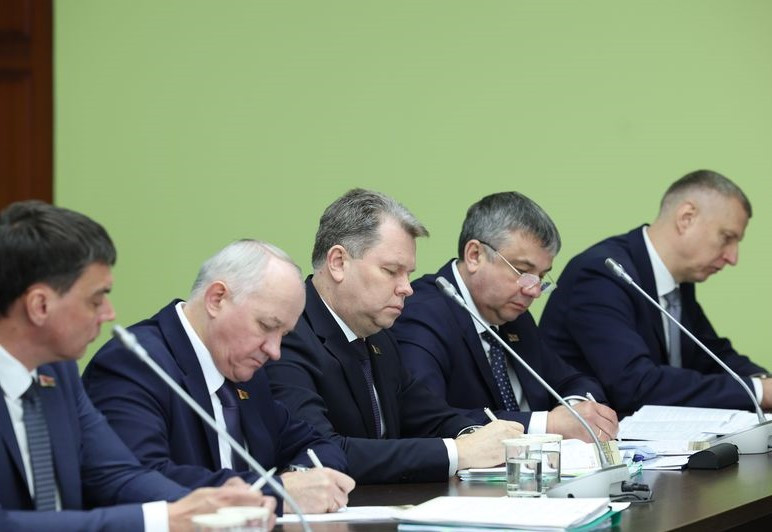
The president asked why the set of measures had not worked properly in the previous five-year plan and what shortcomings it had. At the same time, he asked what positive experience from past years should be preserved for the next term. It is important, he said, to identify the main factors currently holding back the region’s development, as well as the measures that will help correct the situation in 2026–2030. In this context, Aleksandr Lukashenko expects new approaches and breakthrough ideas. Although, as the head of state noted, sometimes there is no need to invent anything particularly special or groundbreaking. It is worth turning to existing experience: “Walk the land, look and see what needs to be done.”
“Maybe one idea is not to invent anything at all, but to build more such fish farms in the southeast [like the Paluzh enterprise the president visited during his working trip]?” Aleksandr Lukashenko suggested. “Given the modest amount of resources [needed to implement such a project], given that we’ve learned our lessons – we’ve bumped our heads on this construction - we know how to build.” Moreover, there is a need for such products on the domestic market, where domestic enterprises supply less than half of the fish consumed. “We are potato eaters, we eat potatoes. But with potatoes, you need fish. Not just meat and milk,” the head of state said.
Addressing government representatives, the president emphasized that the oblast executive committee should not have to shoulder all the work for developing the southeast of Mogilev Oblast on its own. There must be assistants and people responsible at the national level. “The oblast committee should assign this to the district executive committee chairpersons, and they need to get down to work onsite and be accountable for specific plans,” the Belarusian leader said.
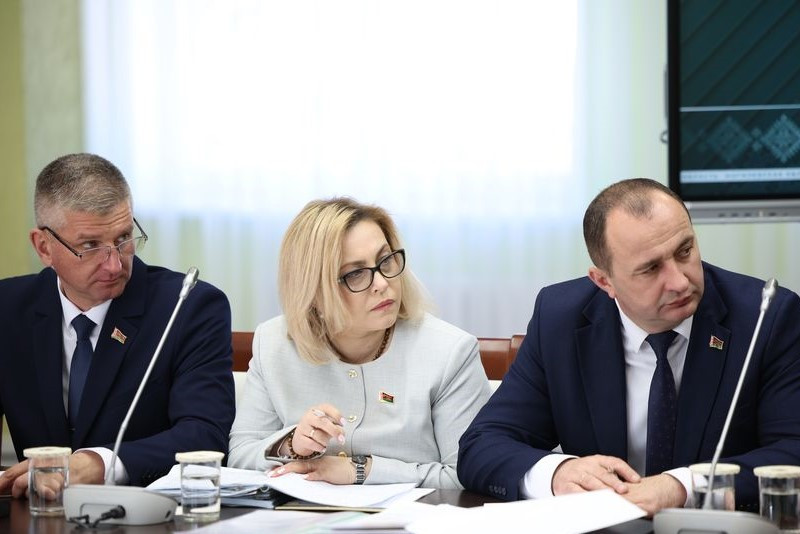
Another important aspect is the expected results from the oblast’s development by the end of the five-year plan. “How realistic are they?" asked Alexander Lukashenko. He also inquired whether the bar for tasks had been set high enough and whether they were achievable.
“How realistic are they?” Aleksandr Lukashenko asked. He also inquired whether the bar for tasks had been set high enough and whether they were achievable.
Another important issue raised by the president concerned the volumes and sources of financing. Aleksandr Lukashenko emphasized that state support would be provided for profitable projects, but it would not be free of charge.
“We will find appropriate credit resources for this,” said the head of state. “There is no such thing as free money. You are all managers, you understand this. But this should be soft launch financing. We have the ability to allocate inexpensive but repayable resources - not just for you in the southeast, but across the entire country where we will be implementing this program and other quick-payback programs.” For example, according to expert estimates, the profitability of a fish farming project like the one at Paluzh is at least 15%. With that level of efficiency, the enterprise is fully capable of meeting its credit obligations and growing.
“We will help you with financing. These will be loans, start-up funds, but repayable. Maybe some investors will dare to put money in. For instance, if I were an investor and had the money, I would gladly invest in such enterprises. The profitability is good. It’s a compact, well-run operation,” the president said.


