


Lukashenko suggests revisiting One District-One Project program approaches
14:00, 24 April

Photo: BELTA
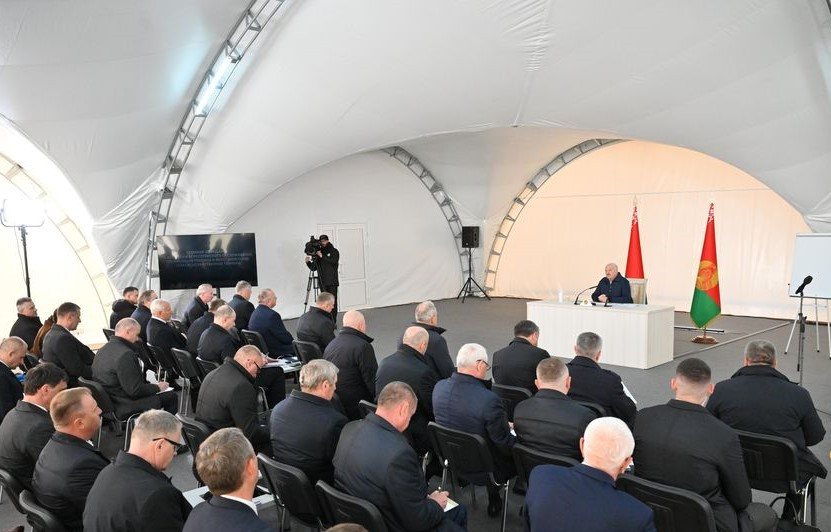
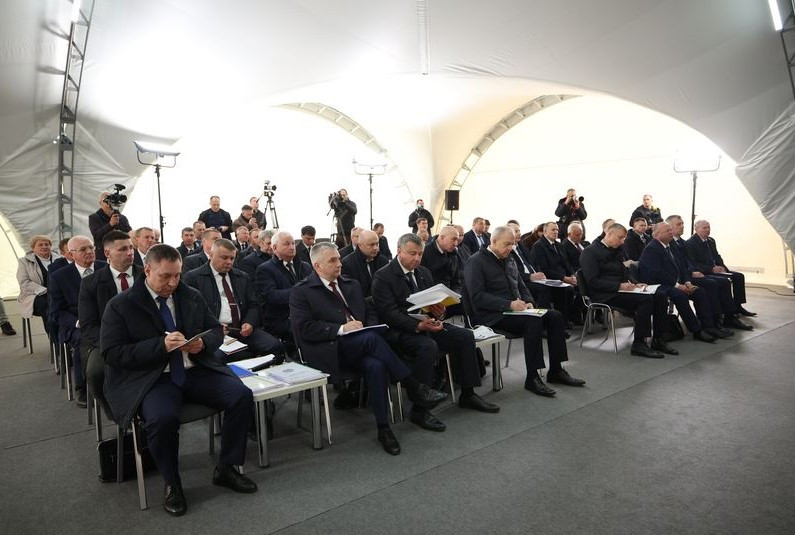
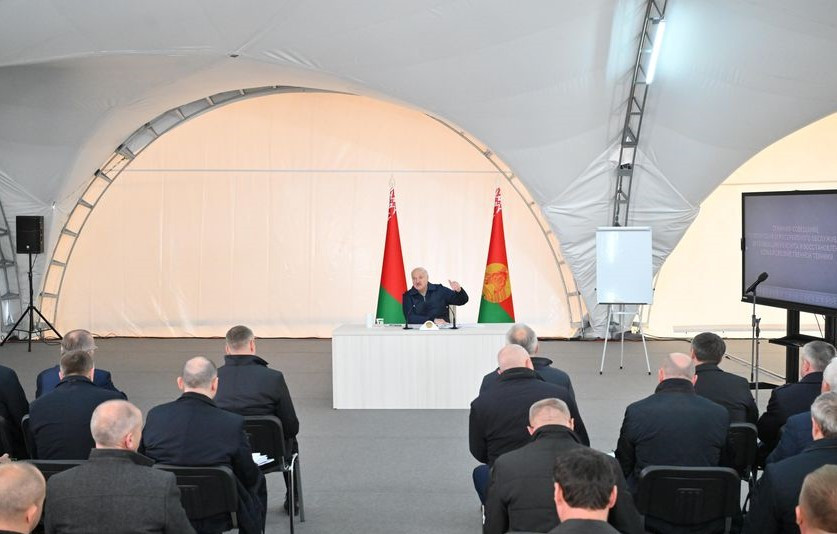
Belarusian President Aleksandr Lukashenko suggested revisiting the approaches to the content and implementation of the One District-One Project program as he spoke at a seminar-conference on agricultural services, the organization of repair and restoration of agricultural machines and vehicles on 24 April, BelTA has learned.
- Поделиться в Facebook
- Поделиться ВКонтакте
- Поделиться в Twitter
“We will discuss this issue at a meeting in the near future,” said the Belarusian leader. “We need to analyze both reclamation and these issues. After some time, we need to analyze how we will move forward.” The president noted that when selecting projects for implementation, many were counting on large amounts of funding. But the focus should have been primarily on feasibility and economic efficiency. And in this sense, the restoration across the country of a network of agricultural service enterprises for the repair and production of agricultural machinery may well be precisely the kind of projects for districts that are needed.
“Everyone thought there would be easy money, 154 projects under the One District-One Project program. They aimed high, but not everything was completed. But agricultural machinery and district agricultural service centers, regional service centers are exactly that kind of project. And in some places, even more important than creating five jobs and stamping plastic, making some bags, and so on. Perhaps that is also needed. But this [the development of district agricultural service centers] is good projects that need to be implemented. And if someone invested money intended for the One District-One Project program in such areas or projects, I think that is not bad,” said Aleksandr Lukashenko.
“This is actually a good investment,” he added.
Similarly, according to the president, the same approach should be taken in other areas: construction, road building, and others. “There too, we need to examine and think about how we will continue to move forward with these projects under the One District-One Project program,” he said.
The president noted that perhaps not everywhere is there a pressing, urgent need to invest in implementing a new project at the local level, nor are there available labor resources everywhere to do so, and creating the appropriate infrastructure to attract them would require additional investments. “We need to approach this wisely. Perhaps in some district we don’t need this project. And we could transfer those funds to some other project. If, for example, in Polotsk they decided to build a new milk processing plant, well, maybe we should concentrate the money and build that enterprise instead,” he said, offering one possible example.
Another example is projects for modern fish farms to raise valuable fish species. One such farm, in the southeast of Mogilev Oblast, the president recently visited. “We have an enormous, open market. They are making excellent products. God willing, we can properly saturate our own market. We already know how to do it. Well done. Previously, they would buy fry and raise it (like fattening a calf). Now they have obtained their own roe and raised fry from that roe - a closed cycle. The external market is big, and the Russians are ready to buy. Why not invest money, and quickly, to get a good return?” Aleksandr Lukashenko asked rhetorically. In his opinion, about ten such fish farms could easily be set up across the country, creating jobs and making good money.
“There are many such projects. They are primarily connected with land, construction, repair, and restoration [of equipment] - all things we know how to do. We don’t need to invent anything,” the Belarusian leader emphasized.


