


MP: Belarus learned lessons after the Chernobyl accident, took steps toward further development
15:57, 24 April

photo: BELTA
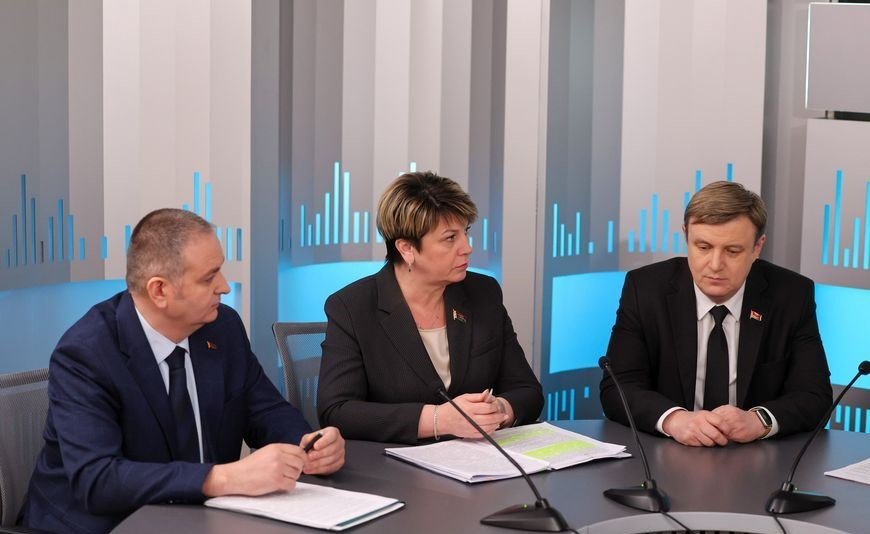
Belarus learned grave lessons following the Chernobyl Nuclear Power Plant accident and took steps toward further development, Zhanna Chernyavskaya, Chairperson of the Standing Committee on Ecology and Environmental Management of the House of Representatives of the National Assembly of Belarus, said in the latest episode of BelTA’s Nation Speaks project.
- Поделиться в Facebook
- Поделиться ВКонтакте
- Поделиться в Twitter
If you compare the scale, Belarus suffered the most: about 20 countries in total felt the Chernobyl accident and its impact, but in Belarus it affected nearly 23% of the territory. In Russia, that is 1.5% of the territory; in Ukraine – 7%. Naturally, these were densely populated areas.
“In the first years, even the first months, the population had to be evacuated from these settlements. About 138,000 people were evacuated, and another 200,000 subsequently left on their own. Imagine what a burden that was on the country. While still part of the USSR, about 30 legal and regulatory acts were adopted in the first six months to a year to somehow regulate the situation. Later, in 1991, two main laws were adopted, which we still follow today, of course, making amendments and additions in light of the post-Chernobyl situation,” the MP said.

Belarus adopted two main laws that regulated the work to mitigate the consequences: one on the legal regime of territories contaminated by radionuclides, and one on the social protection of the population. “The first defined the zones of impact and radionuclide contamination density, as well as the regime and measures to be carried out in those territories. The second law defined categories of people depending on their place of residence,” said Zhanna Chernyavskaya.
Belarus learned serious lessons after the Chernobyl accident and took the main steps toward further development; documents have been adopted and are in effect in the country. “There is the law on radiation safety. A subprogram until 2030, called Radiation Safety, operates as part of the National Security Infrastructure program. In addition, there is a law regulating matters related to the operation of nuclear energy in the Republic of Belarus,” she said.
Zhanna Chernyavskaya also recalled reading a small brochure from a Swiss analytical center in the 1990s. “They were analyzing the situation after the Chernobyl accident, and one of the analysts wrote that Belarus would never develop nuclear energy. Forty years later, I recall that statement and think about how wrong he was. They wanted to write us off back then, but we turned out to be wiser. Despite the Chernobyl accident, we have overcome a great deal, accomplished a great deal, and continue to develop, including our legislation,” she emphasized.


